
Choosing the Road to Ladakh
While planning for the Ladakh tour, a question arose—was it better to fly directly and face the sudden high-altitude acclimatisation, or to acclimatise gradually by climbing by road from Srinagar? We chose the latter and decided on a two-day stay in Srinagar for exploring its Mughal Gardens, adding that ‘trailer’ to our exploration.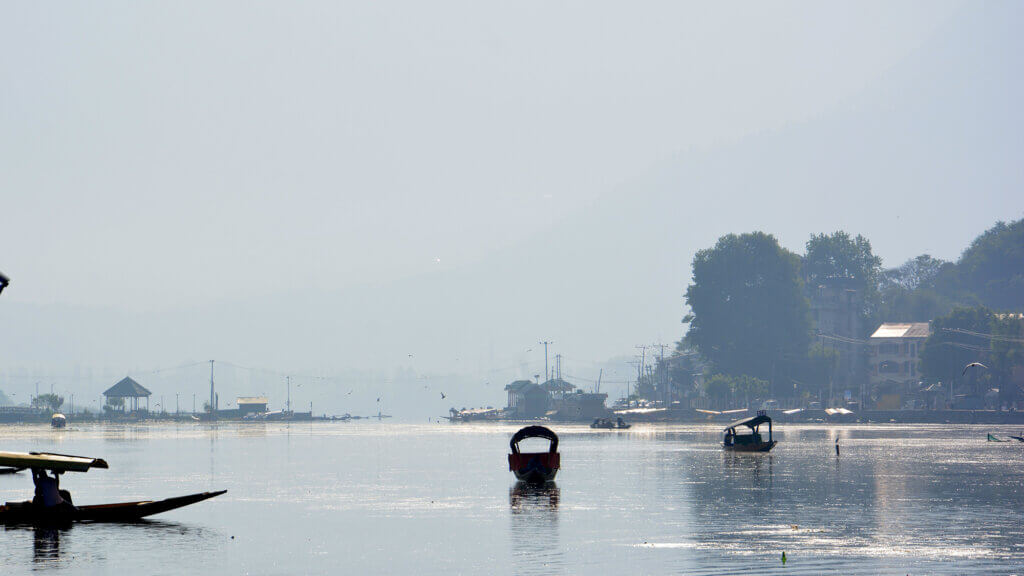
We could plan a longer visit later. It was a choice to acclimatise not only the lungs to the altitude, but also the spirit to the overwhelming scale of the Himalayas in Ladakh.
What a divinely beautiful and delectable decision that turned out to be! If the Himalayas are the crown of our great land, then the Kashmir Valley is its most beautiful jewel, and Srinagar sits at its heart.
The Night on Dal Lake, Srinagar
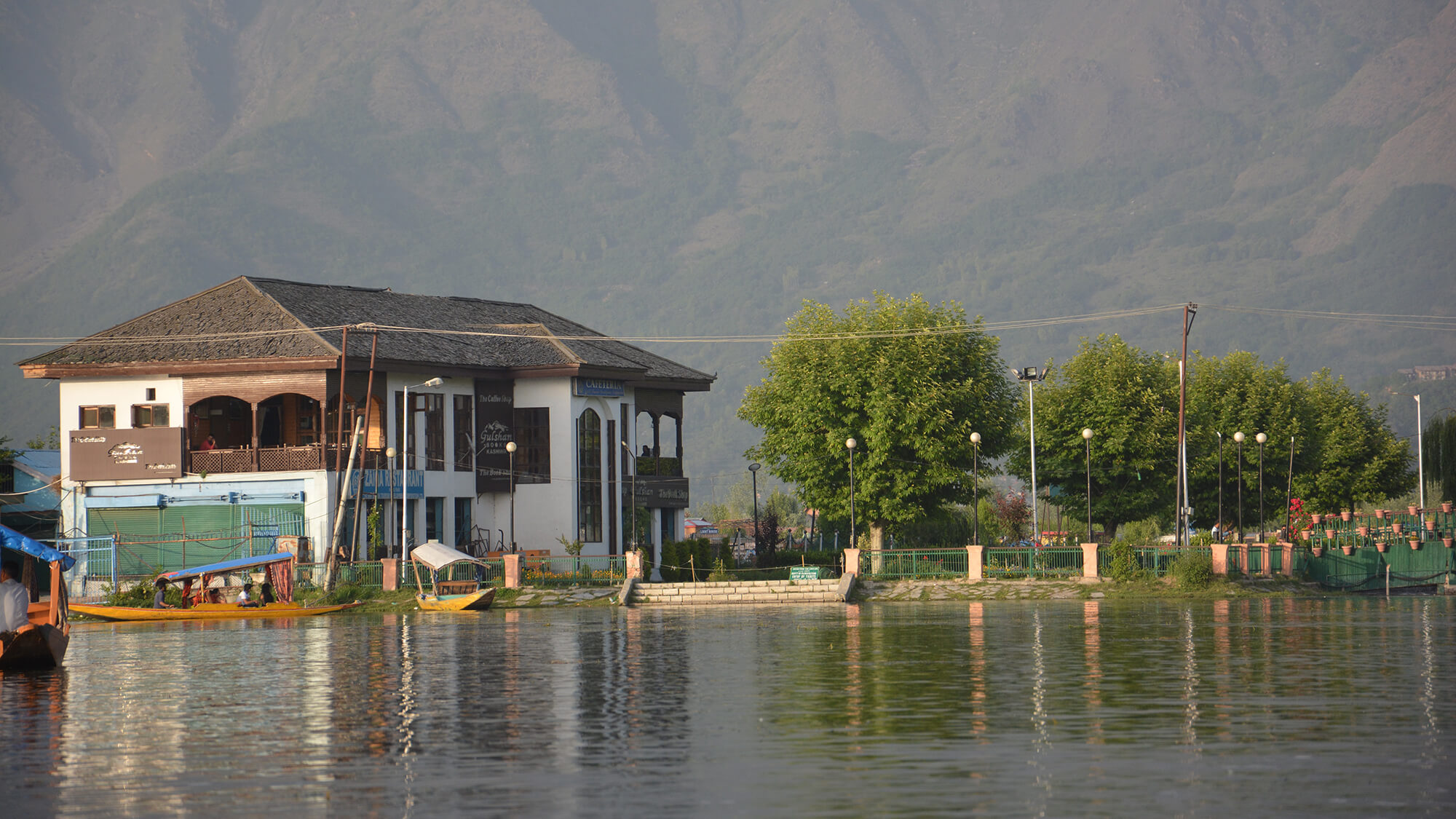
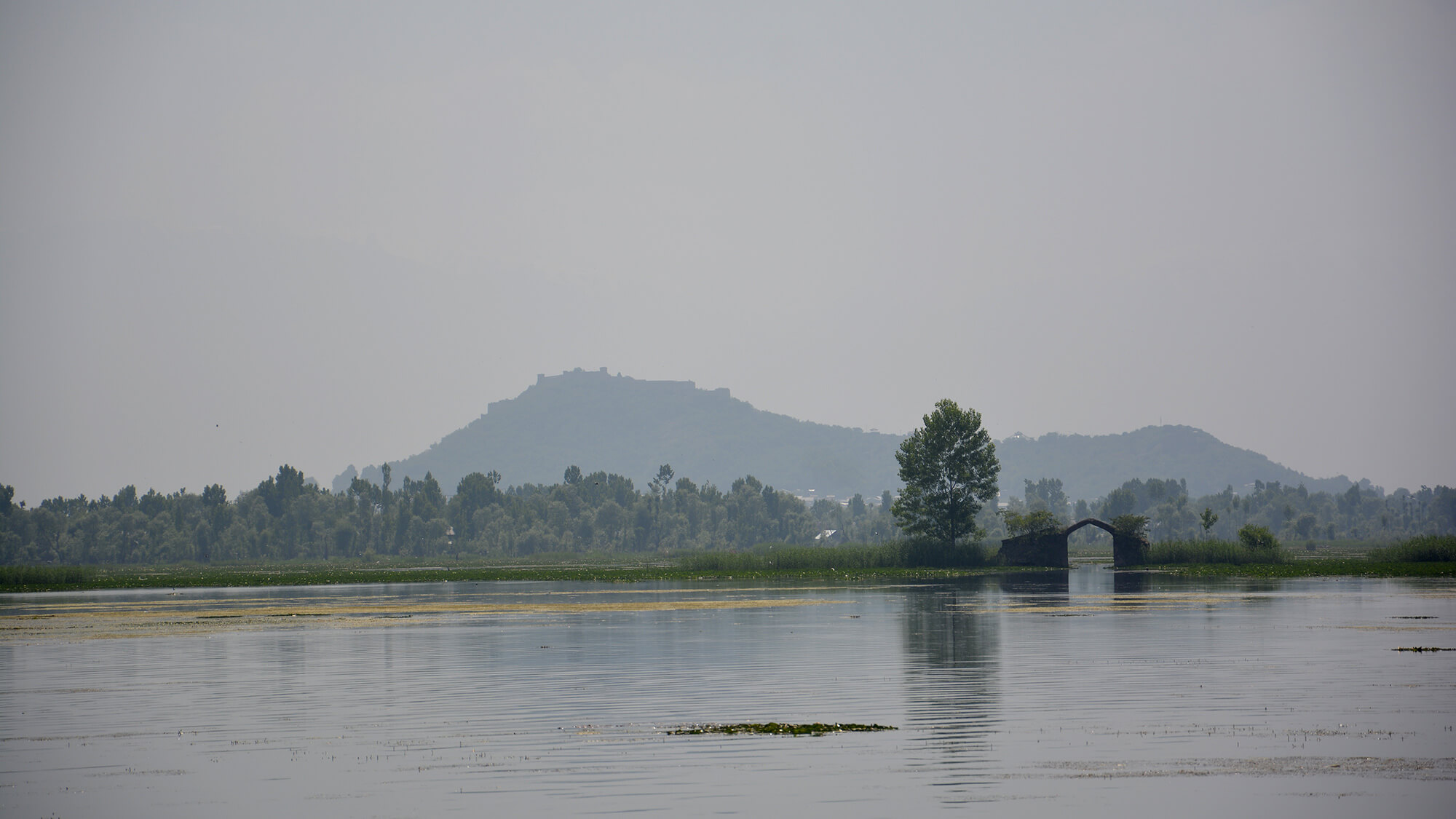
 We were a group of sixteen, half of them curious and enthusiastic children of all ages. Our journey began with the mandatory houseboat stay on Dal Lake on the first night. The waters of Dal Lake extend to the mountain ranges that surround them, and could be best appreciated through an evening shikara ride, which we took with quiet anticipation.
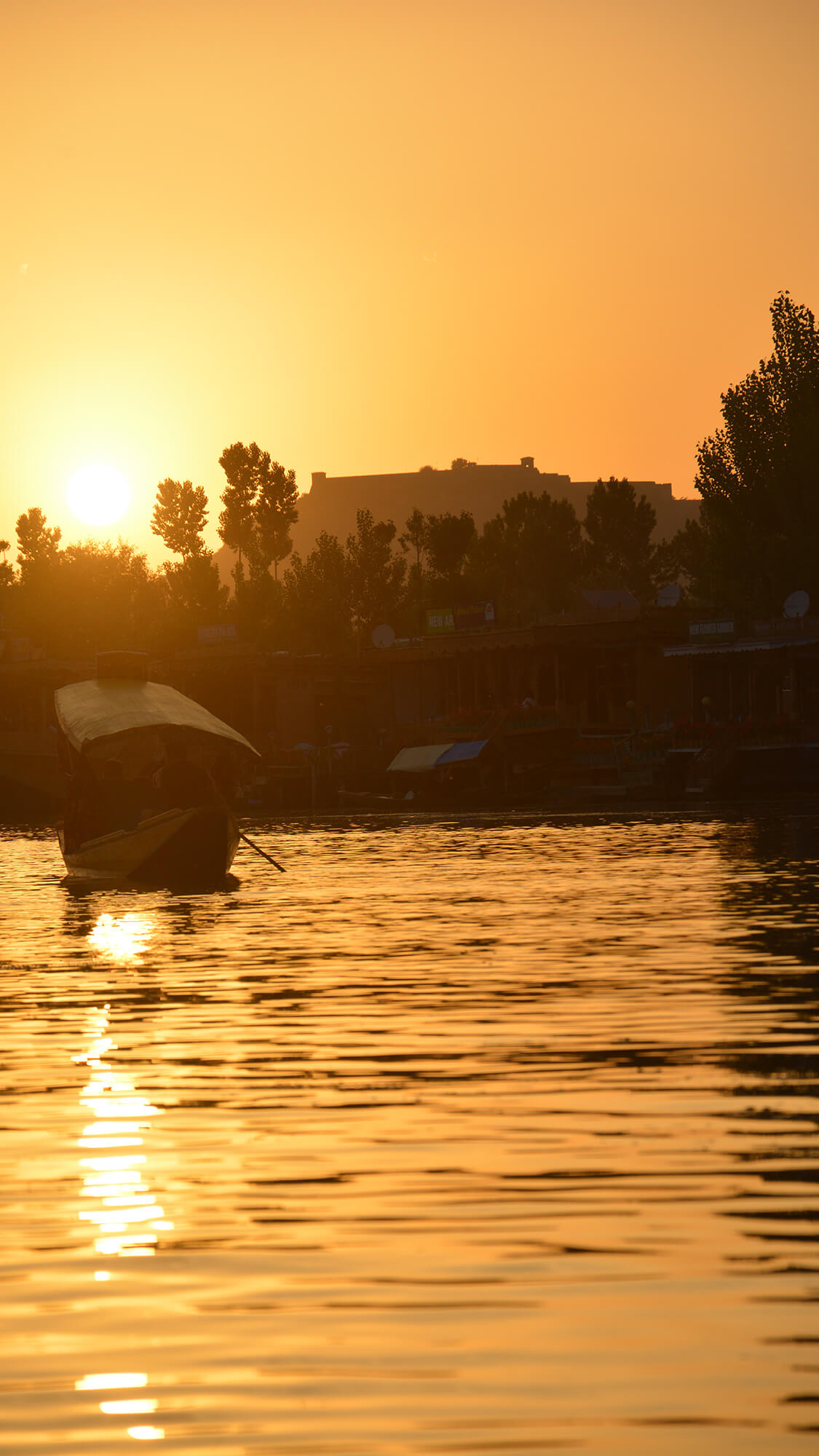
The conversation with the shikara owner during the ride made us realise how an ordinary Kashmiri strives to lead a normal life—earning a livelihood, tending to family, and living with dignity. He was not much interested in the politics of the place. He loved it when visitors came, because visitors are harbingers of a good season—they bring work and, with it, the means to lead a respectable life. That evening ride on the shikara gave us some truly quiet and moving moments, grounding us in the lived reality of Srinagar beyond its beauty.
Meena Bazaar and Reflections on Water
We explored the vast waters dotted with tiny floating houses, some anchored for ages. There was a large house in the middle of the waters, almost like a floating haveli, resting gently on Dal Lake. As evening fell, the water turned orange, reflecting the sun and the sky. We were then taken to a market on water—the floating Meena Bazaar—where shikaras glided through narrow lanes. This market was unique, floating on the lake and selling local crafts to appreciative eyes. The lit Meena Bazaar of the night cast beautiful reflections on the water, making it a truly unique experience.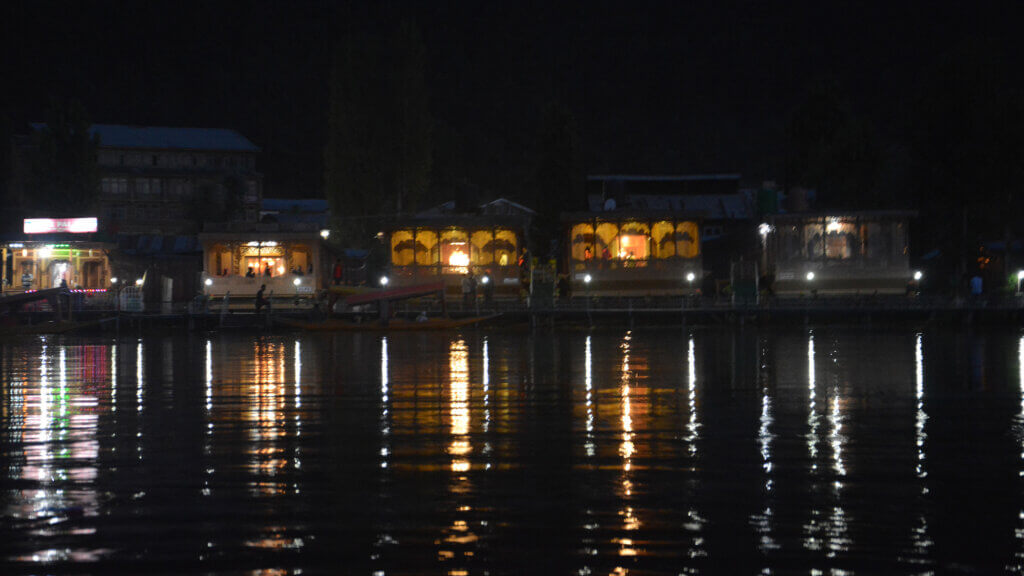
This first encounter in Srinagar was preparing us gently for what lay ahead—its famed Mughal Gardens, shaped by water, landscape, and time.
Gardens of Srinagar and the Spirit of Kashmir
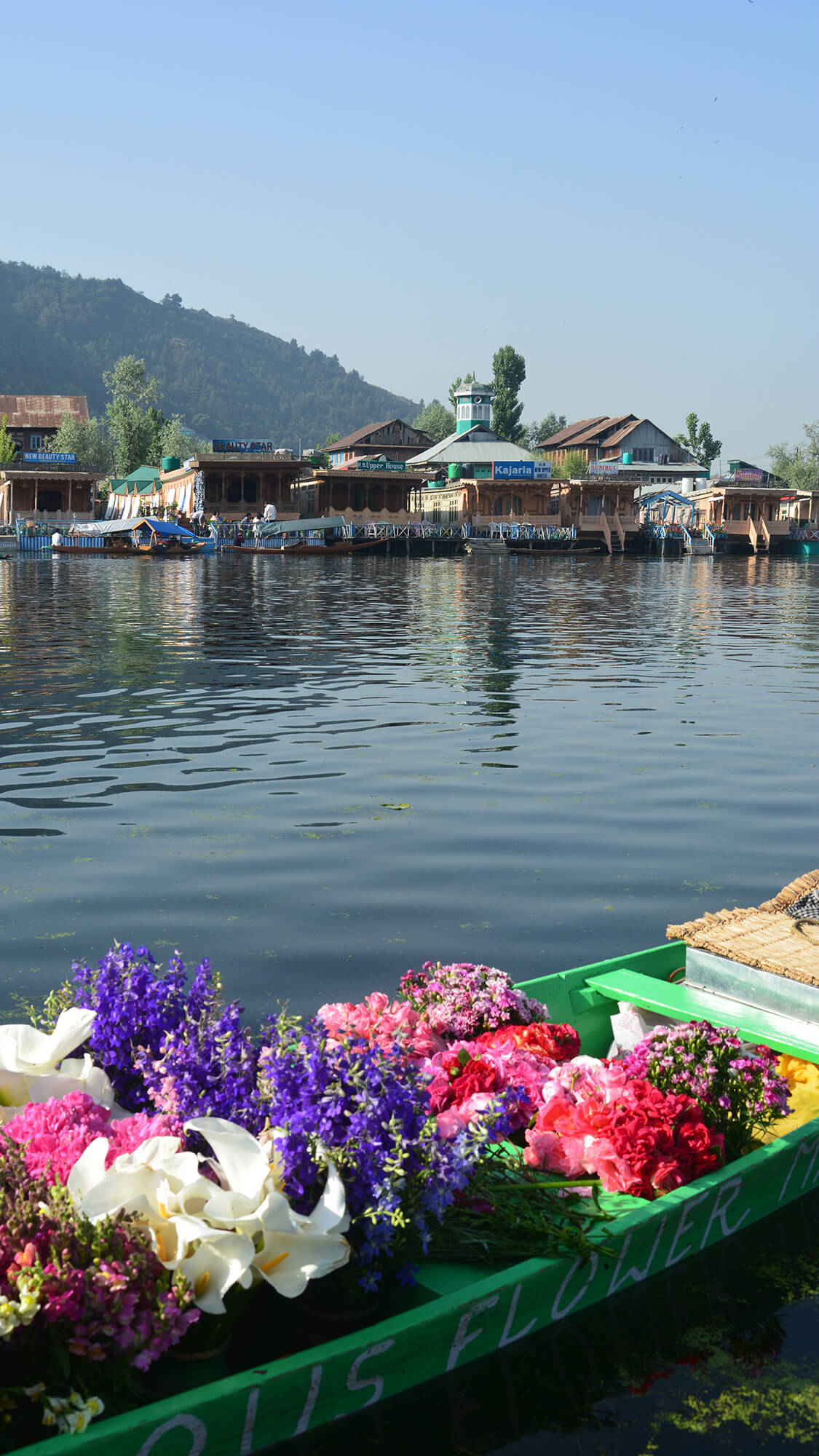
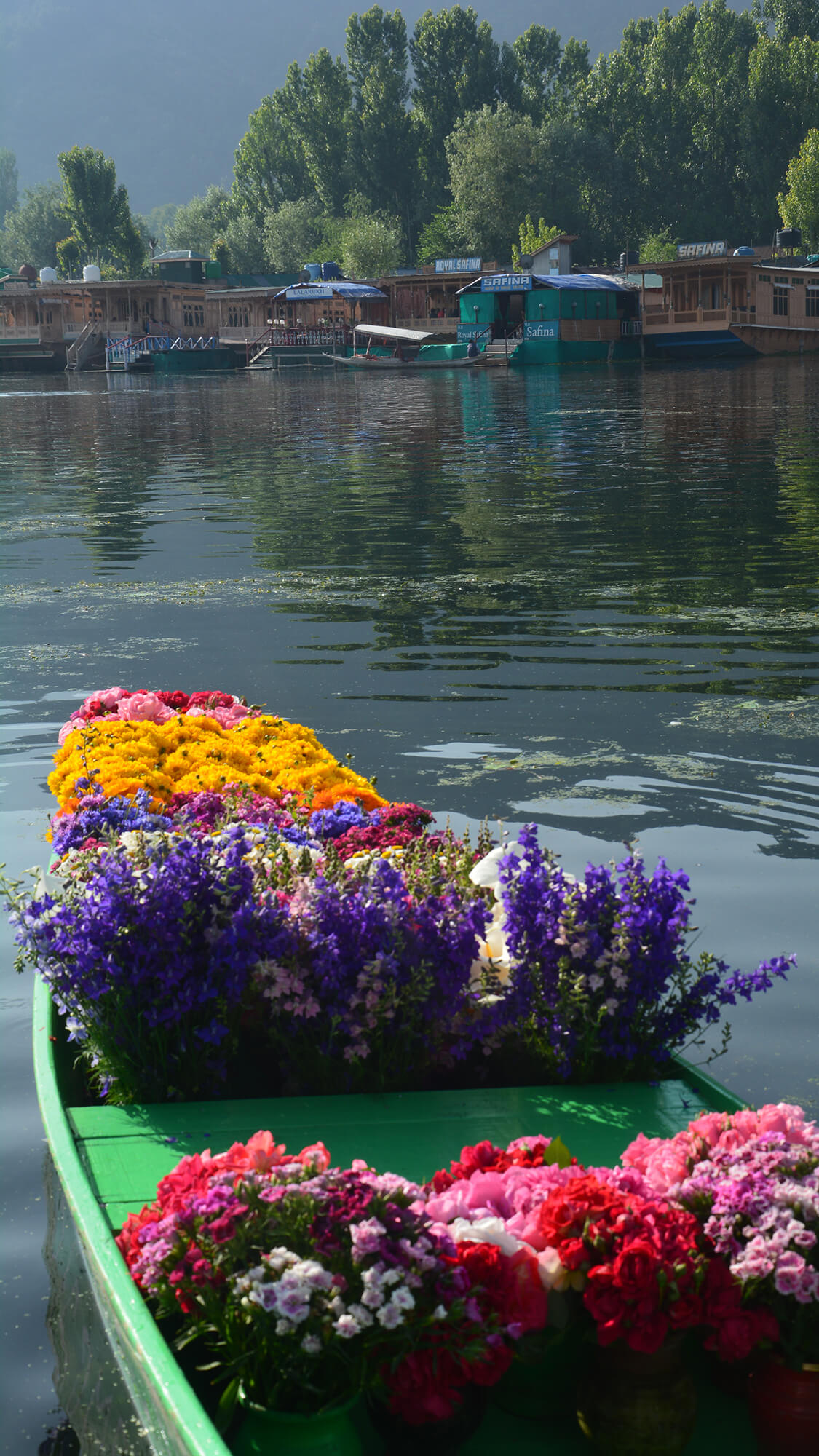
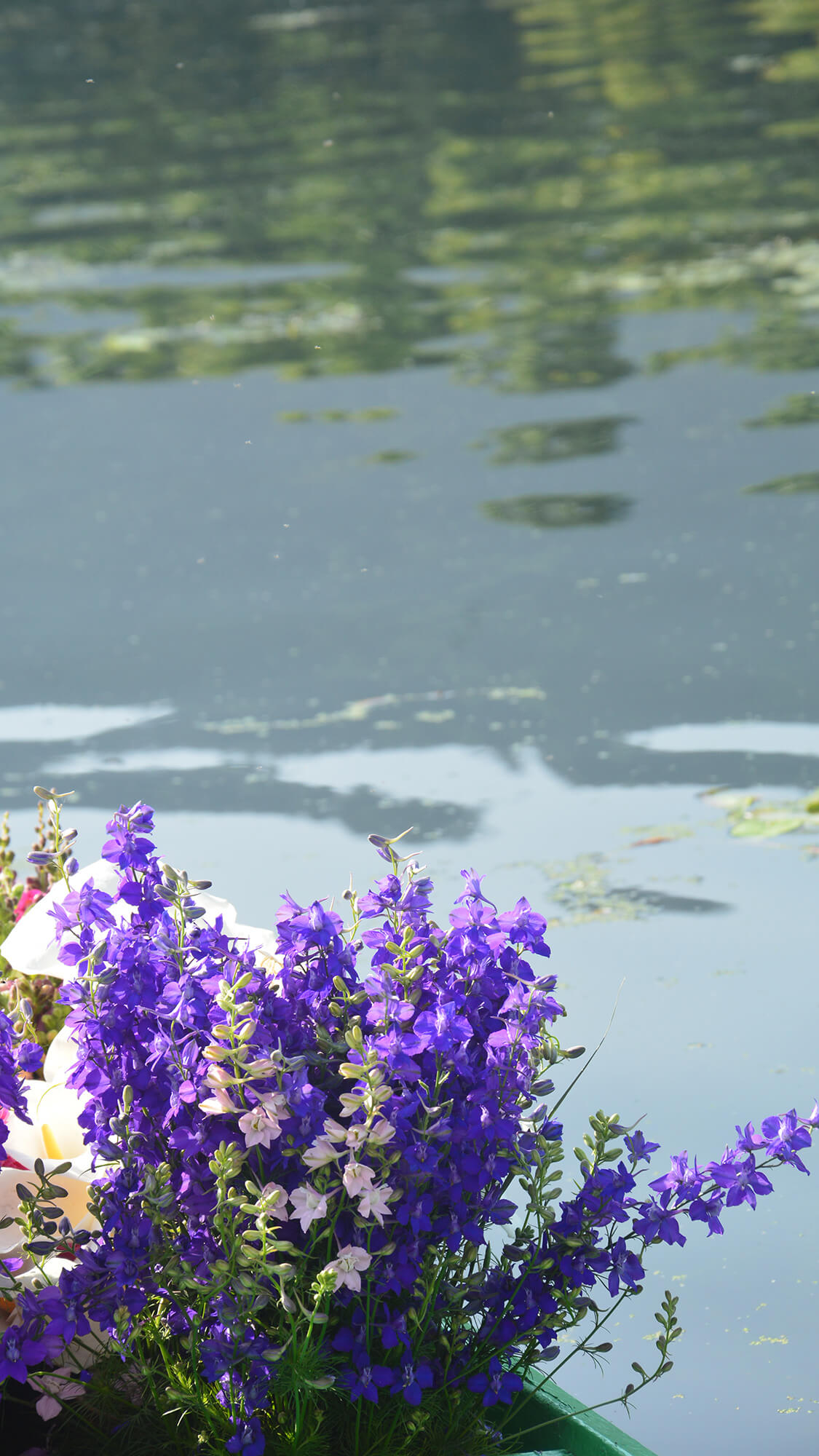
The next morning, we woke up to shikaras selling bunches of some of the most beautiful flowers I had ever seen. We bought these, and they felt like precursors to the day ahead. We were to explore Srinagar and its Mughal Gardens today.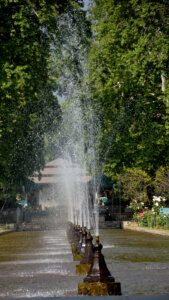
Kashmir had been recognised as one of the most beautiful places on earth long before the Mughals came to India. It was an ancient learning centre evolving from Vedic roots, flourishing during the Buddhist period, and later witnessing the rise of Shaivism. Over time, its beauty attracted rulers and scholars alike, leading to rich traditions of shastras in the pre-Mughal period, and later an eclectic evolution of music and architecture with Persian influence during the Mughal era. The Mughal Gardens of Srinagar emerged from this layered cultural soil.
The Mughals took the concept of the enclosed paradise garden—and adopted it here. In Srinagar, they allowed the mountains to form the perimeter, effectively making the garden a part of the larger landscape.
Chashme Shahi and Nishat Bagh
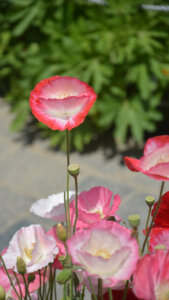
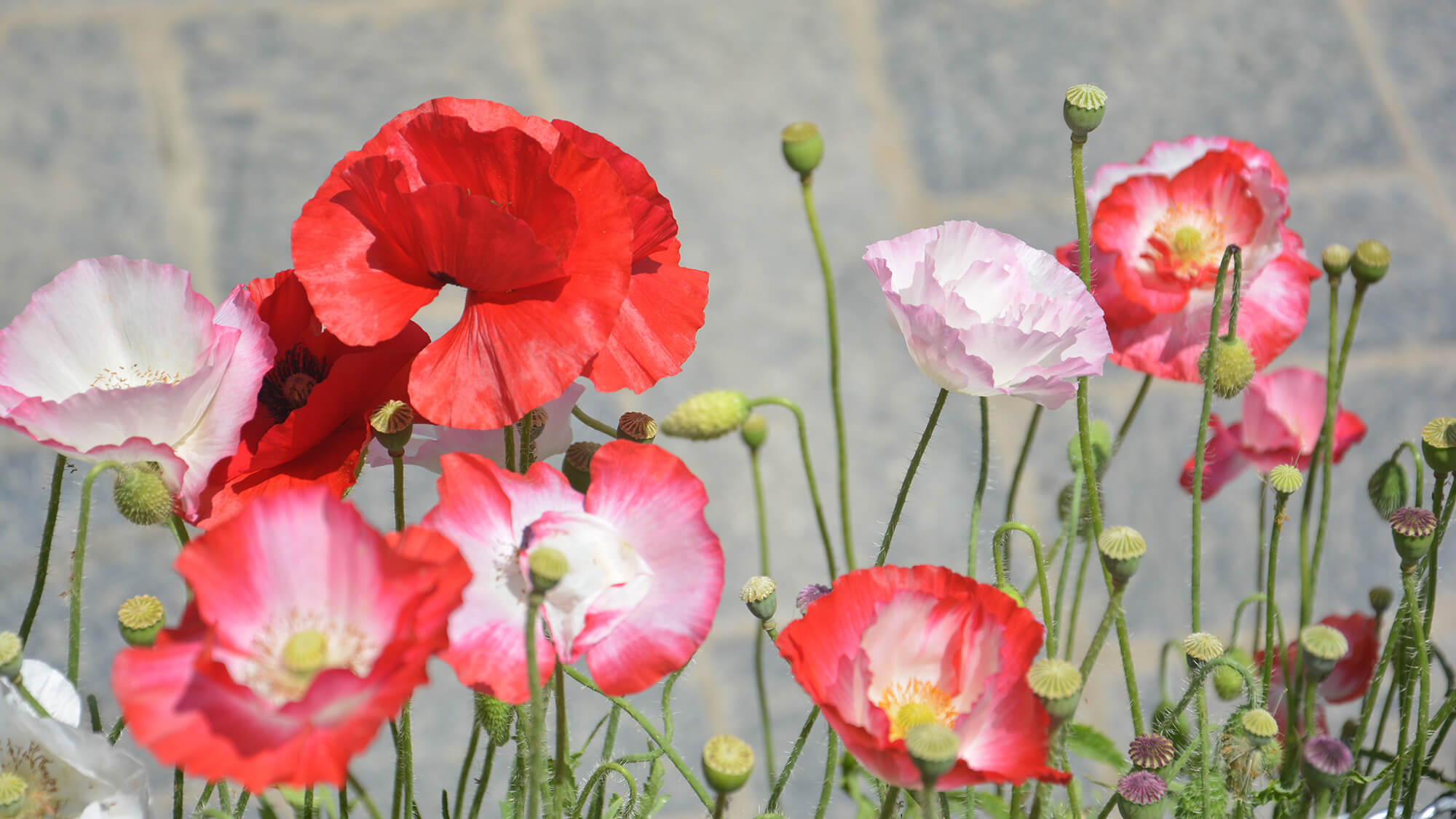
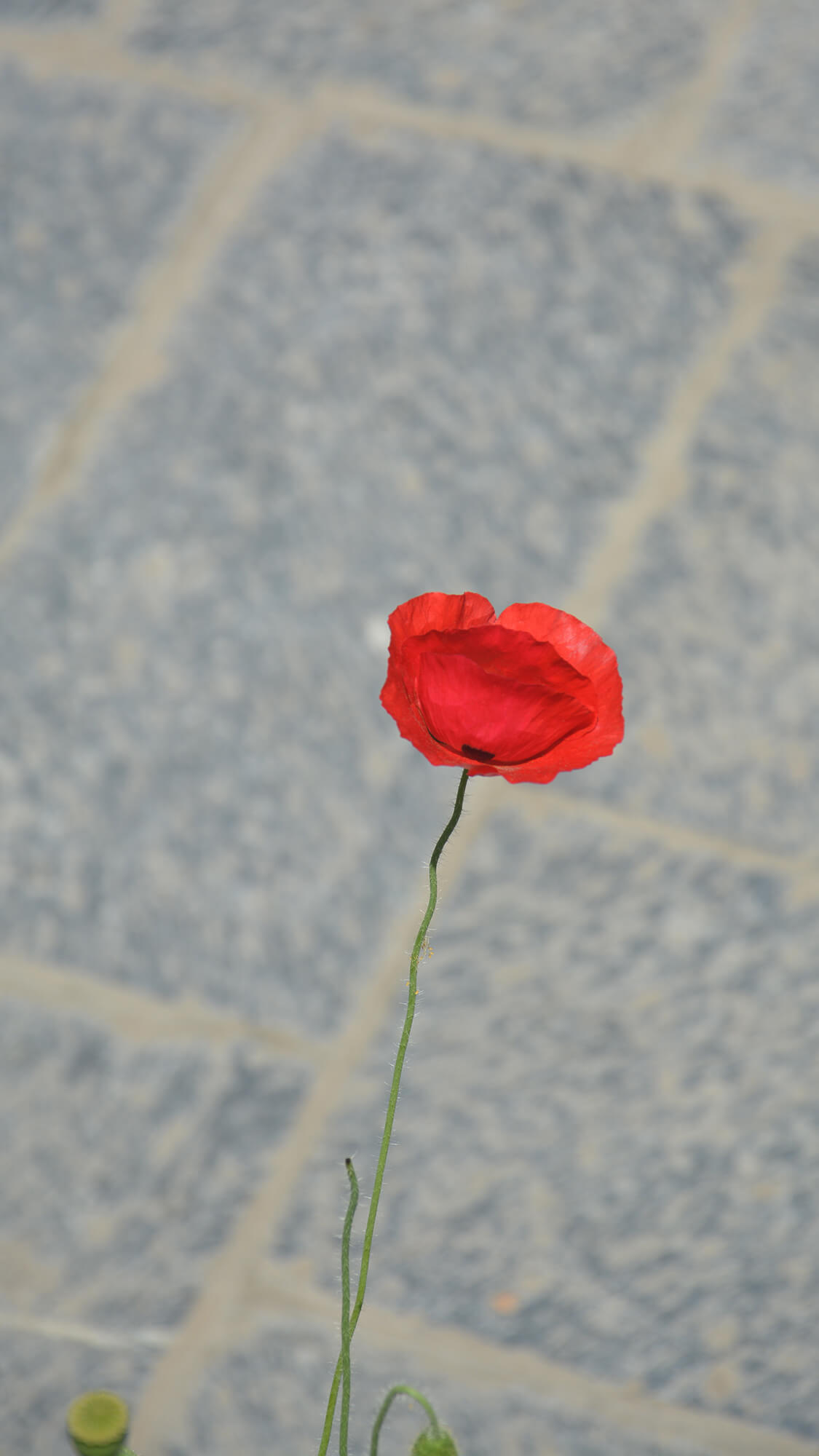
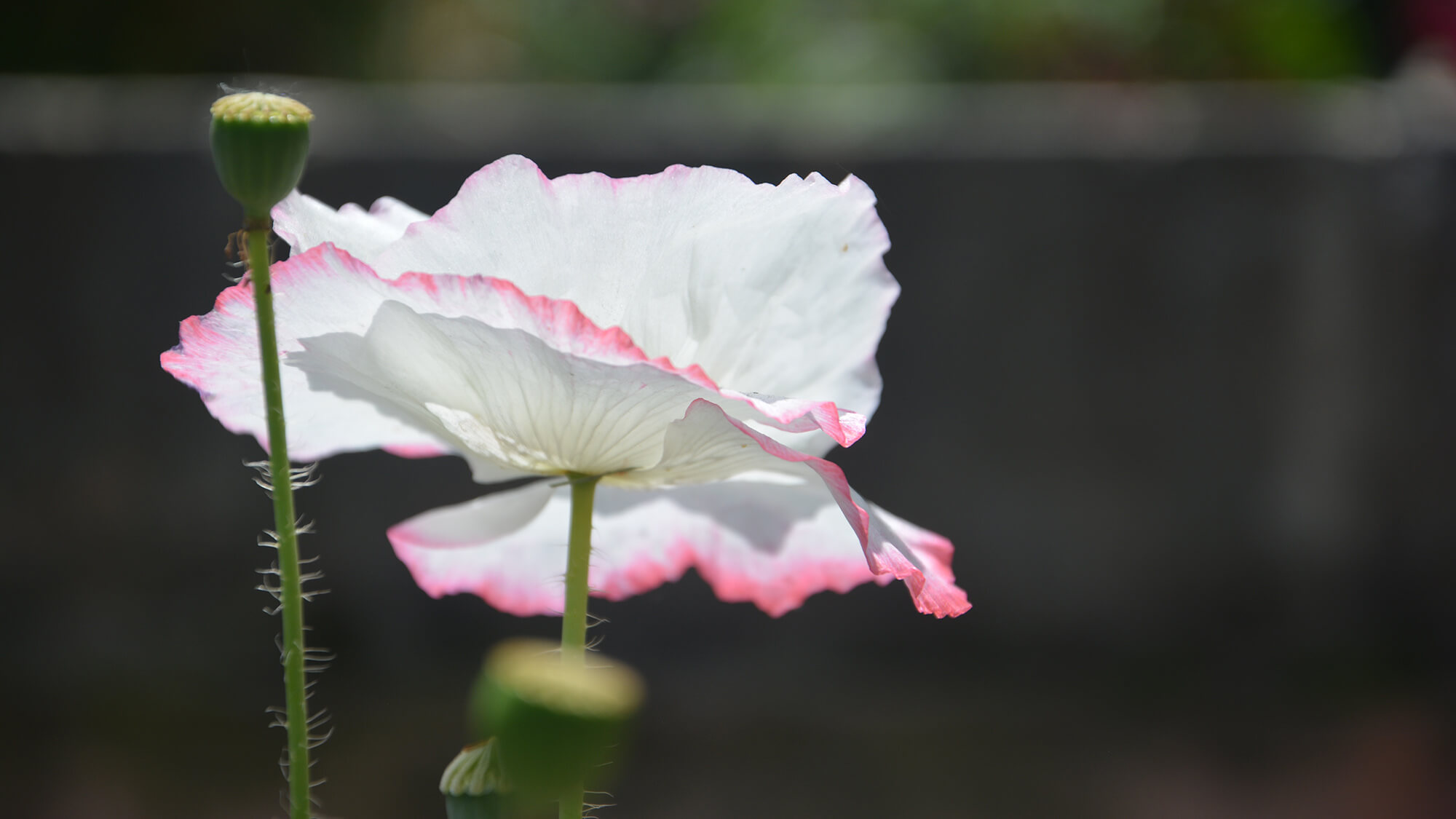
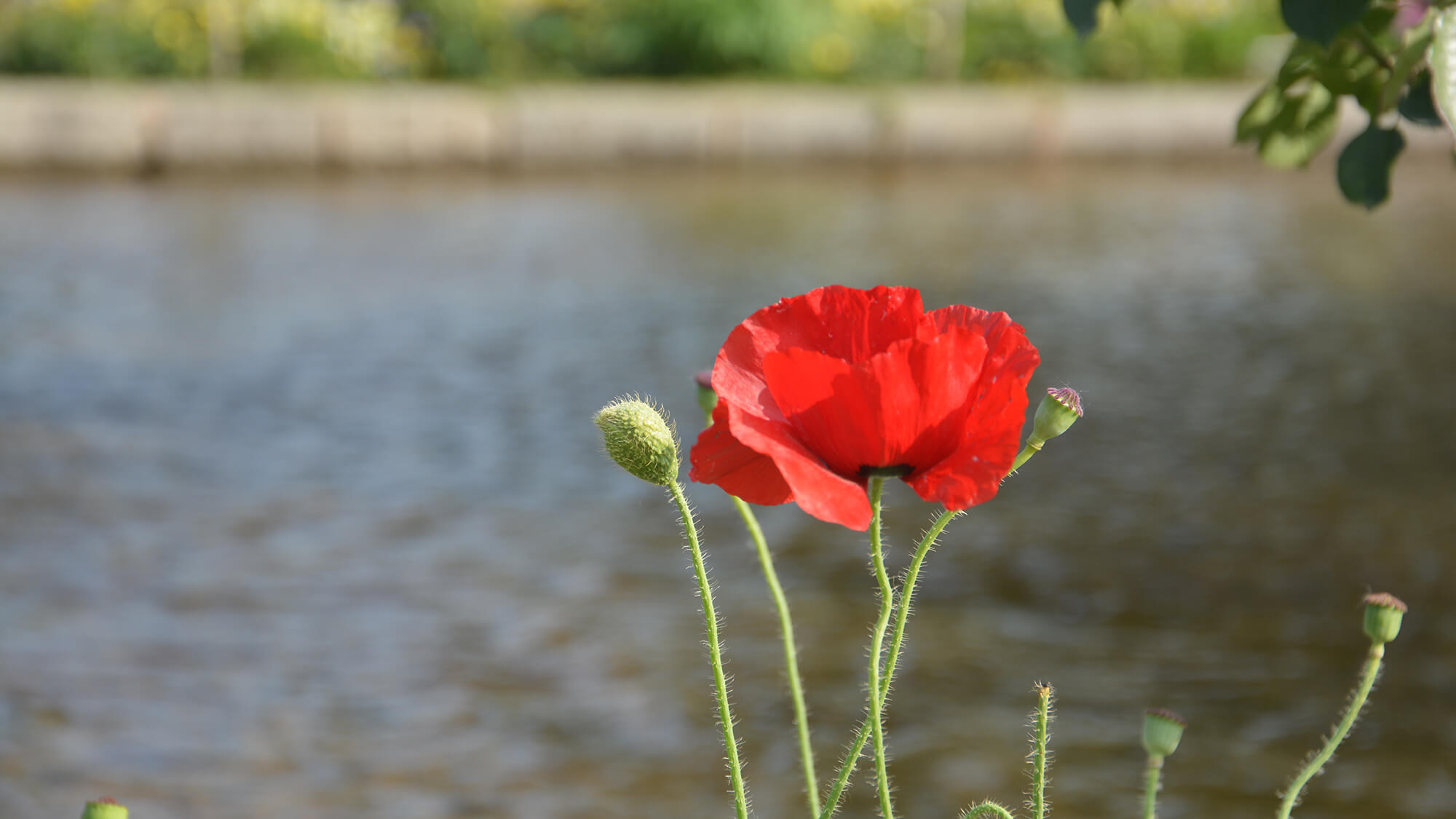
Chashme Shahi Bagh was the first we visited. As the name suggests, this garden is developed on a natural slope, around a natural spring which is said to have healing qualities. With its beautifully laid-out terraces and paths, this one has amazing flowers in its gardens. I spotted some of the most beautiful poppy flowers here.
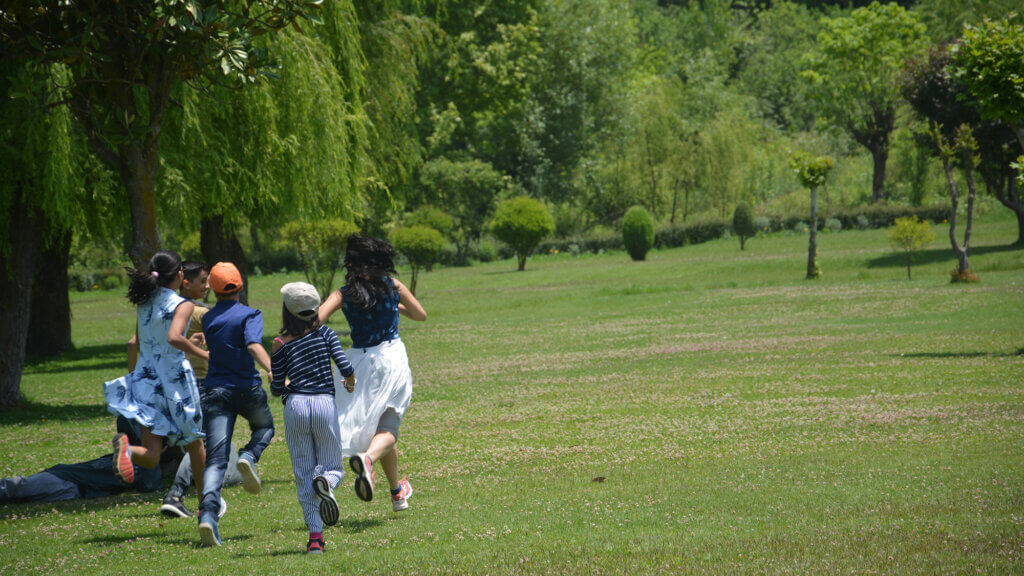
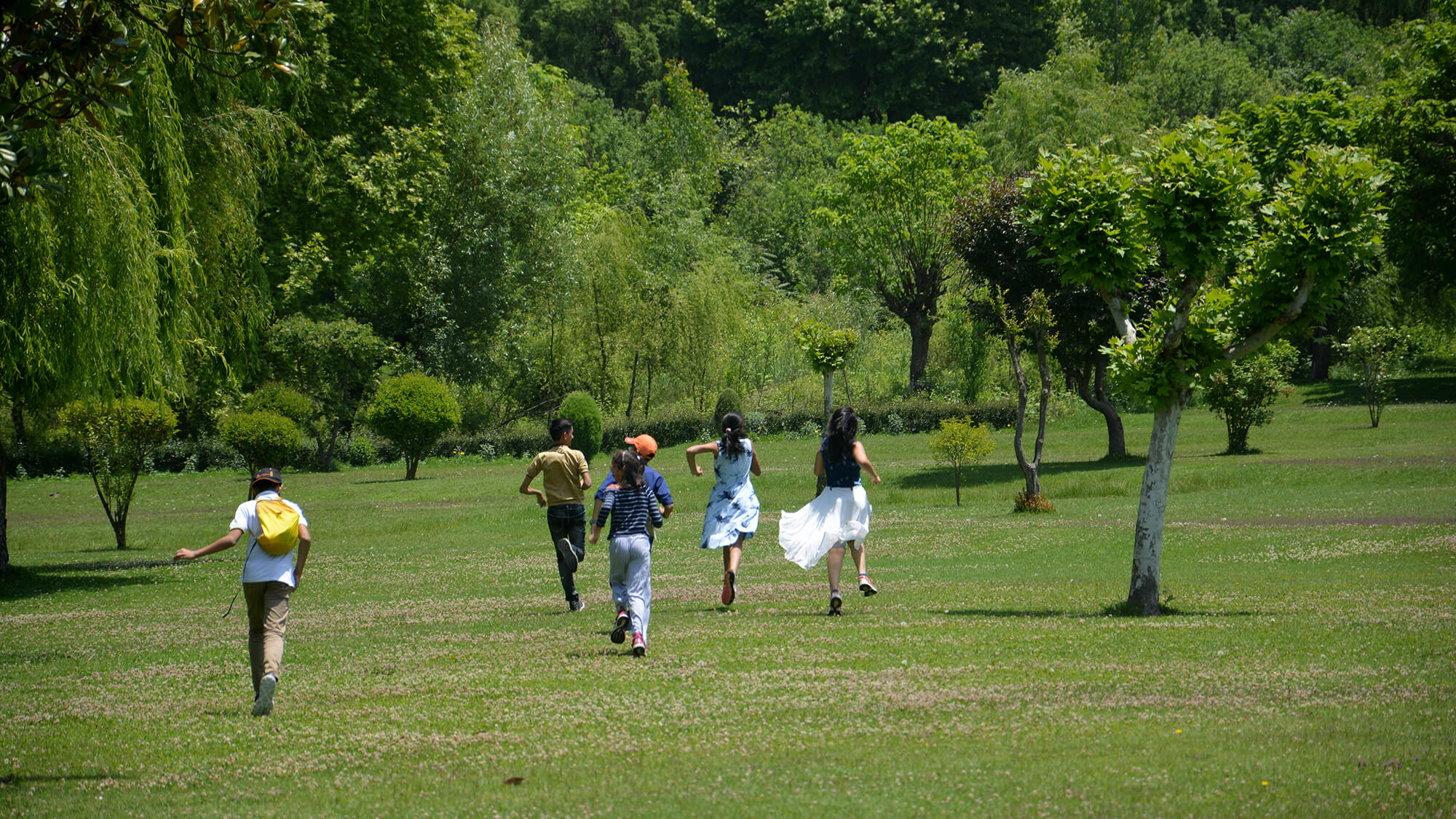
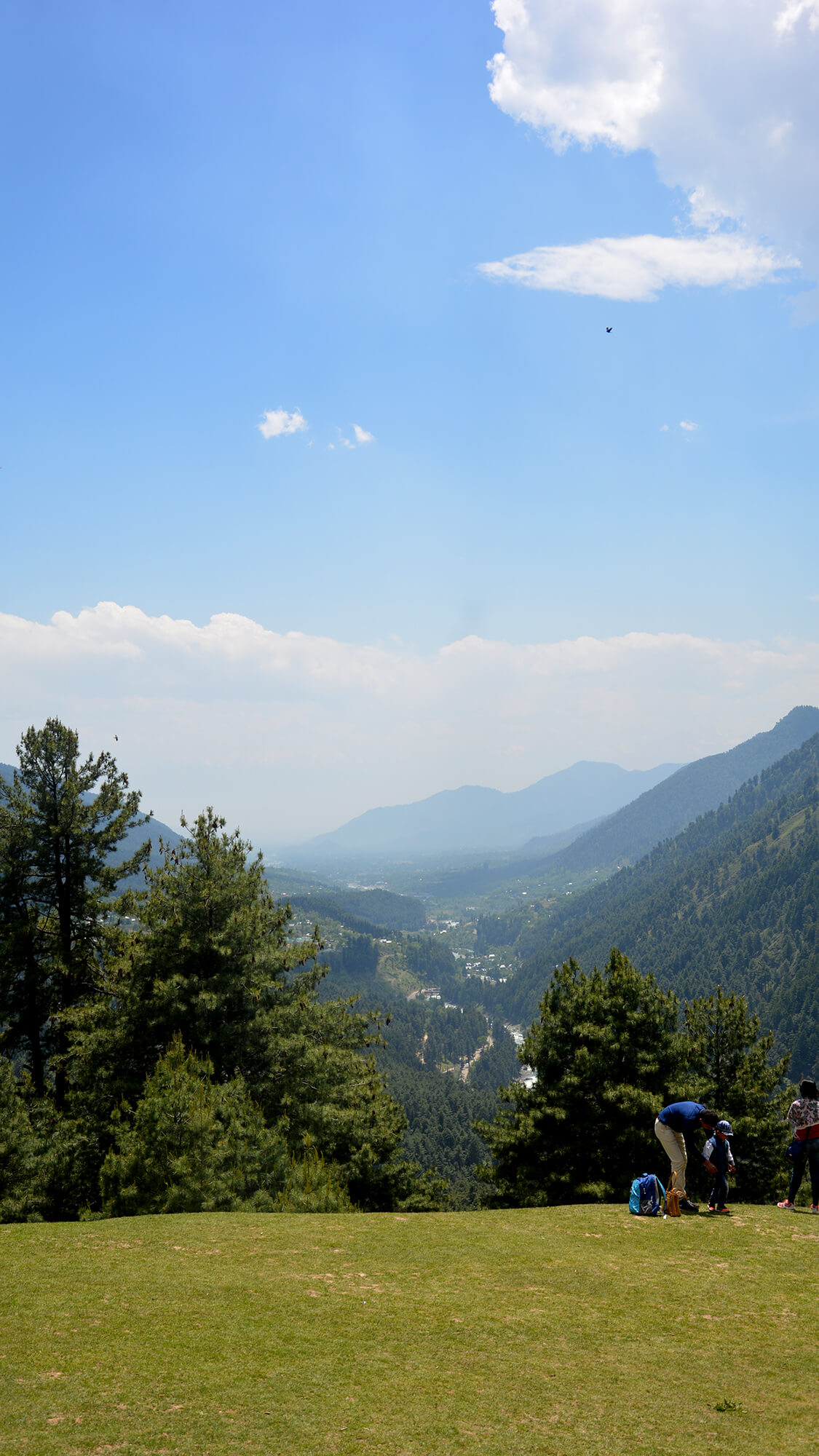
From there, we moved to the Botanical Garden at the foothills, with large expansive green meadows surrounded by chinar and pine trees. The excited children ran gleefully on the meadow,racing to the base of the mountain. With sixteen of us together, a joyful mood was set for exploring the next garden—the magnificent Nishat Bagh.
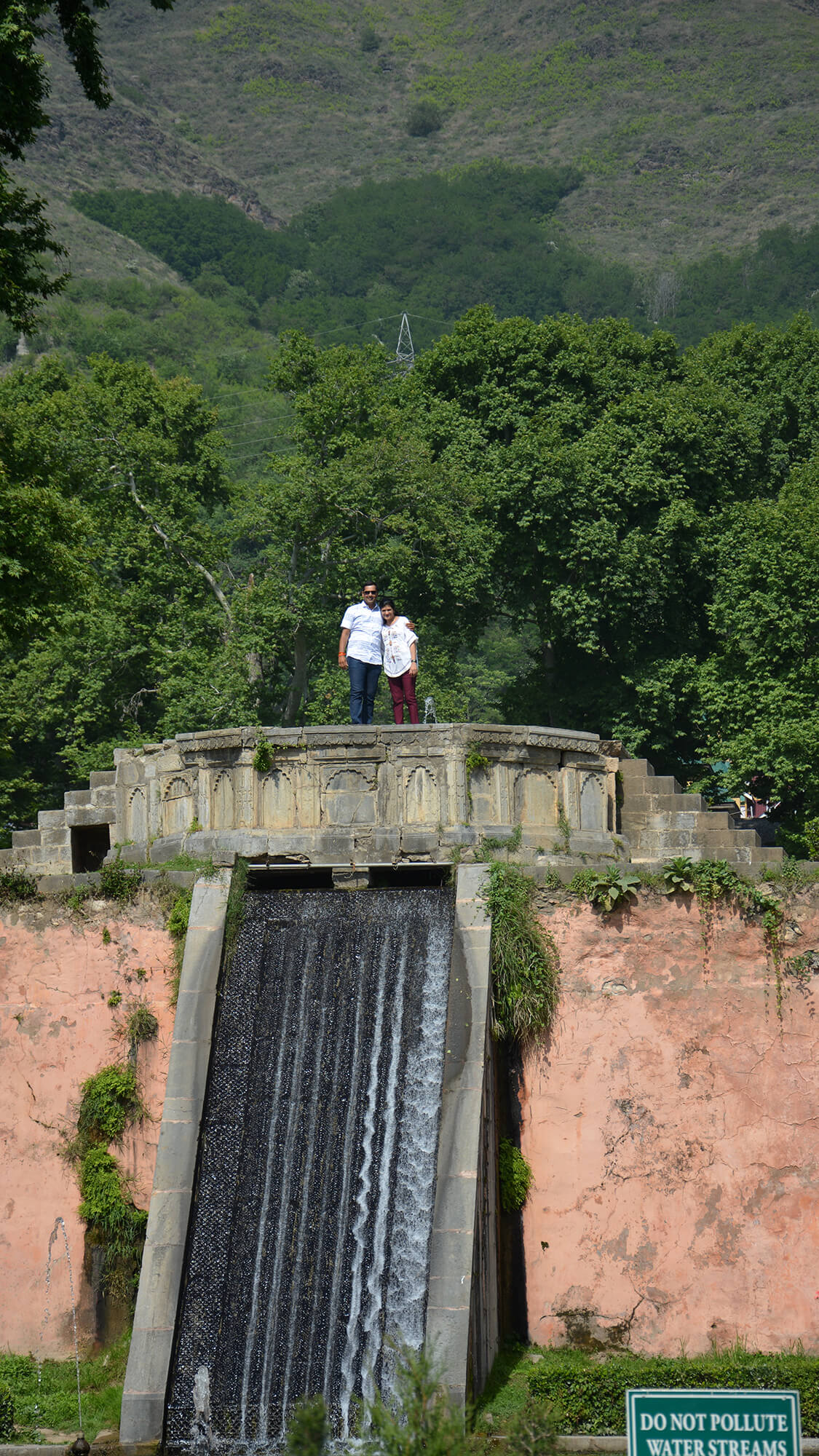
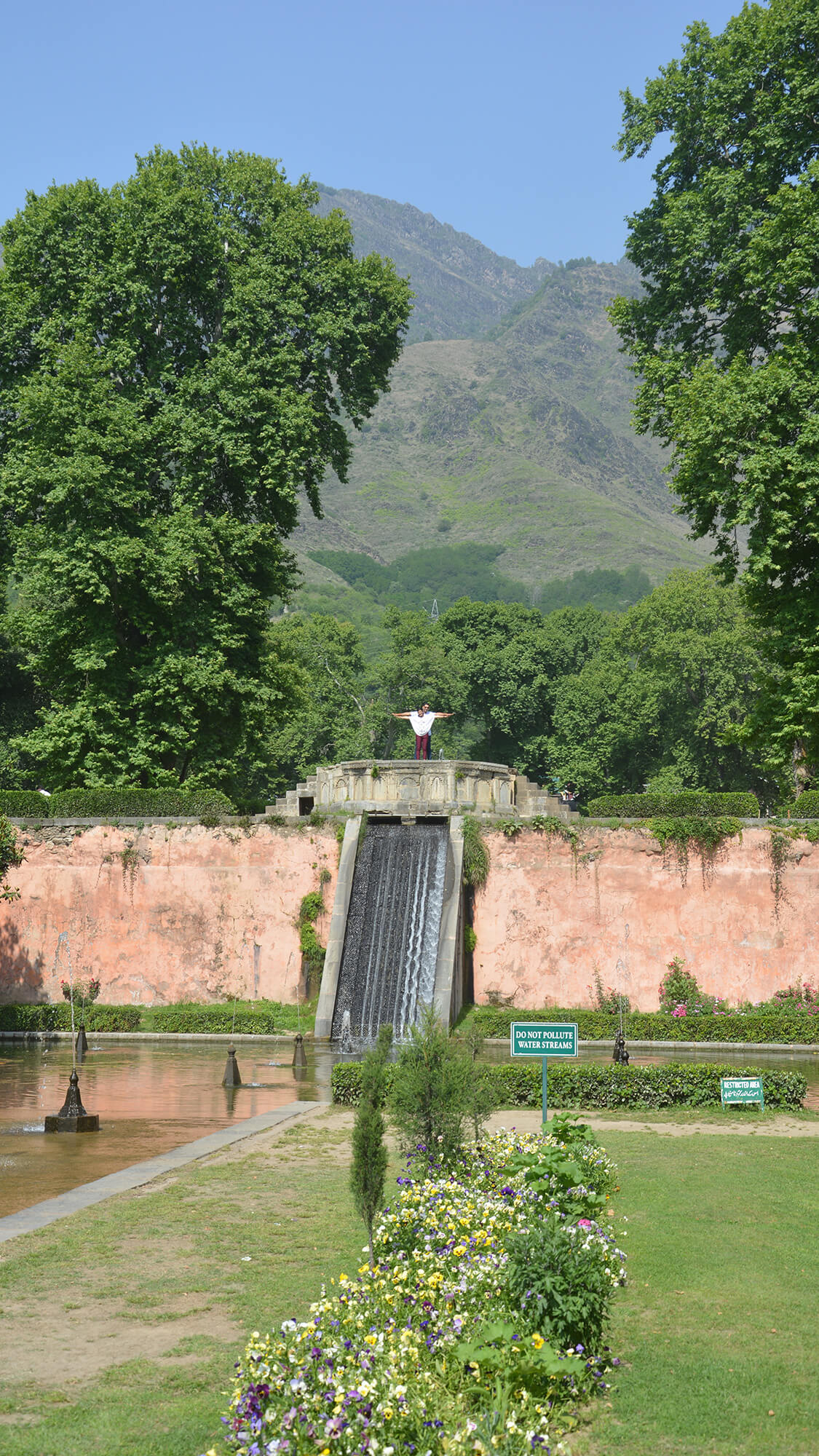
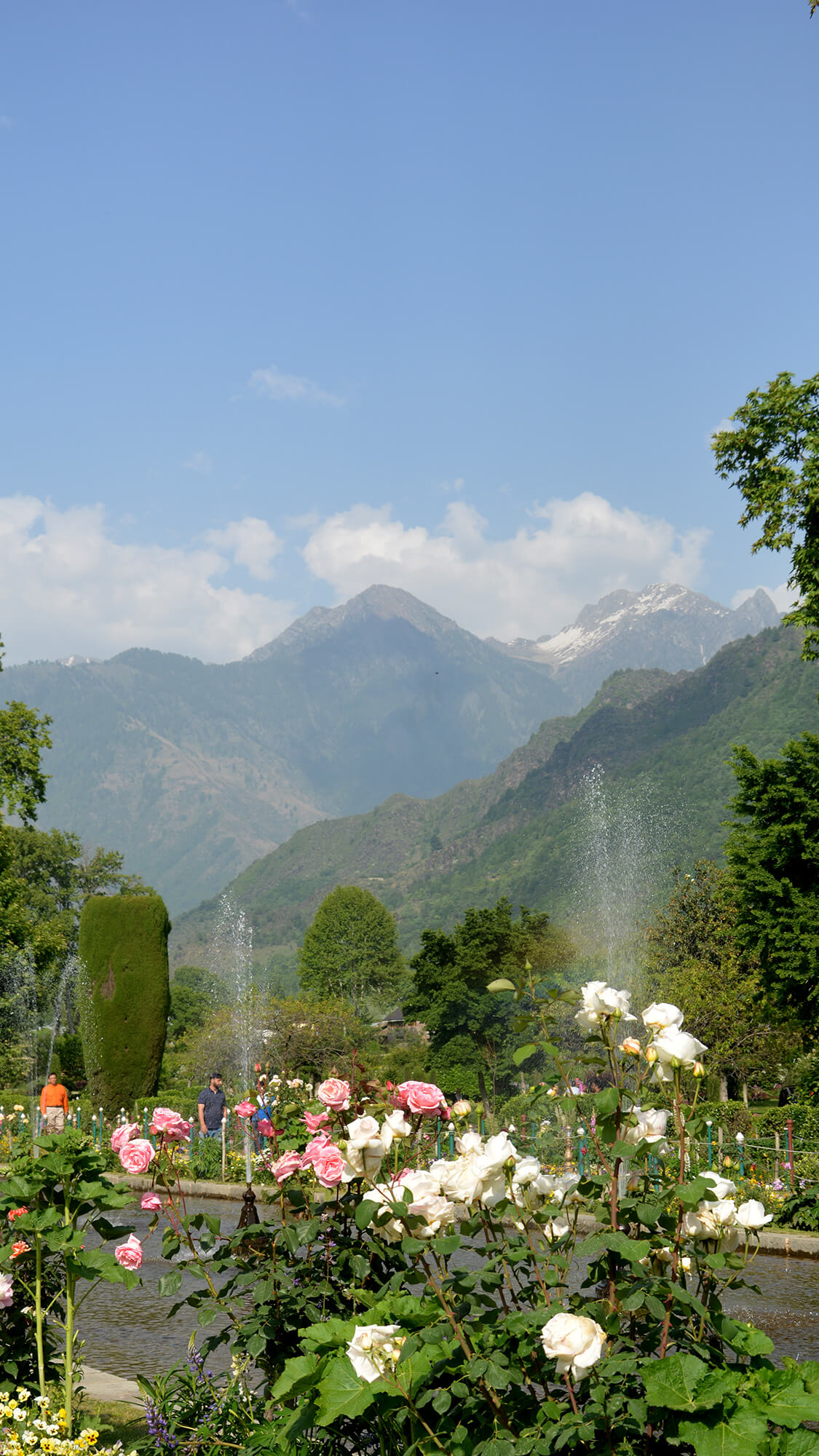
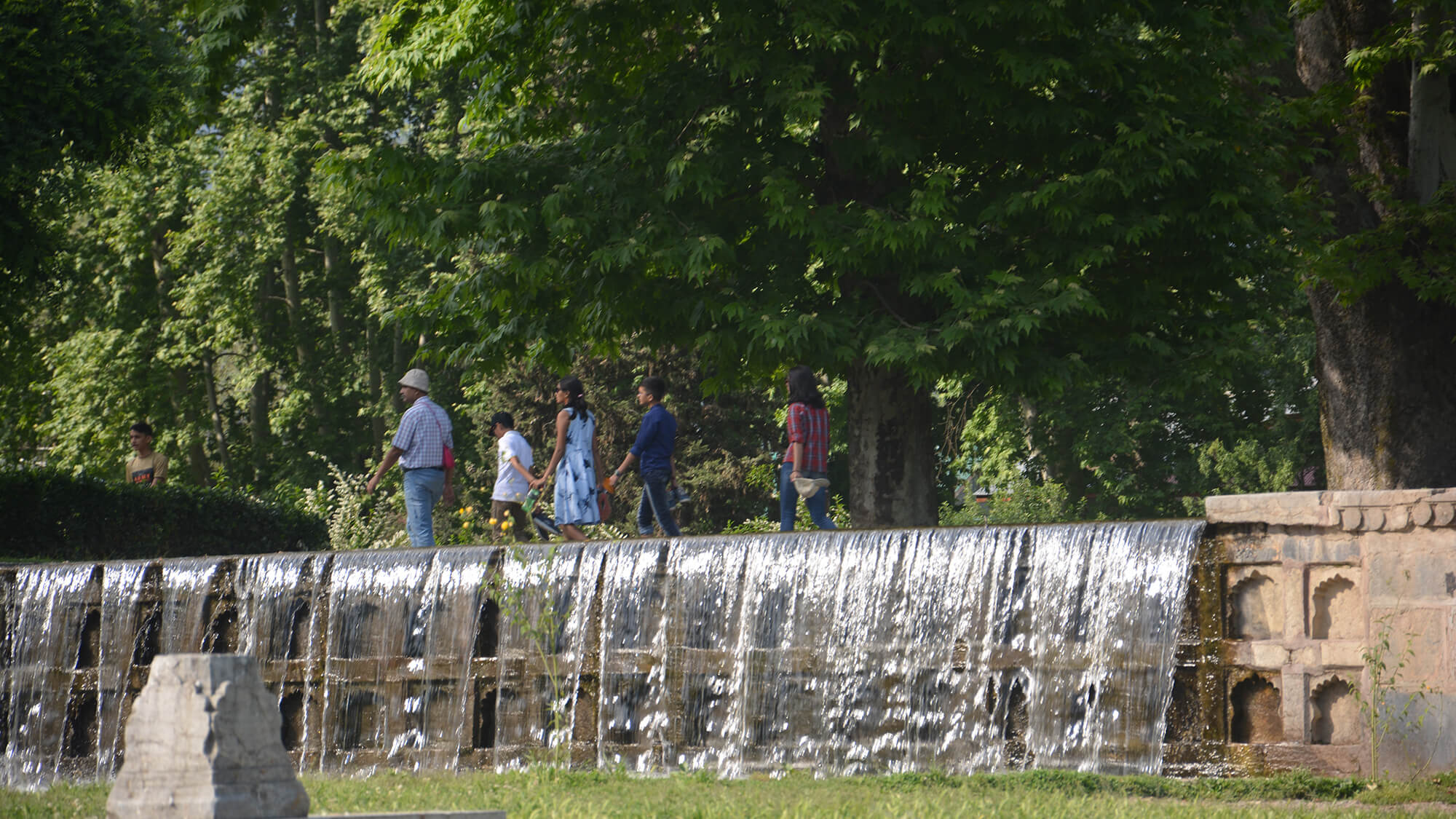
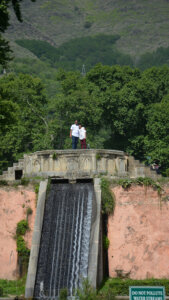 Nishat Bagh lies on the slope of the Zabarwan mountain range and descends gently towards Dal Lake. Laid out in the 17th century, this garden is exceptional in its setting and one of the finest Mughal Gardens in Kashmir. We encountered a series of terraces as we entered, each framed by mountains with the sky as a backdrop. What makes this place truly amazing is how water is leveraged to create a beautiful transition from one terrace to another. It falls, it cascades, it forms a chadar, creating a rhythmic pattern while traversing from one level to the next.
The carvings on these stone chutes—the chadars— are a feat of acoustic engineering, designed to break the flow into a specific sound.
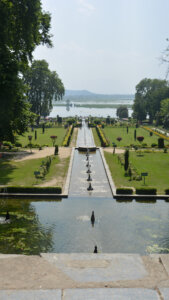 What connects the mountains, the terraces, and Dal Lake is the central flowing water channel, punctuated by fountains. The garden offers panoramic views of the lake from each terrace. The water channel here is a visual and symbolic connection between the majestic mountains and the expansive lake. The terraces also held other water features, accessible and inviting touch and play.
Spread over acres of land, Nishat Bagh is a true example of a pleasure garden meant as a private space for emperors. The built form here is minimal, and the spatial division is largely visual.
Srinagar was a summer retreat for the Mughal emperors, and they moulded the environs just enough to make them suitable for the purpose without overpowering nature. The Mughal Gardens here respond to the land rather than dominate it.
Shalimar Bagh: Pleasure, Privacy and Poetry
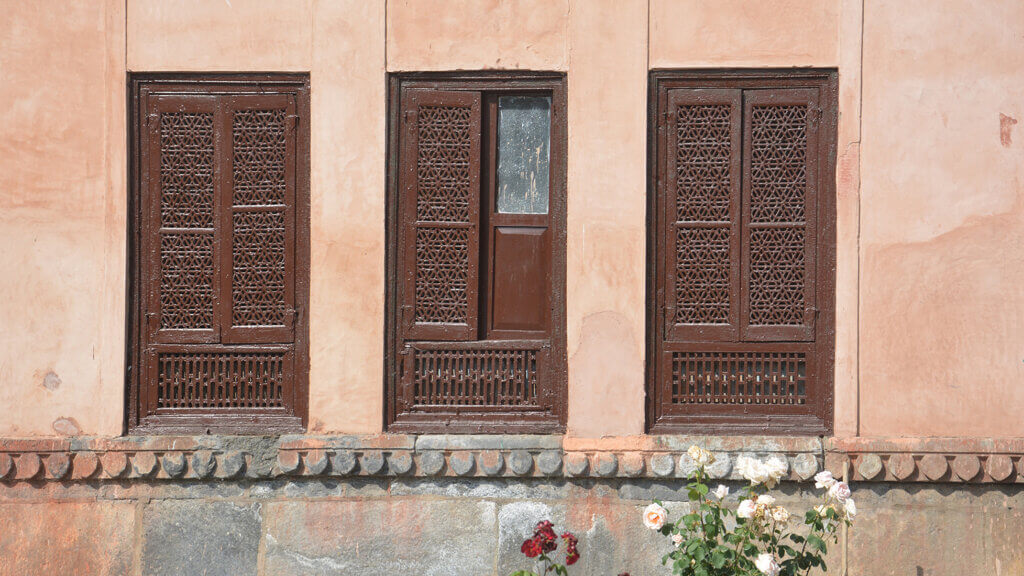 Next, we went to Shalimar Bagh, again located near Dal Lake. Gardens at this site are believed to have existed since the 6th century and have evolved continuously. What we see today was commissioned by Emperor Jehangir and supervised by his son Prince Khurram, who later became Emperor Shah Jahan.
While monuments like the Taj Mahal and forts such as the Red Forts at Agra and Delhi were built to inspire awe and confidence in the ruler, it is here at Shalimar that the finesse and authority of the Mughals in art and architecture can truly be admired, especially in how the Mughal Gardens here negotiate pleasure, privacy and respect for the surroundings.Shalimar is the manifestation of the Eight Paradises, a divine order etched into the Kashmiri soil.
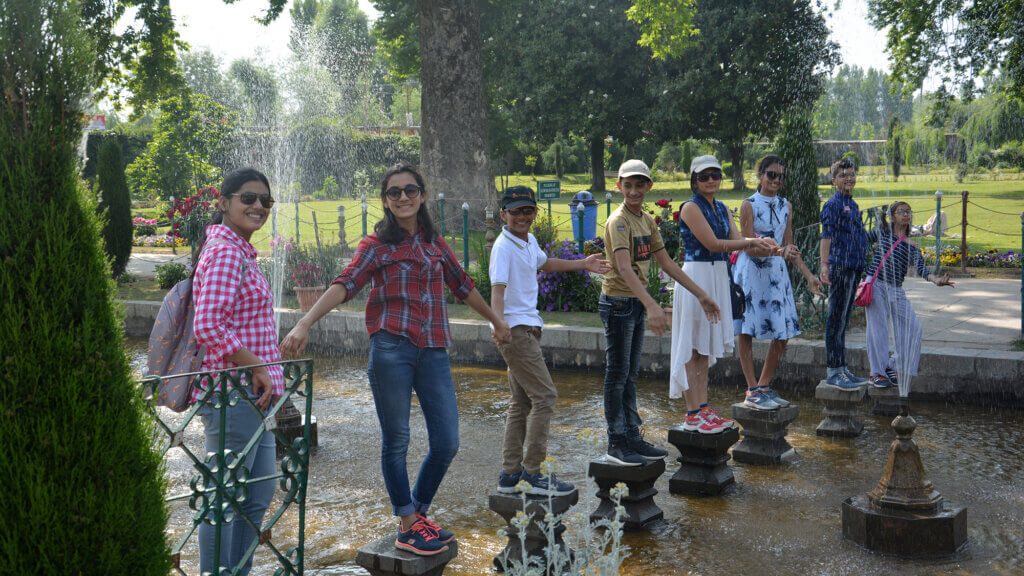 By the time we reached Shalimar, most of our group members were tired and immediately retired to the nearest lawn. I, being an architect, was as excited as could be—and so were the children who wanted to explore the environs and enjoy it with me.
Water, Geometry, and the Divine
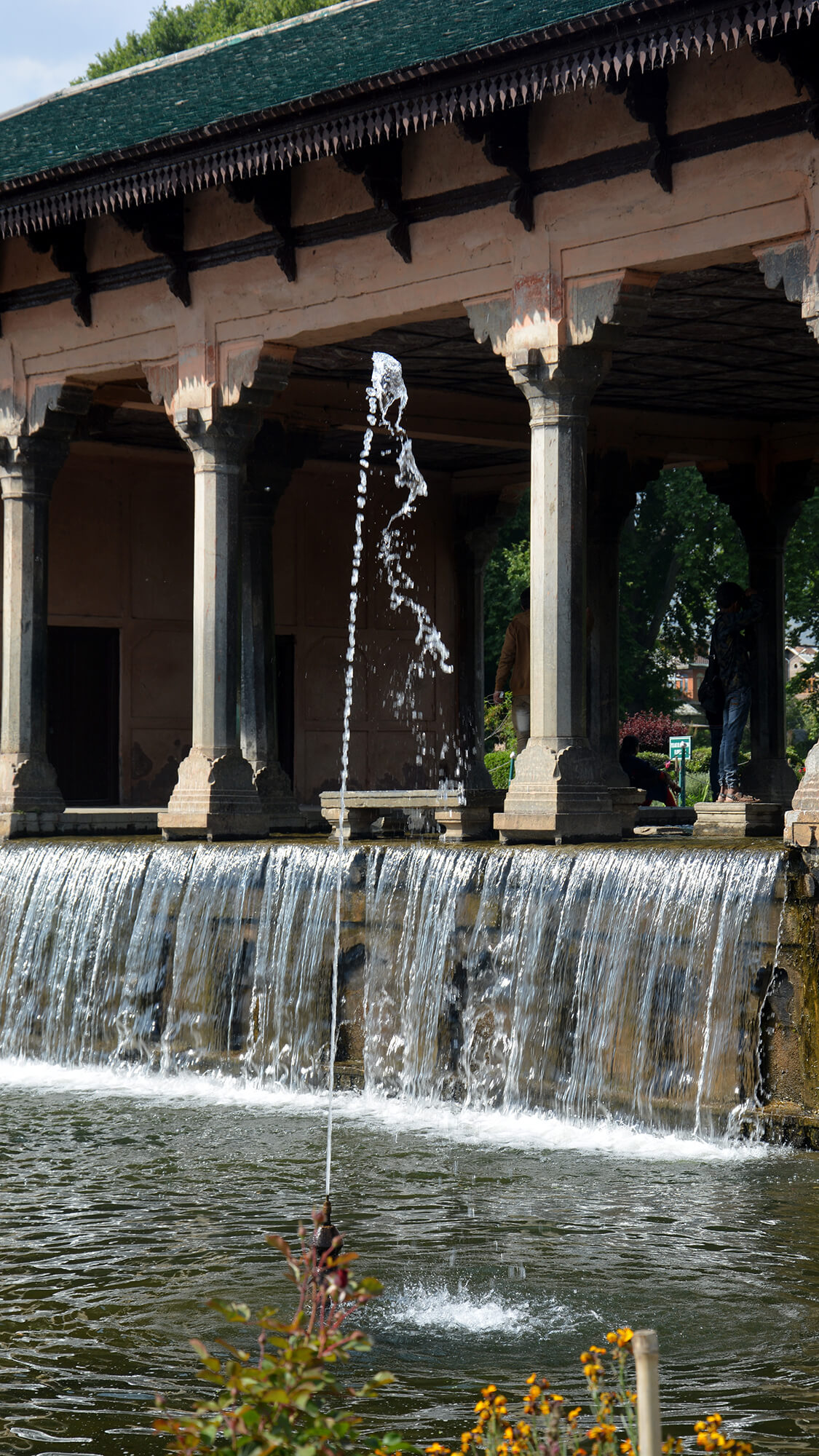
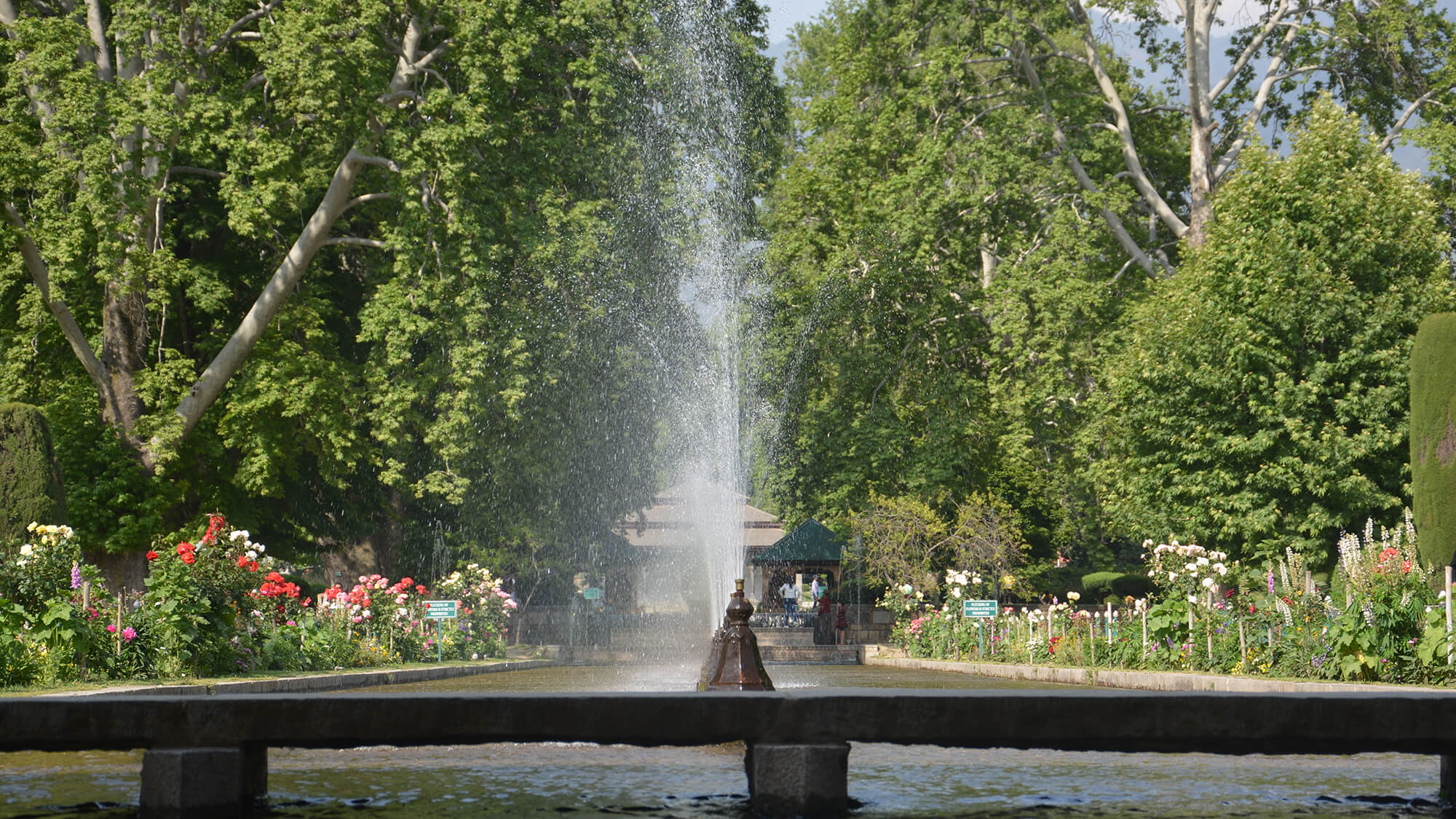
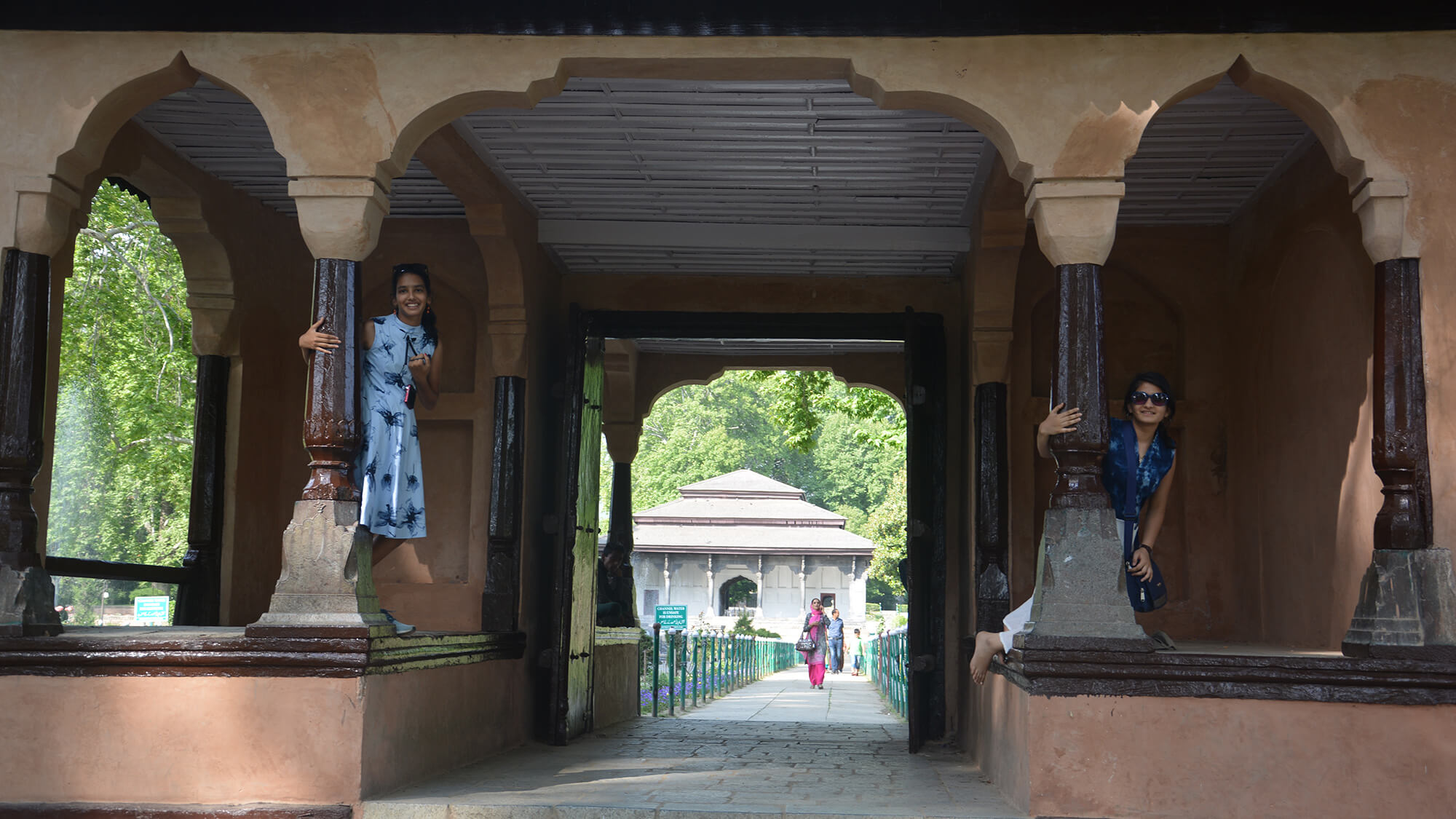
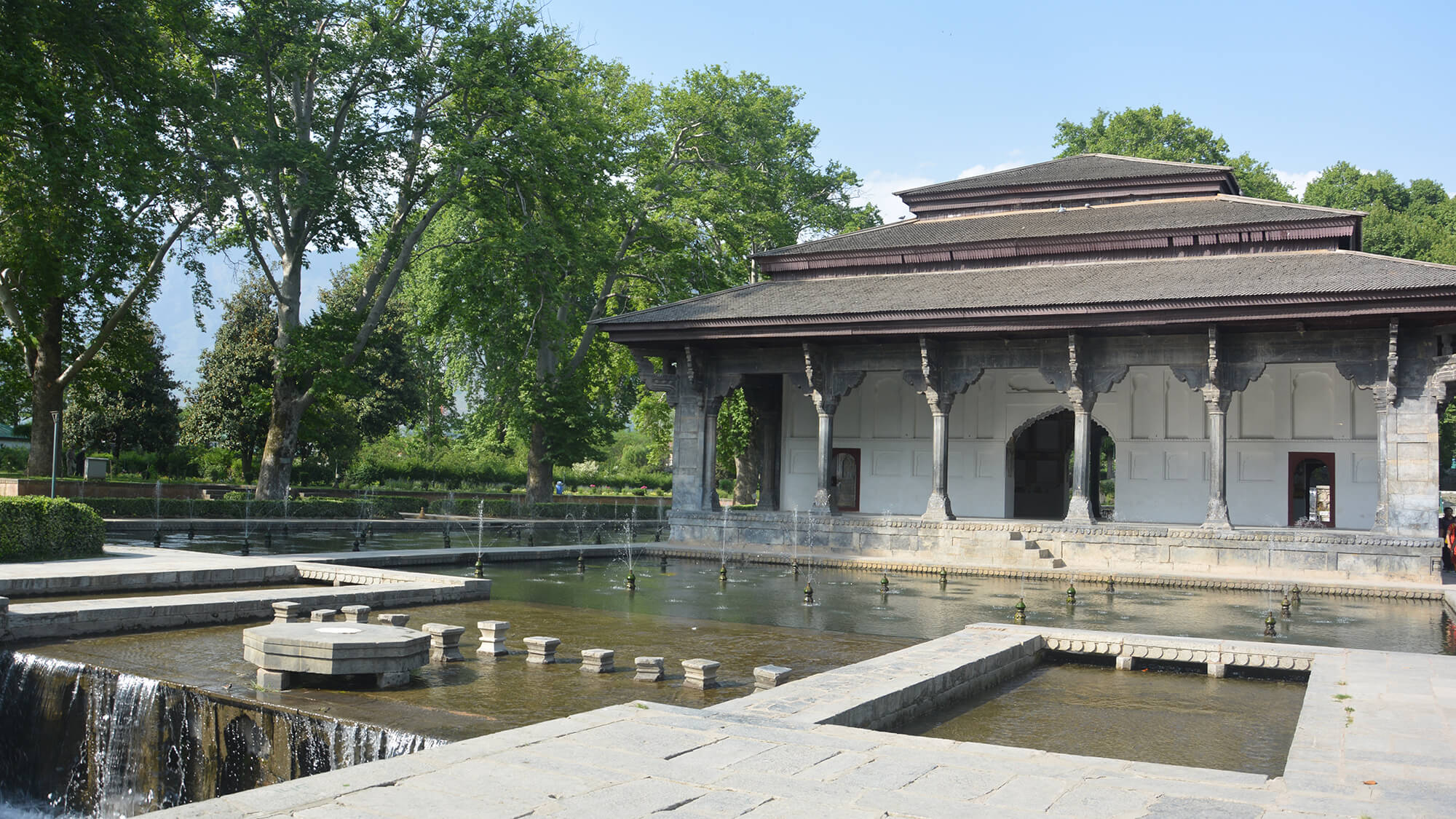
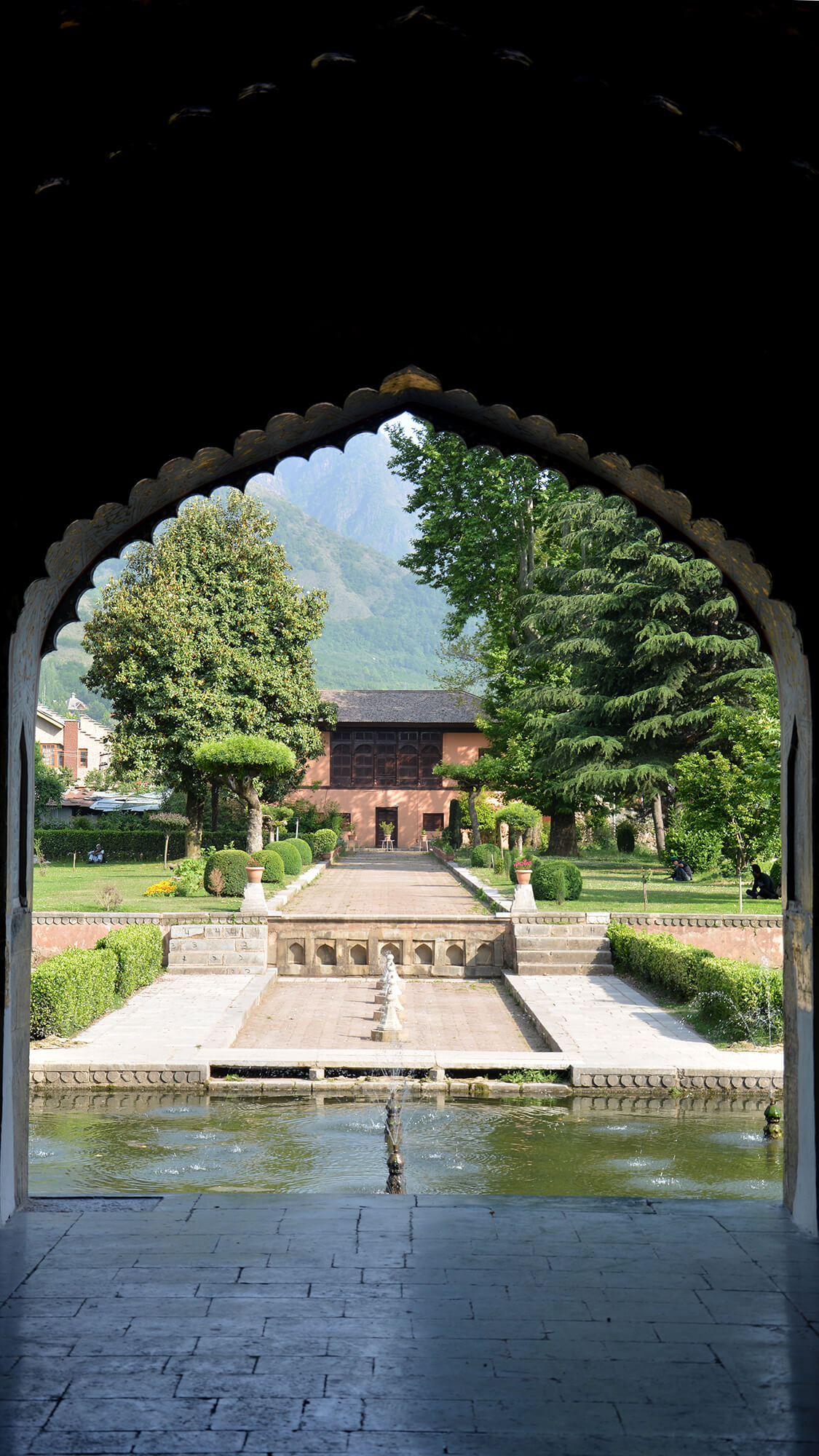
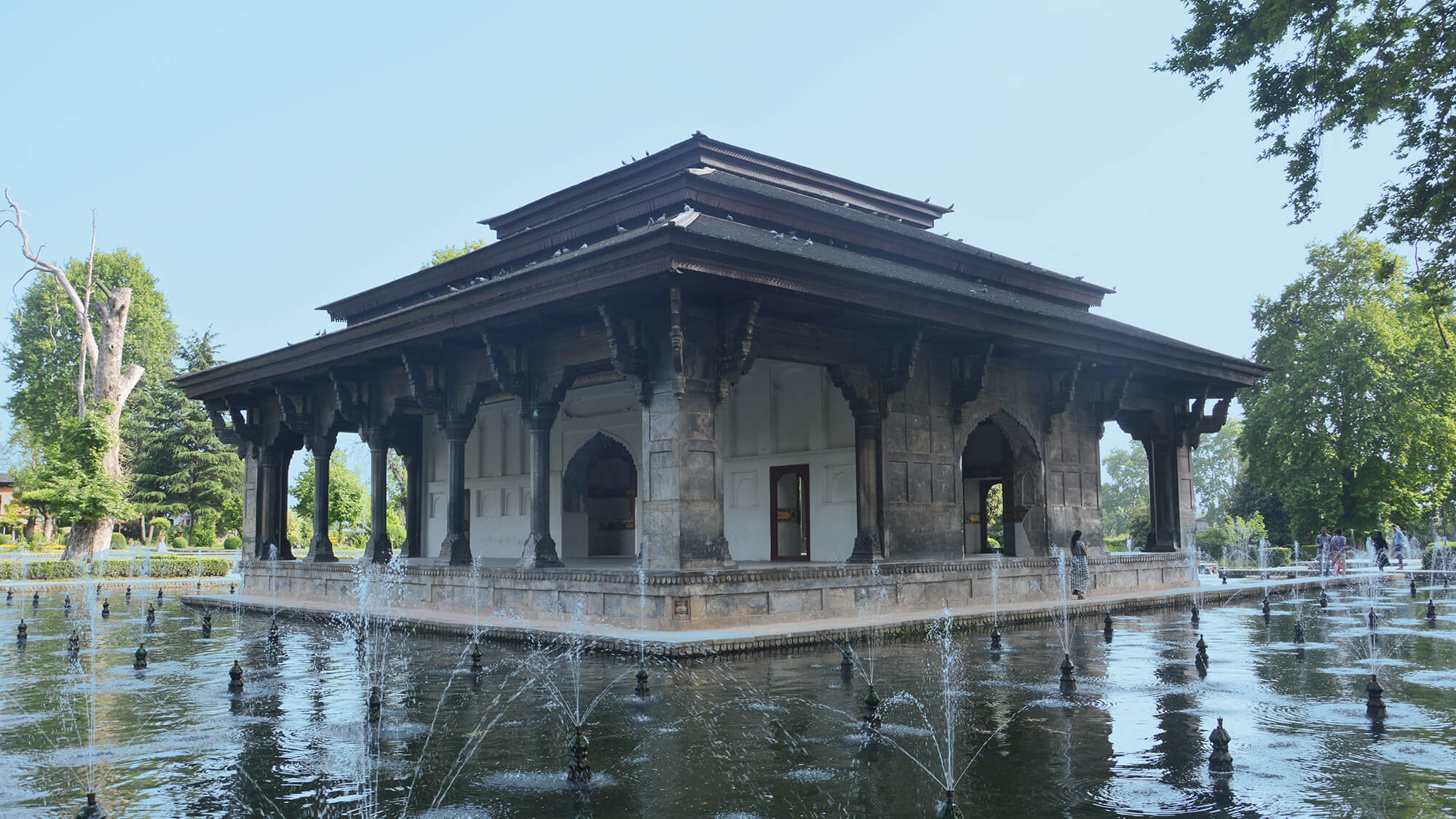
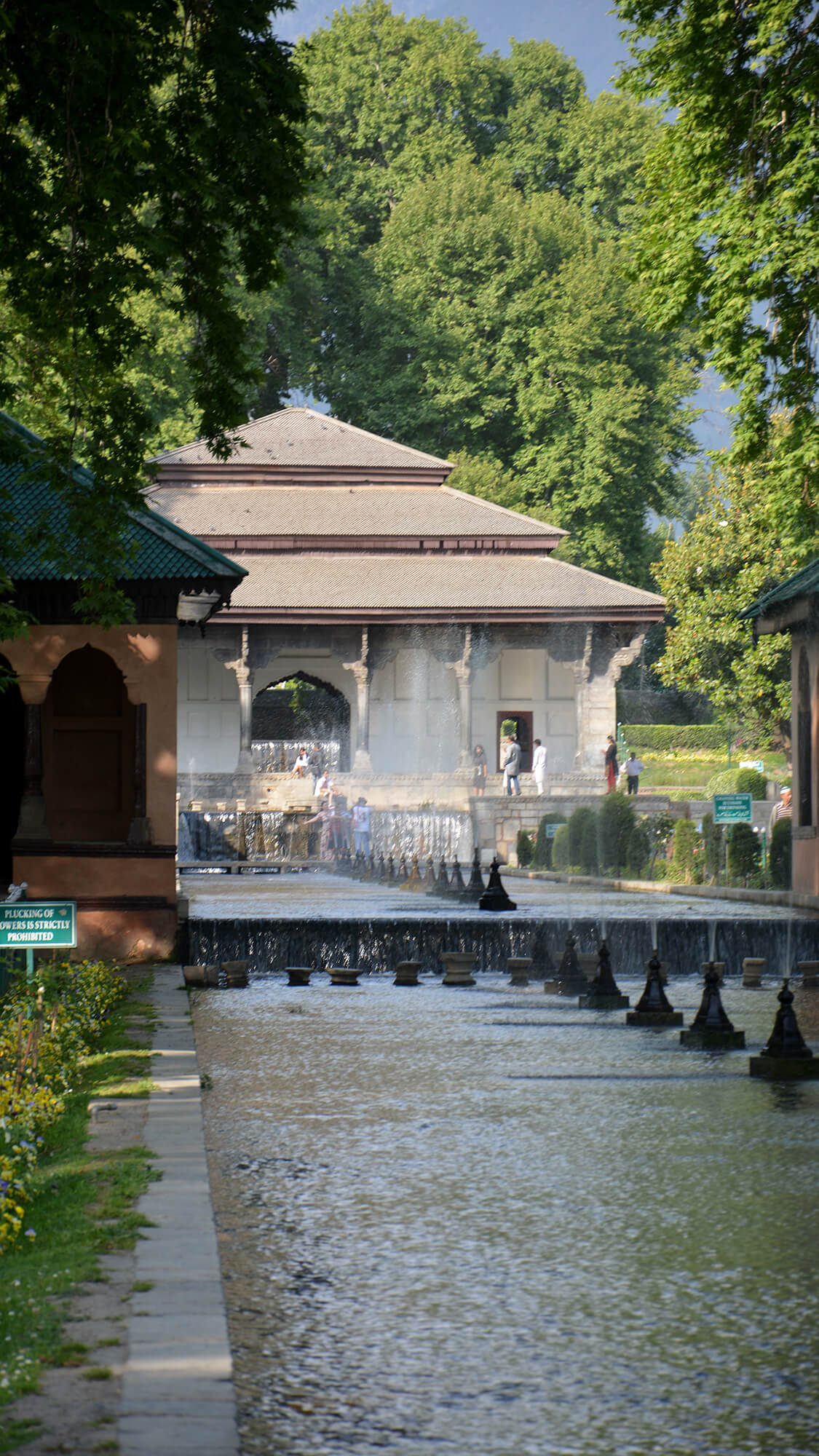
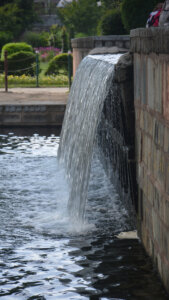 As we entered, we were greeted with a series of terraces, much like Nishat Bagh. However, while Nishat is primarily a pleasure garden, Shalimar is a garden where the emperor also held court. One terrace led to another, each section defined by pavilions. Water flowed through these pavilions before falling to the next terrace, or through the wide water channels or cascades with gates placed on either side. A series of fountains lined the central axis, leading the eye to the Black Pavilion at the back.
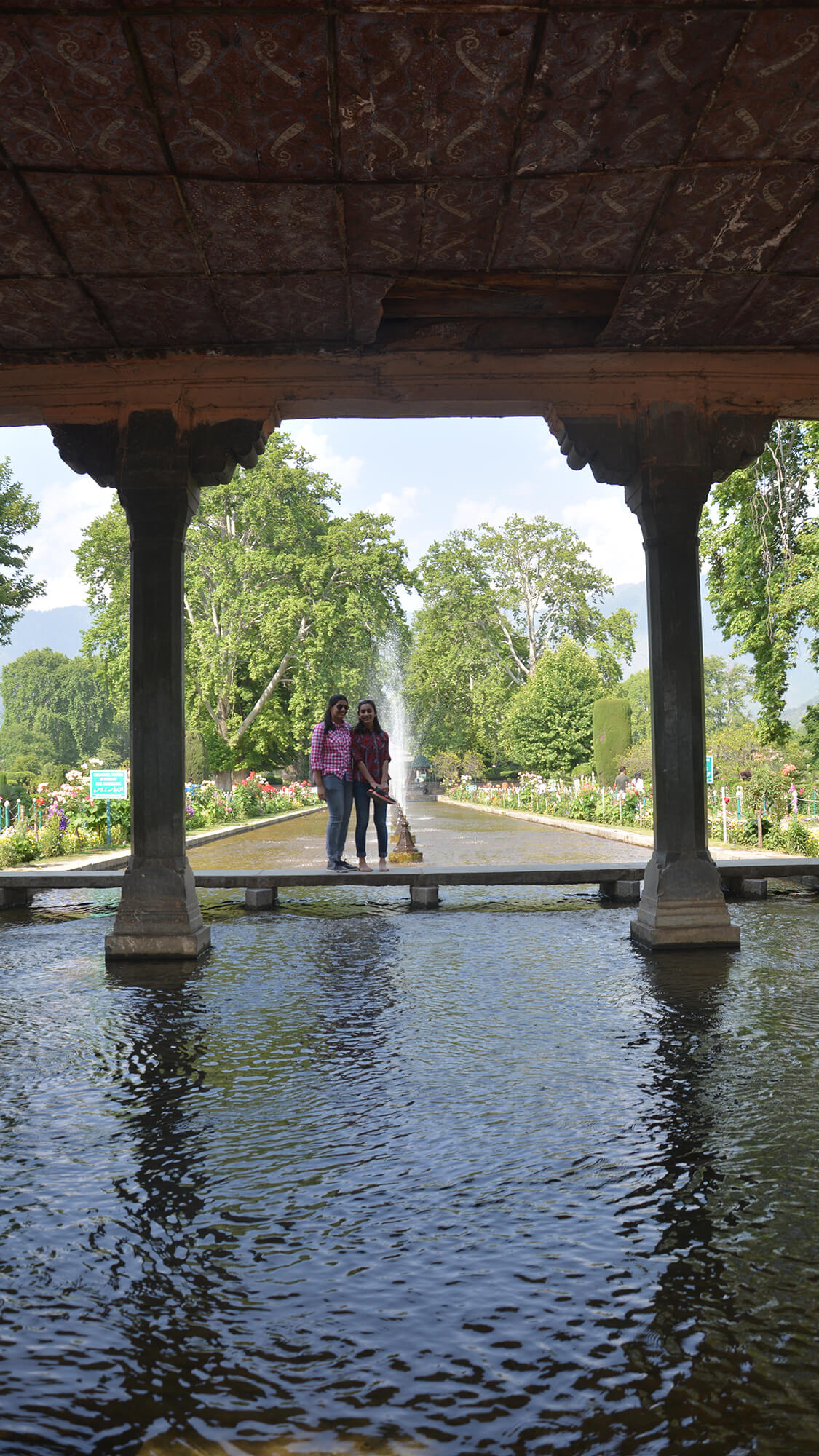
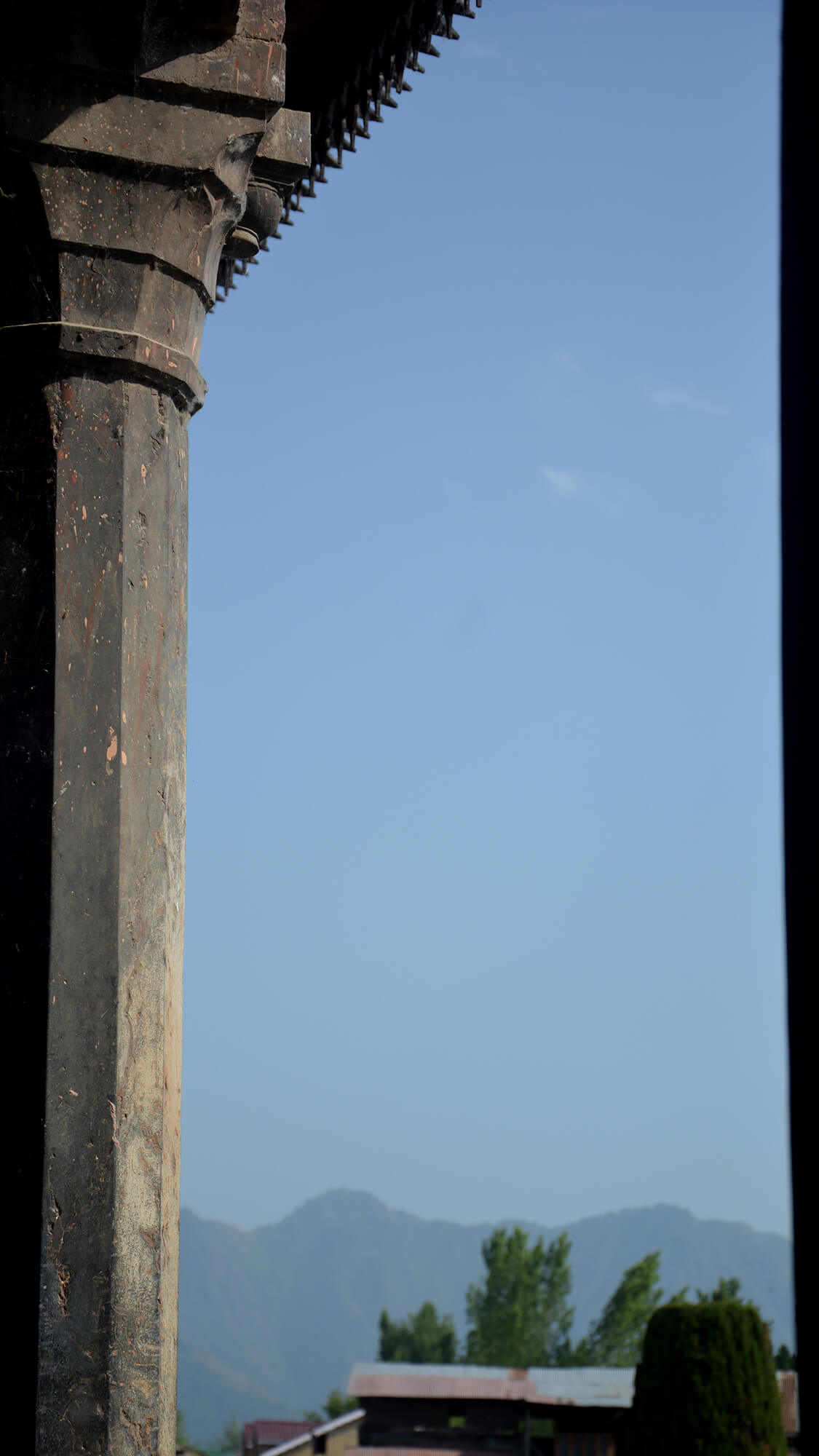
Each terrace is defined by these gates and pavilions, all connected by the water channel.  Further ahead, the Black Pavilion is surrounded by almost a thousand fountains on all sides. From here, one can see the precision of geometry, with fountains aligned perfectly along the central axis, connecting the entry pavilion to the zenana at the back.
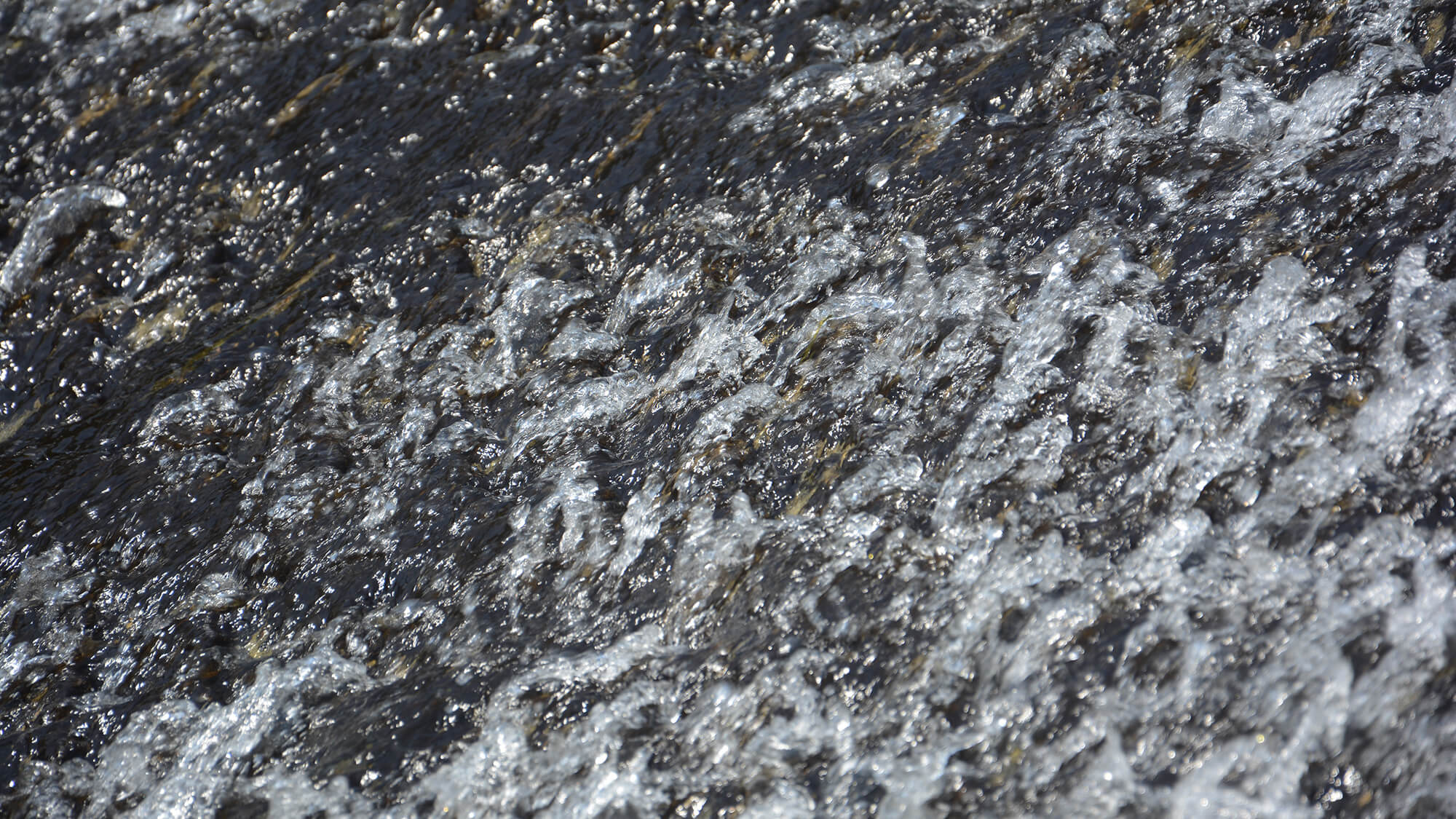
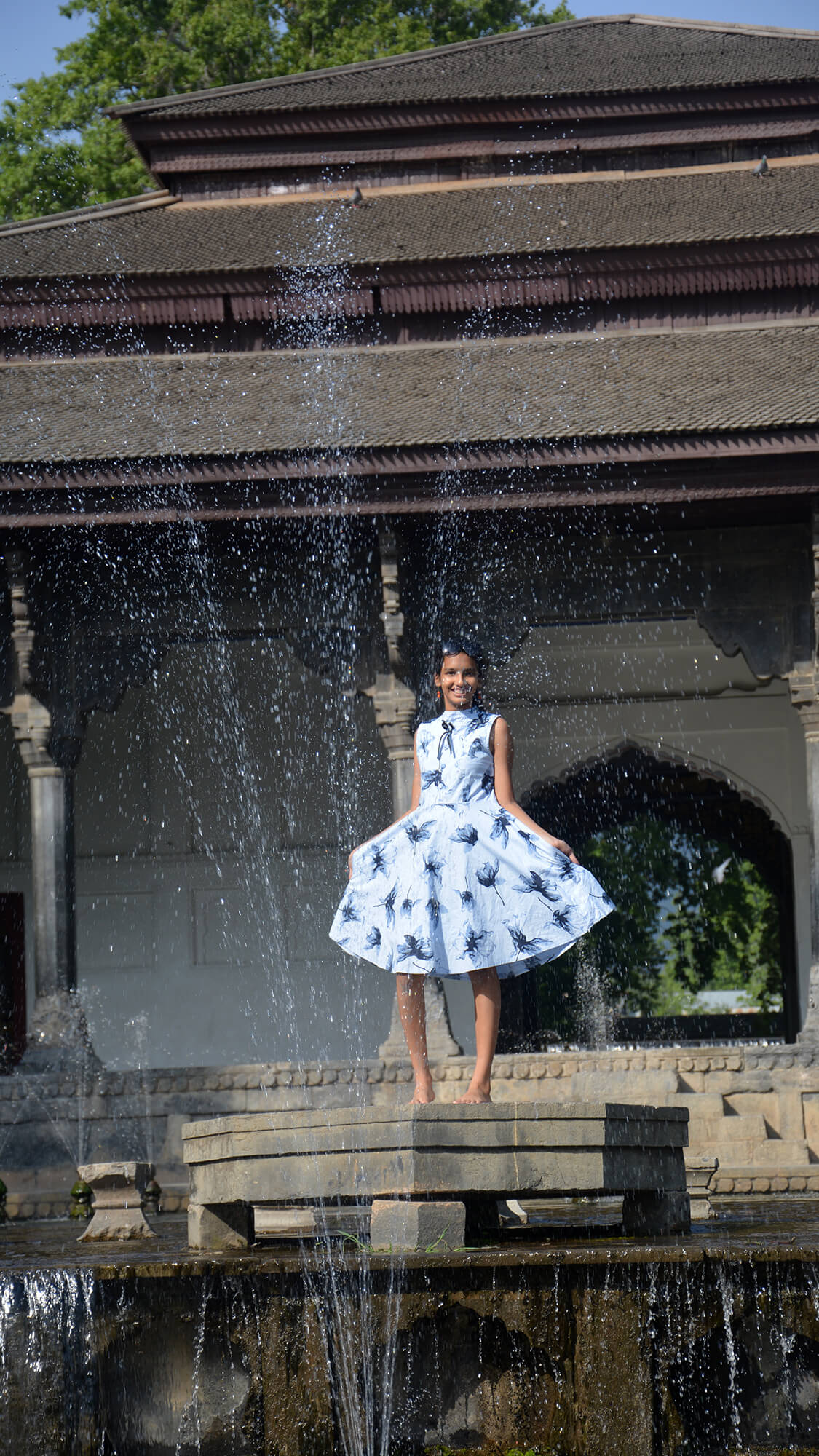
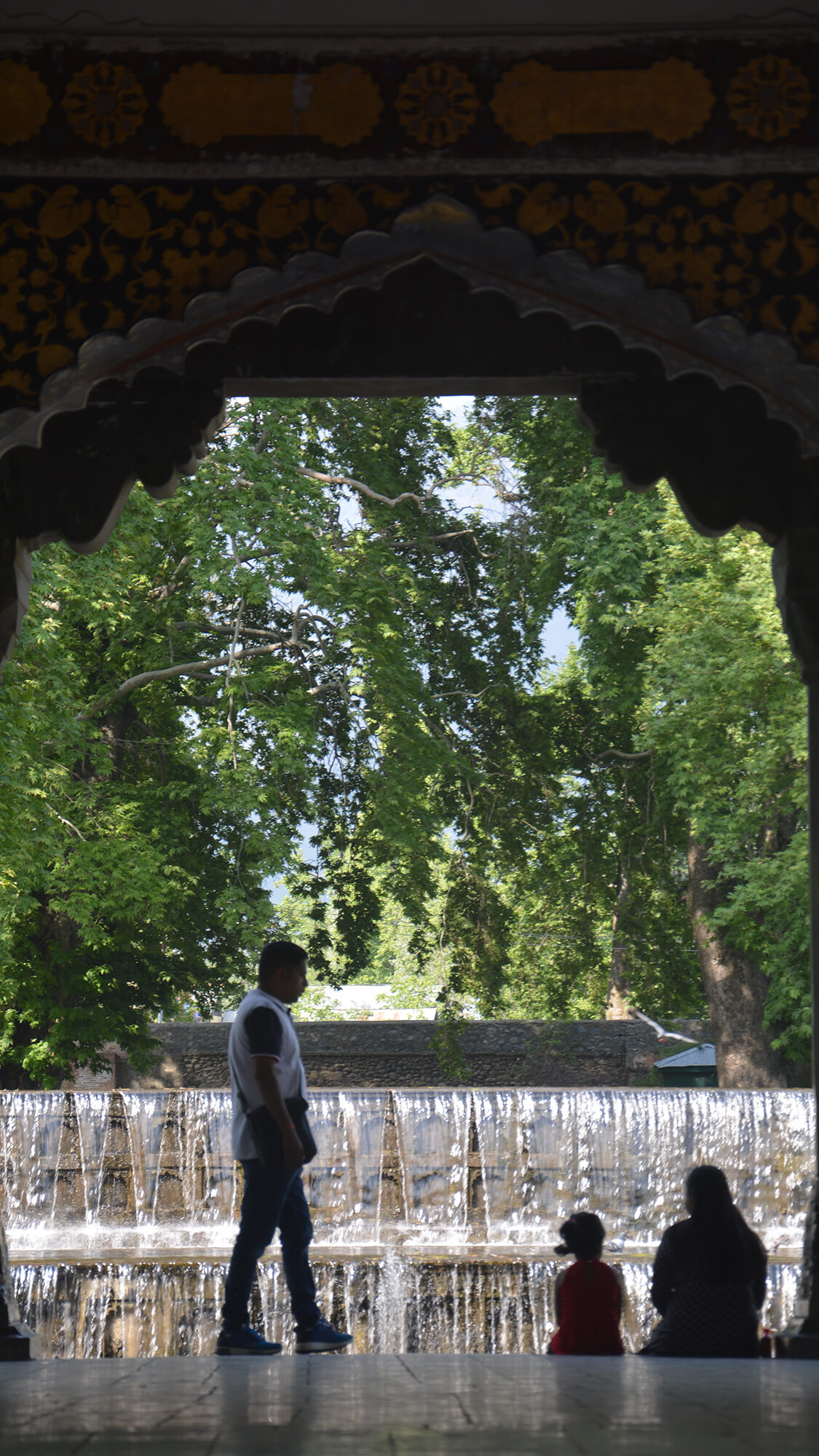
The gushing, flowing, falling water created sounds—each different from the other—depending on how it fell, what it fell upon, and the carving of stone channels through which it passed.This was a calculated soundscape; the white noise of the falling water ensured that the Emperor’s conversations in the pavilions remained private.
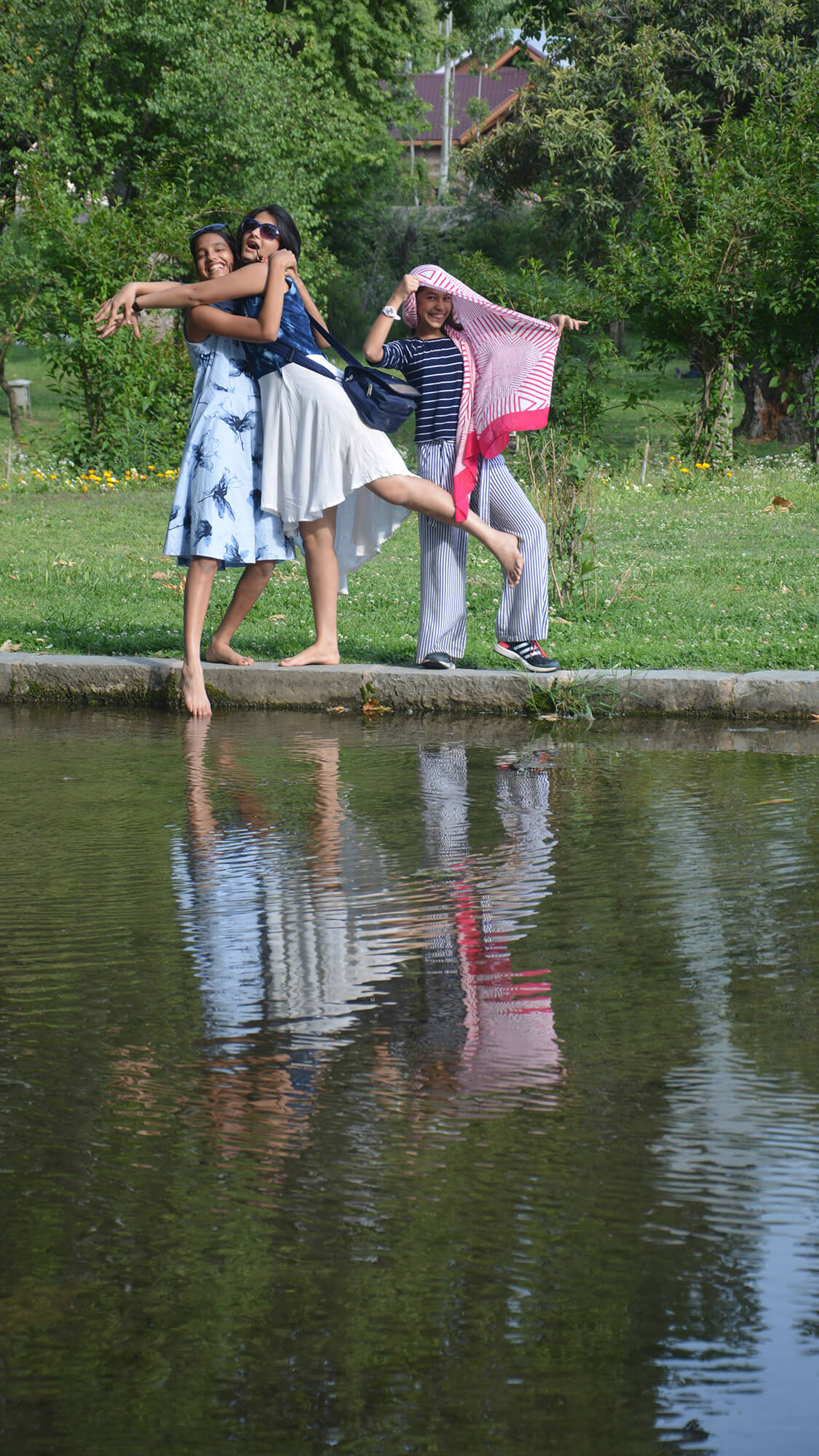
The children were especially delighted here, as water revealed itself in countless forms—leaping, whispering, cascading, and resting. 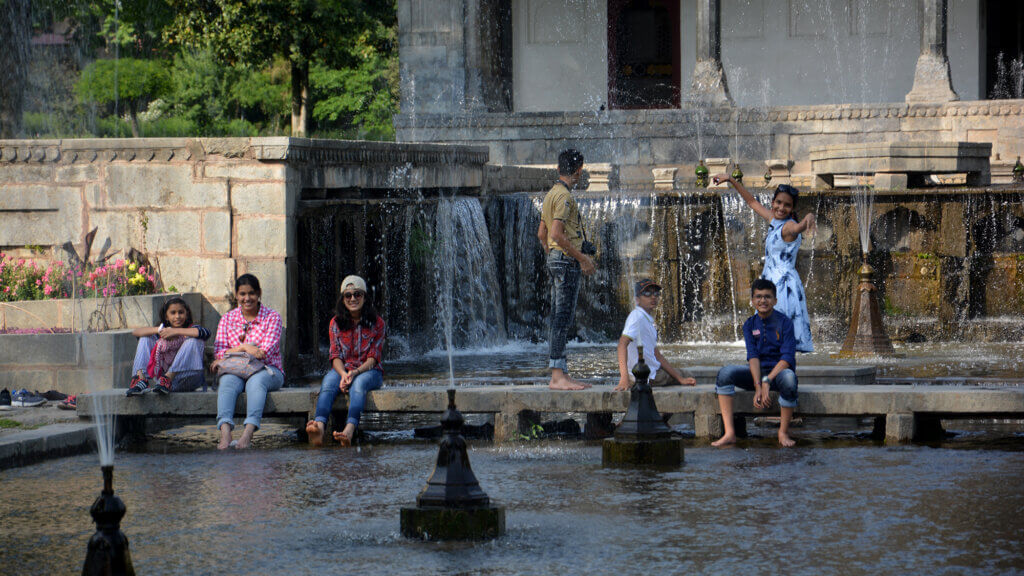
The water before the zenana changes its character, becoming a still pool, complementing the privacy it proposes and requires. Here, life stands still, making the visitor contemplative. The water reflects the sky, the trees, and engages anyone who wants to sit beside it.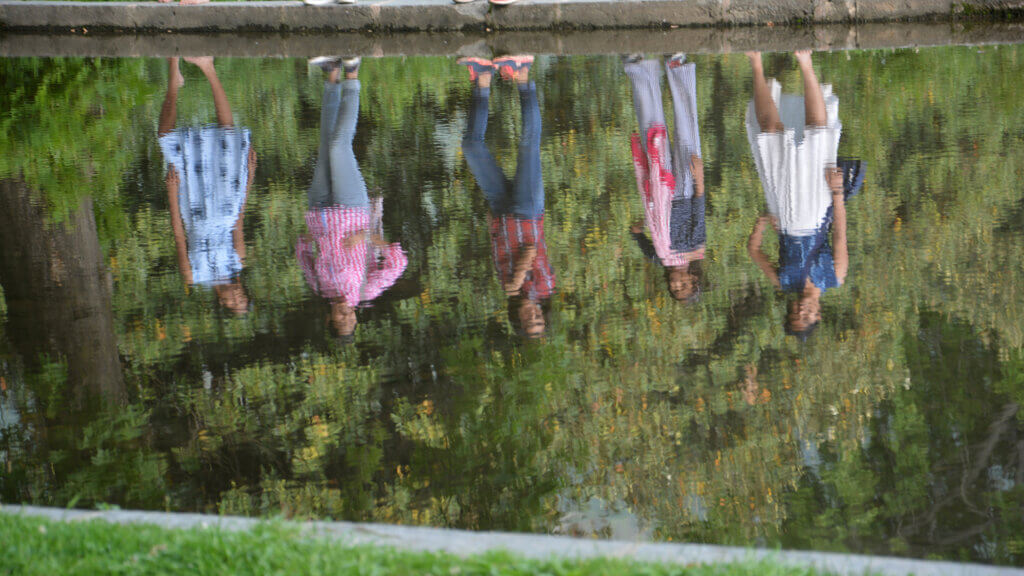
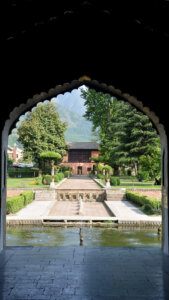 This shift from moving energy to a static one mirrors the spiritual journey – one from the temporal world of action to the eternal world of reflection.
What I noticed was how porous the whole architecture was. Every structure was just about frames—framing the views of the gardens, the fountains, and the surroundings. The scale and material responded to and respected nature, never trying to stand out, in fact complementing and merging with it. The proportions and rhythm of the place were sublime and made you connect with the Divine—Divine which is both within us and in the nature that surrounds us, and which is most beautifully pronounced in Srinagar and its Mughal Gardens.
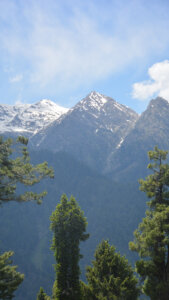 “Agar Firdaus bar ruye zamin ast, hamin ast o hamin ast o hamin ast.”
(“If there is a heaven on earth, it is here, it is here, it is here.”) said Amir Khusrau in the 14th century. And it remains the same in the strife torn valley even in this 21st century.
The entire valley has music—a music one can hear if one is keen. But an exploration of Shalimar Gardens feels like a classical recital, a symphony ; equally immersive, equally joyful, with its own crescendo and conclusion. Both have one outcome—to delight the senses and to connect to the Divine.

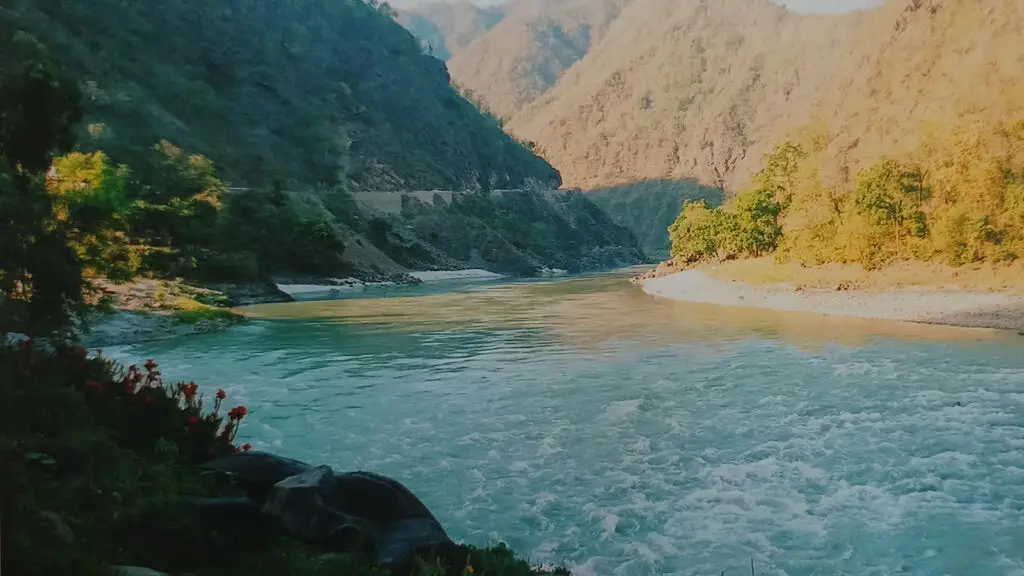
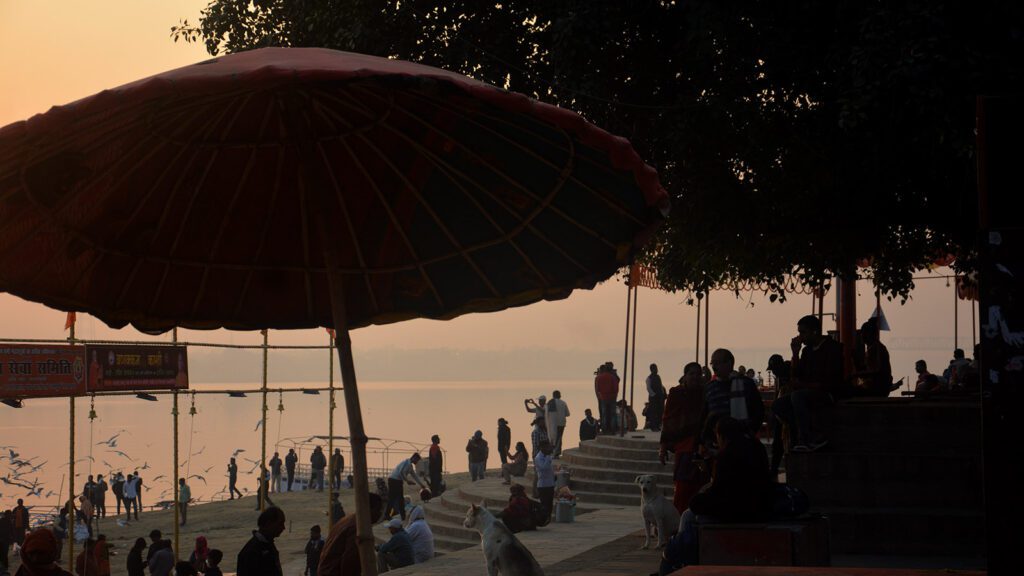




Your excellent travel piece not only traces the historical account of the Mughal Gardens of Srinagar but also brings out their exquisite beauty by highlighting the Persian landscaping and unique architecture of these gardens. The pics are stunning too.
I have visited Kashmir twice … first time as a 10 years old schoolboy and then as a 25 years old young man. The charm of those visits still linger on and your travelogue has rekindled the desire to visit Kashmir again 👌♥️👍
Thank you Rameshji for constant encouragement