
Beginning at the Sangam
For our Varanasi visit , we started our tour from Prayagraj. Prayag means confluence, and Allahabad—the city of God—is rightly called Prayagraj.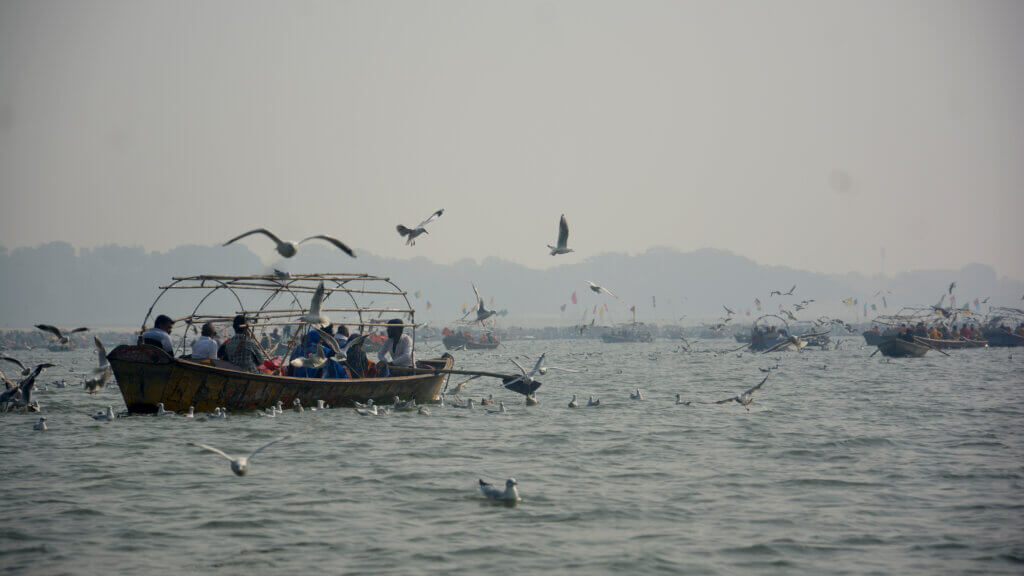
We had gone here mainly for snaan at the Sangam, a place outside the city, where the mighty Ganga meets the serene Yamuna, along with the invisible Saraswati. A boat ride took us to the middle of the confluence. Multiple such boats carrying the faithful were plying on the water. Here an island was formed with dozens of boats tied together to form a floating platform. An entire system of puja, pujari, and mallah made the snaan an event as we climbed down from the boat to take a dip. It was both thrilling and delightful to take a dip in the deepest waters of the sangam, change the clothes and do the puja afterwards on the same boat.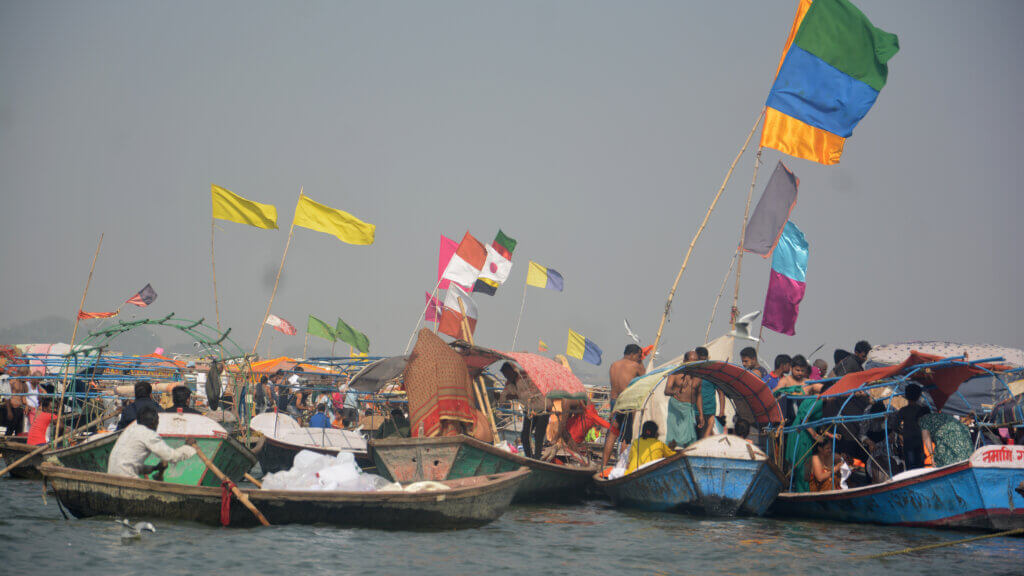
We had an entire day ahead, and on my mother’s insistence—though she was not with us—we decided to visit Chitrakoot for the remaining half day.
Stories That Live in the Land
For my mother, Chitrakoot is a spiritual escape, just like Rishikesh is for many. She loves the place and hence wanted us to visit it if we had time. This being a detour, we had not planned it before, and I didn’t know what to expect.
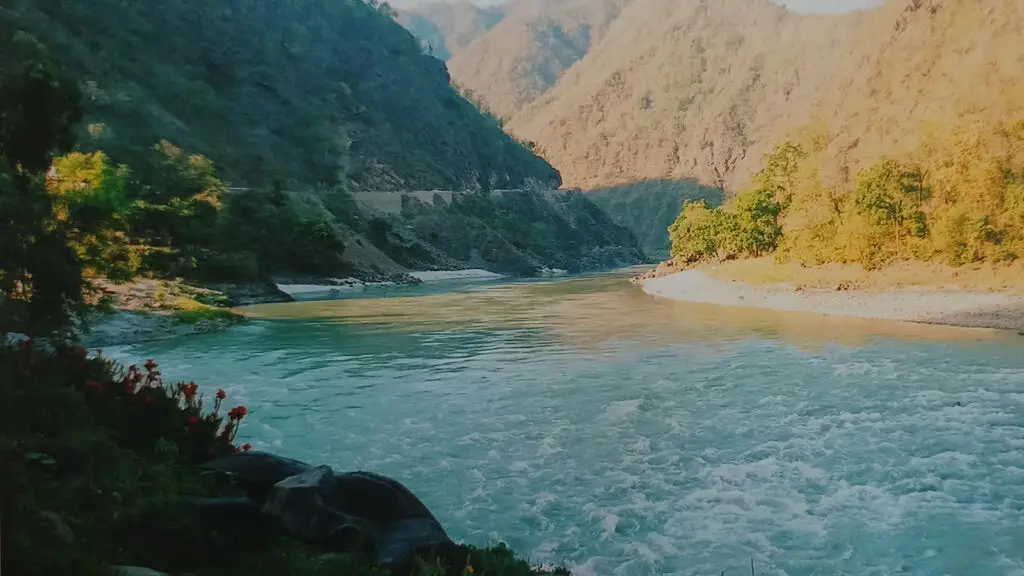
Since I have been to Rishikesh many times, I imagined a peaceful bank on the River Mandakini, to which we were headed.
 A sacred land, Chitrakoot holds many stories—from ancient mythology to folklore. Meaning “Hills of Wonders,” Chitrakoot lies in both UP and MP, with River Mandakini becoming the state border. The place is surrounded by the northern Vindhya range, with hills like Kamadgiri, Hanuman Dhara, and Gupta Godavari near the town.
It is believed that Ram, along with Sita and Lakshman, spent more than 11 years of their exile here. It was here that Bharat came to meet Ram during the exile, and it was here Ram conferred with Rishi Atri and his wife Anusuya, debated, and learnt much about the Vedas and shastras.
Faith, Folklore and Chitrakoot
 It is a folklore that Lord Hanuman guided Tulsidas to Chitrakoot, for here he could meet Rama, his God. And as Tulsidas remained absorbed in his quiet service—applying sandalwood tilak to each devotee—Hanuman gently alerted him :
“चित्रकूट की घाट पर भय संतन की भीर।
तुलसीदास चंदन घिसें, तिलक करत रघुबीर।।”
Thus reinforcing the importance of the place in finding the divine.
My mother being a Ram devotee, I had heard all these stories from childhood. Yet, I had no idea how the place looked or felt. Whatever I had known were stories, and I had seen no images. And this ignorance turned my visit into a delightful discovery.
A Walk Through Living Spaces
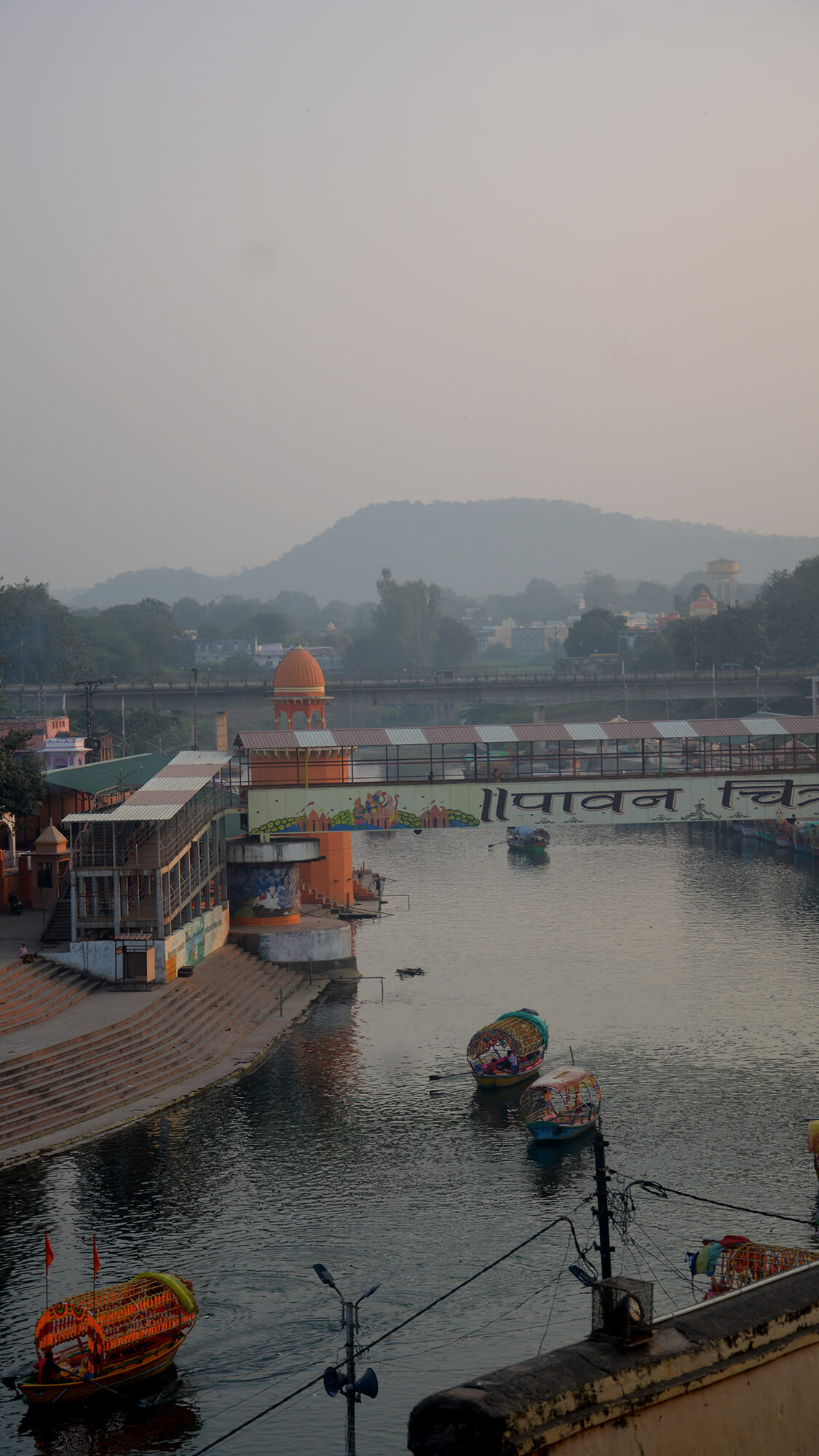
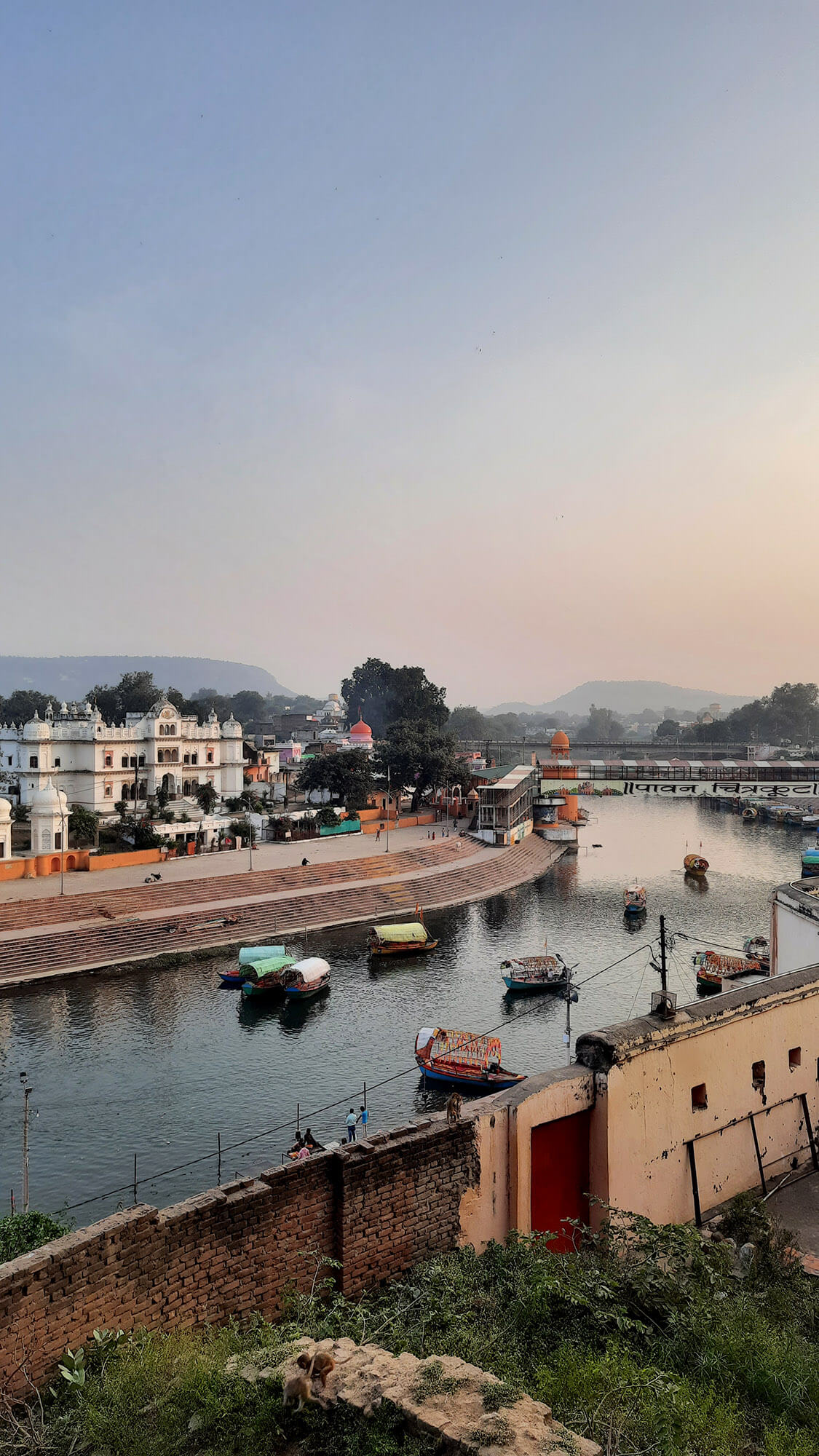
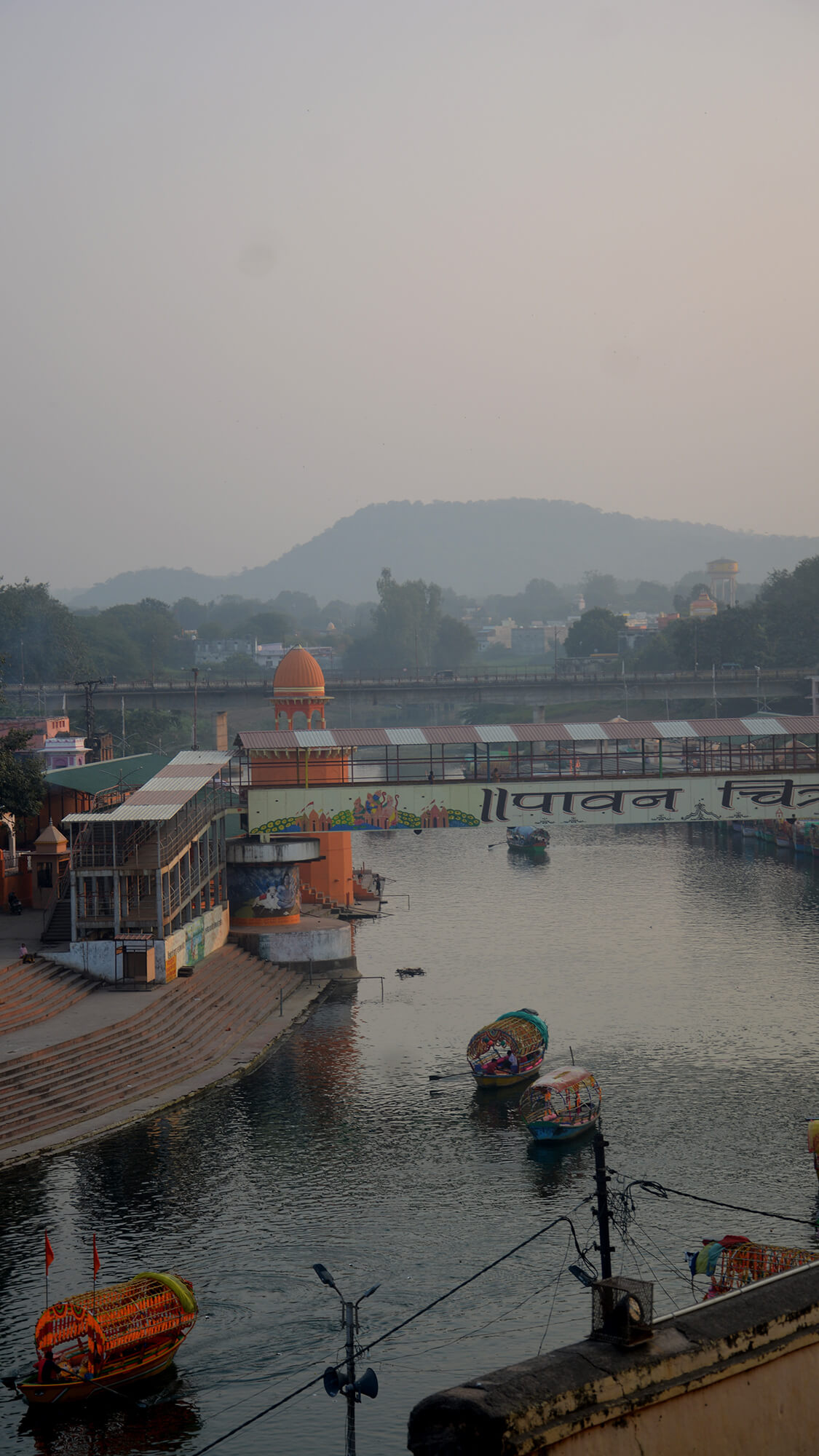
We entered the Ram Ghat area of Chitrakoot on foot, after parking the car on the street behind. The river was flowing beneath a pedestrian bridge connecting both banks—and two states. Indeed, which state would that bridge belong to?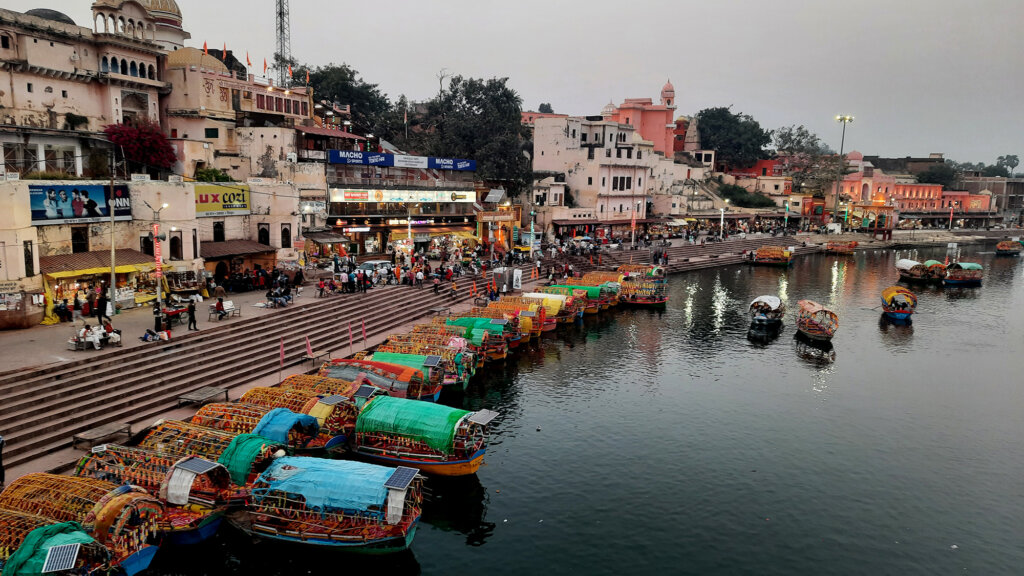
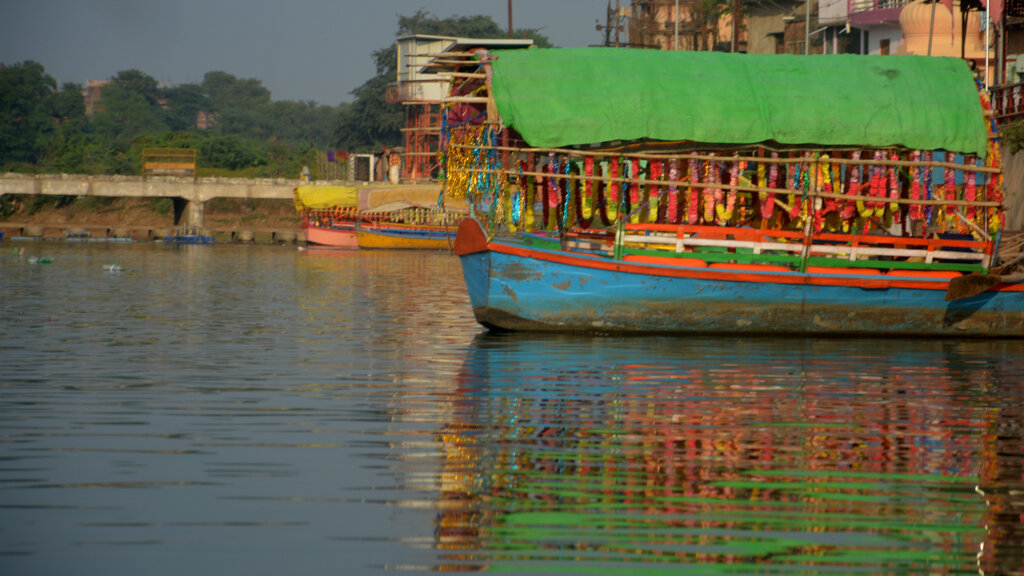
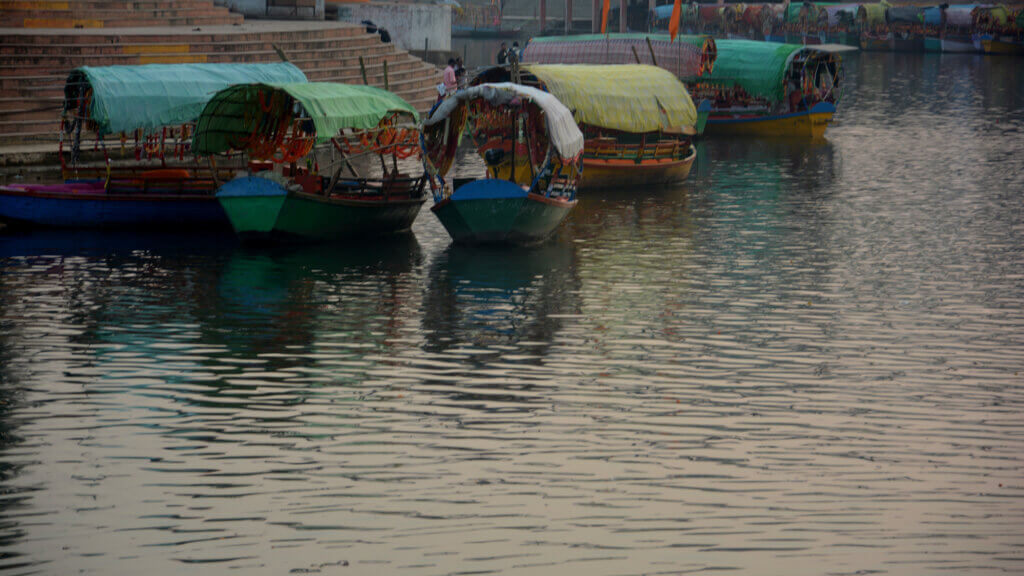
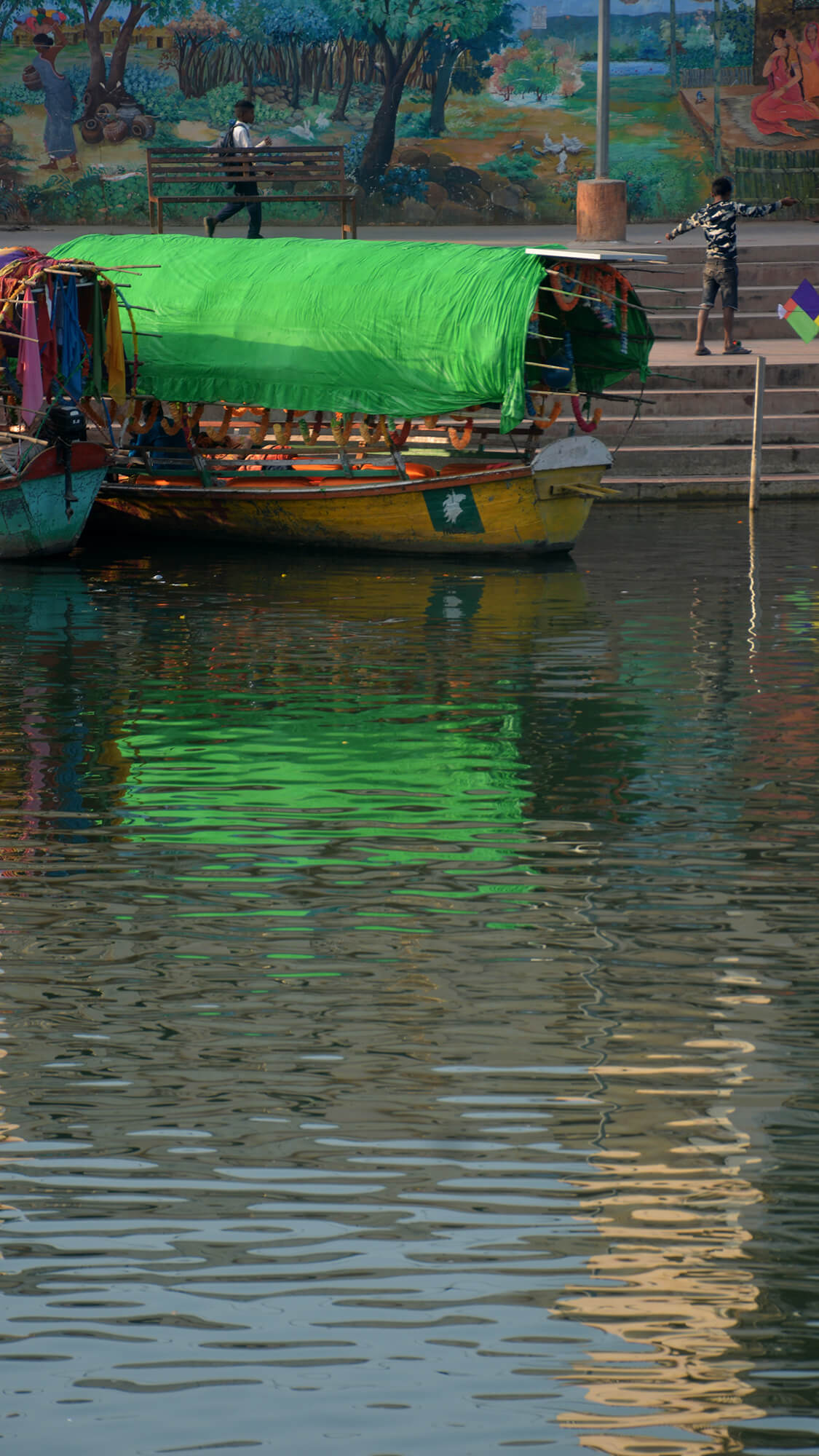
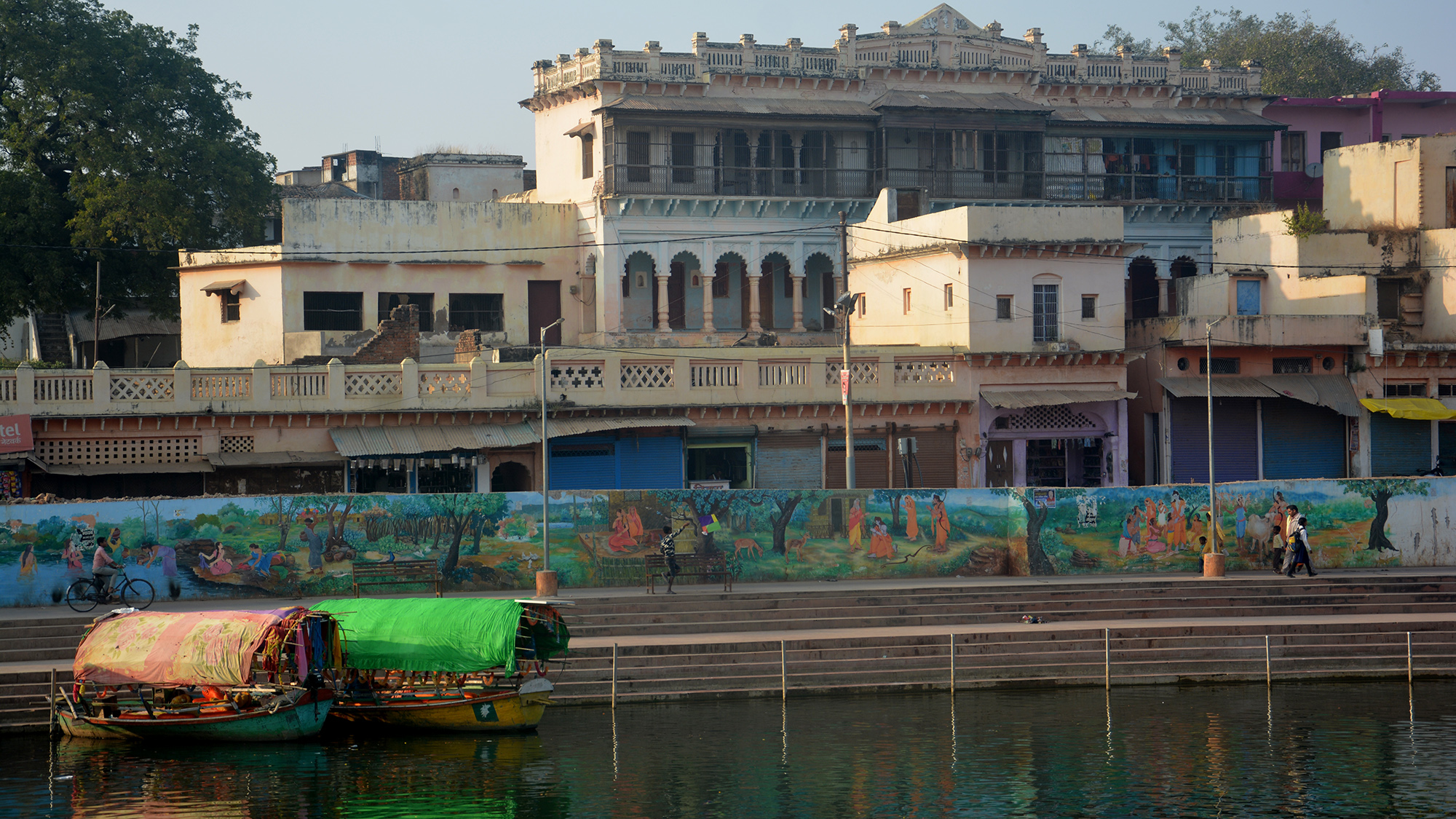
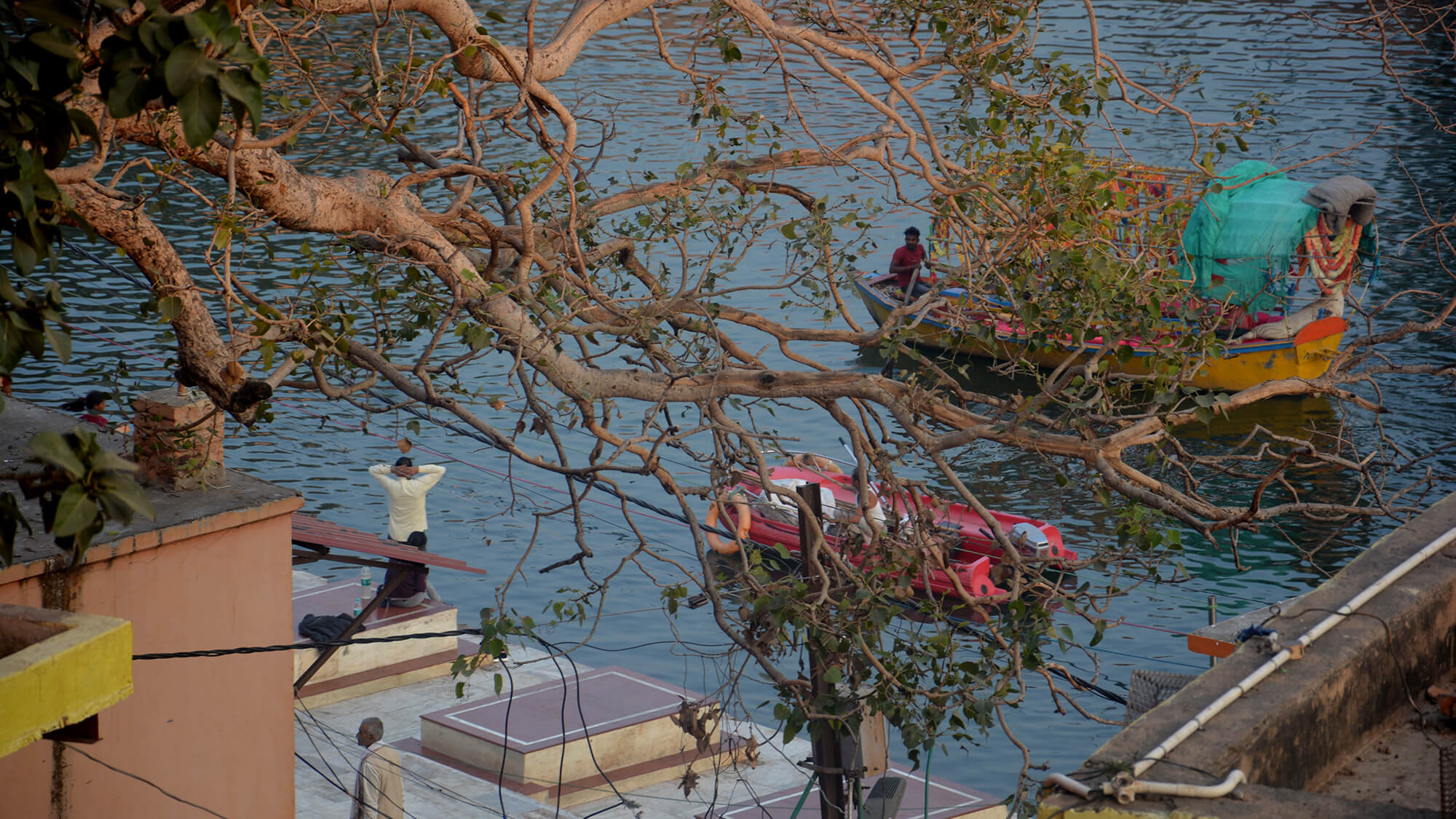
The river had many colourful boats, parked, decorated, and ready to take visitors from one bank to another.
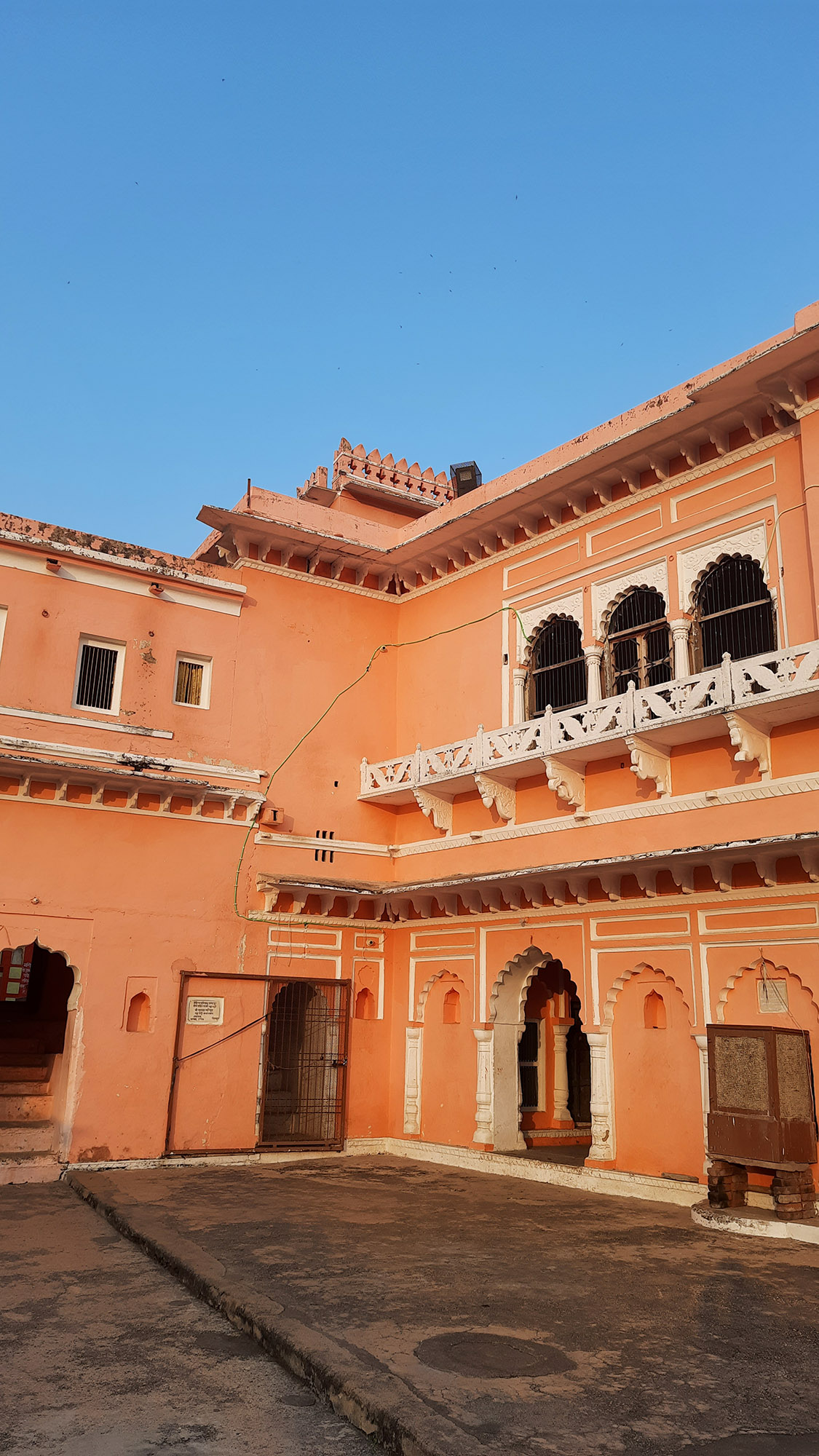
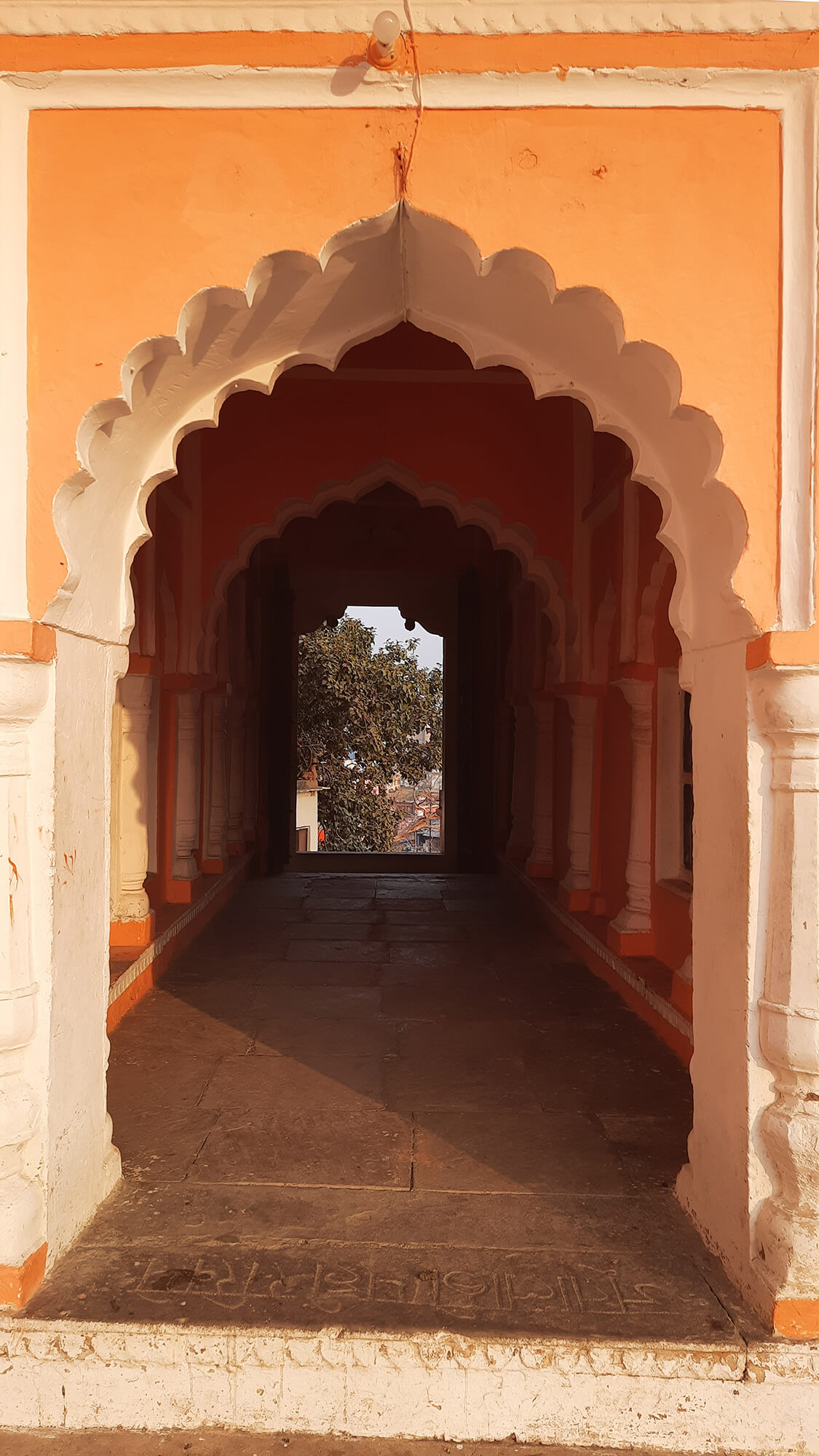
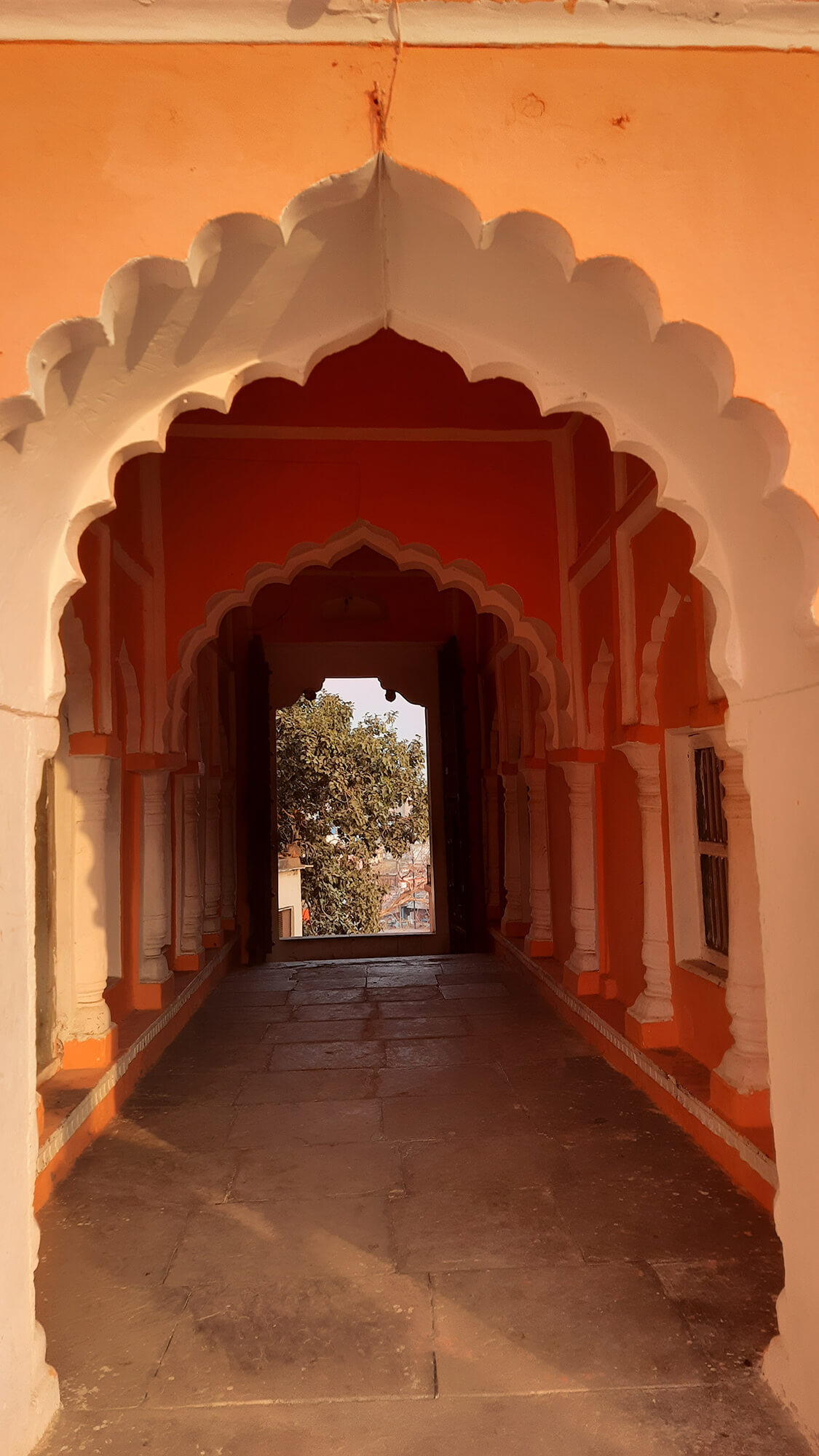
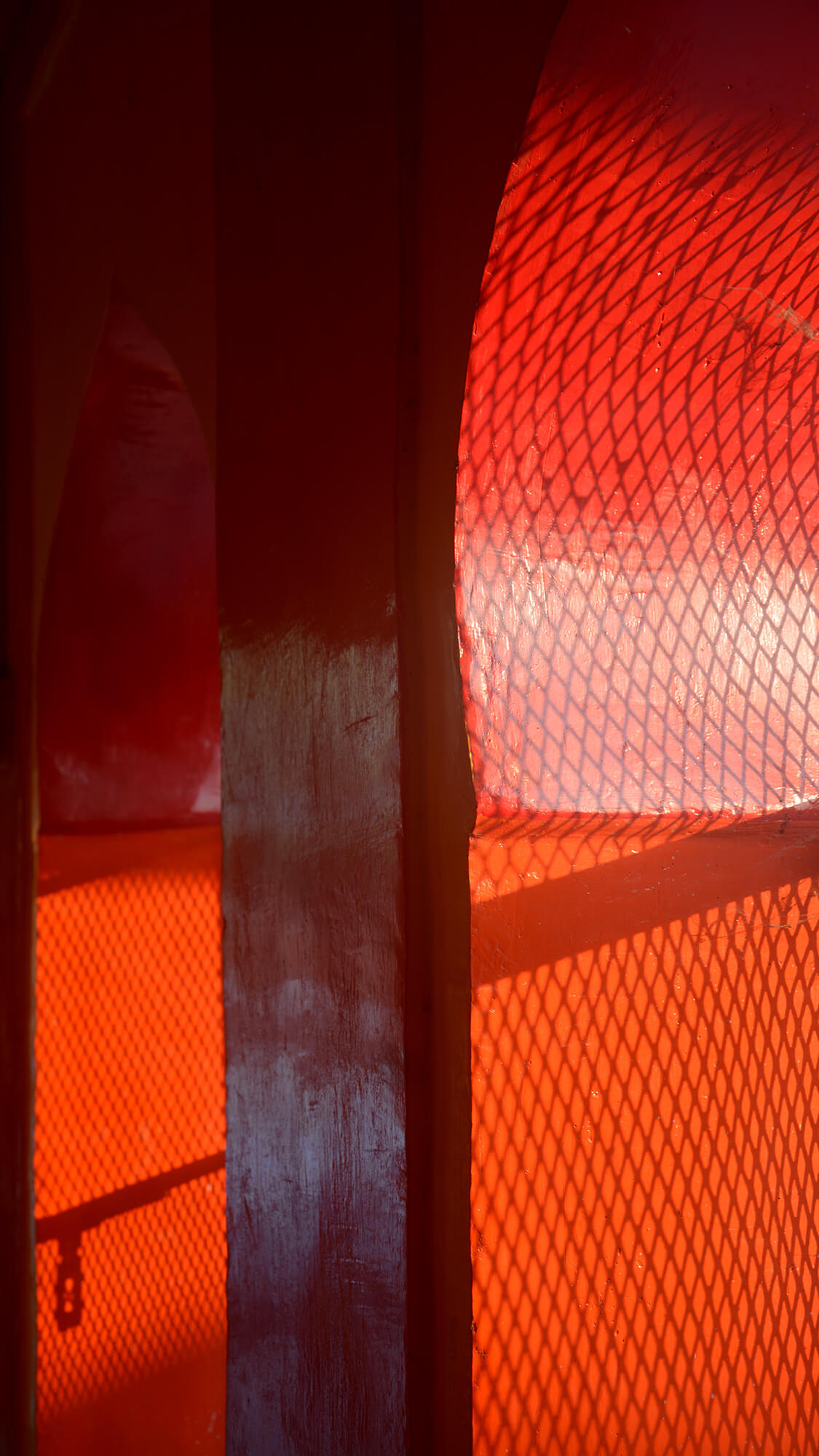
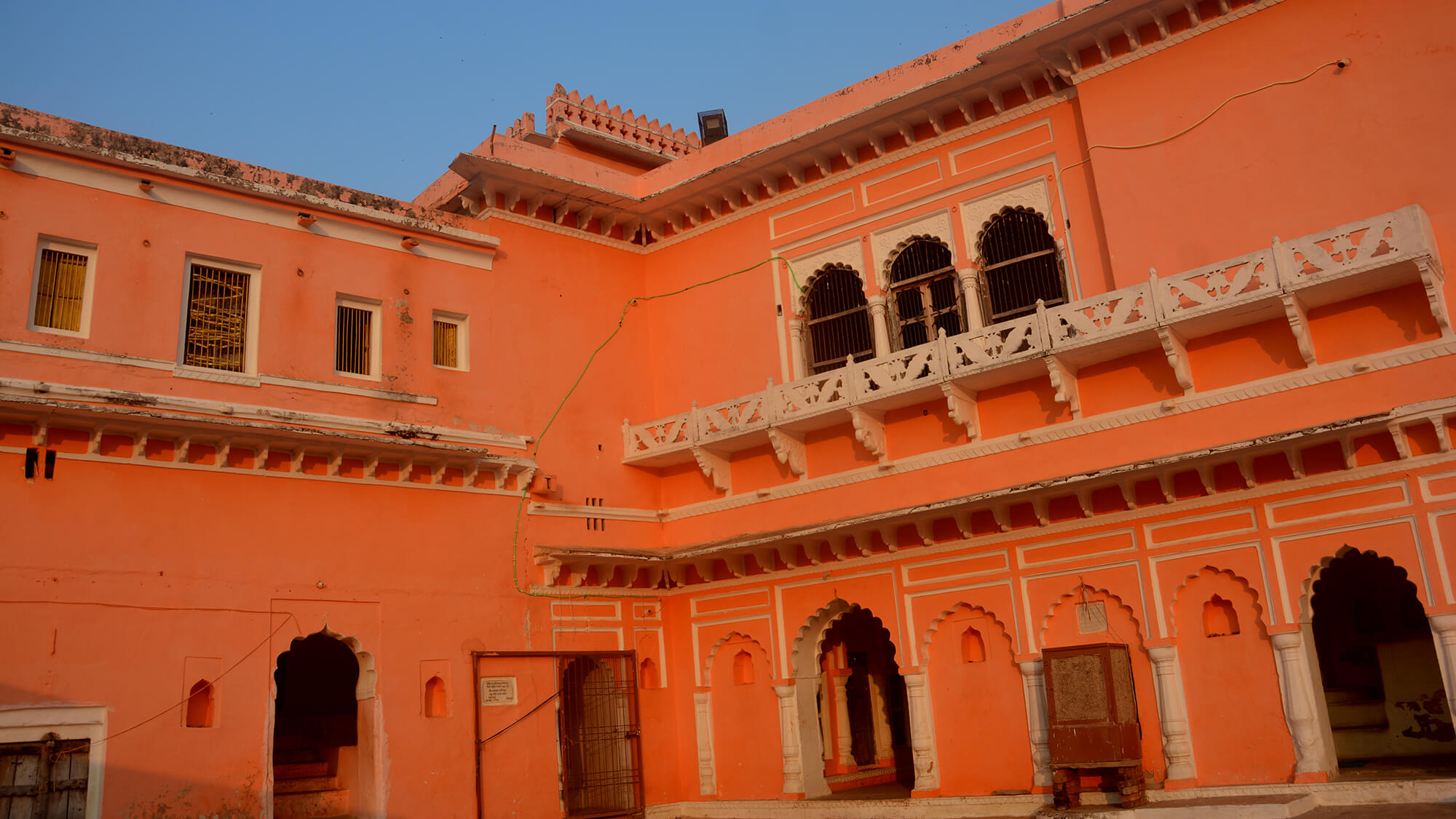
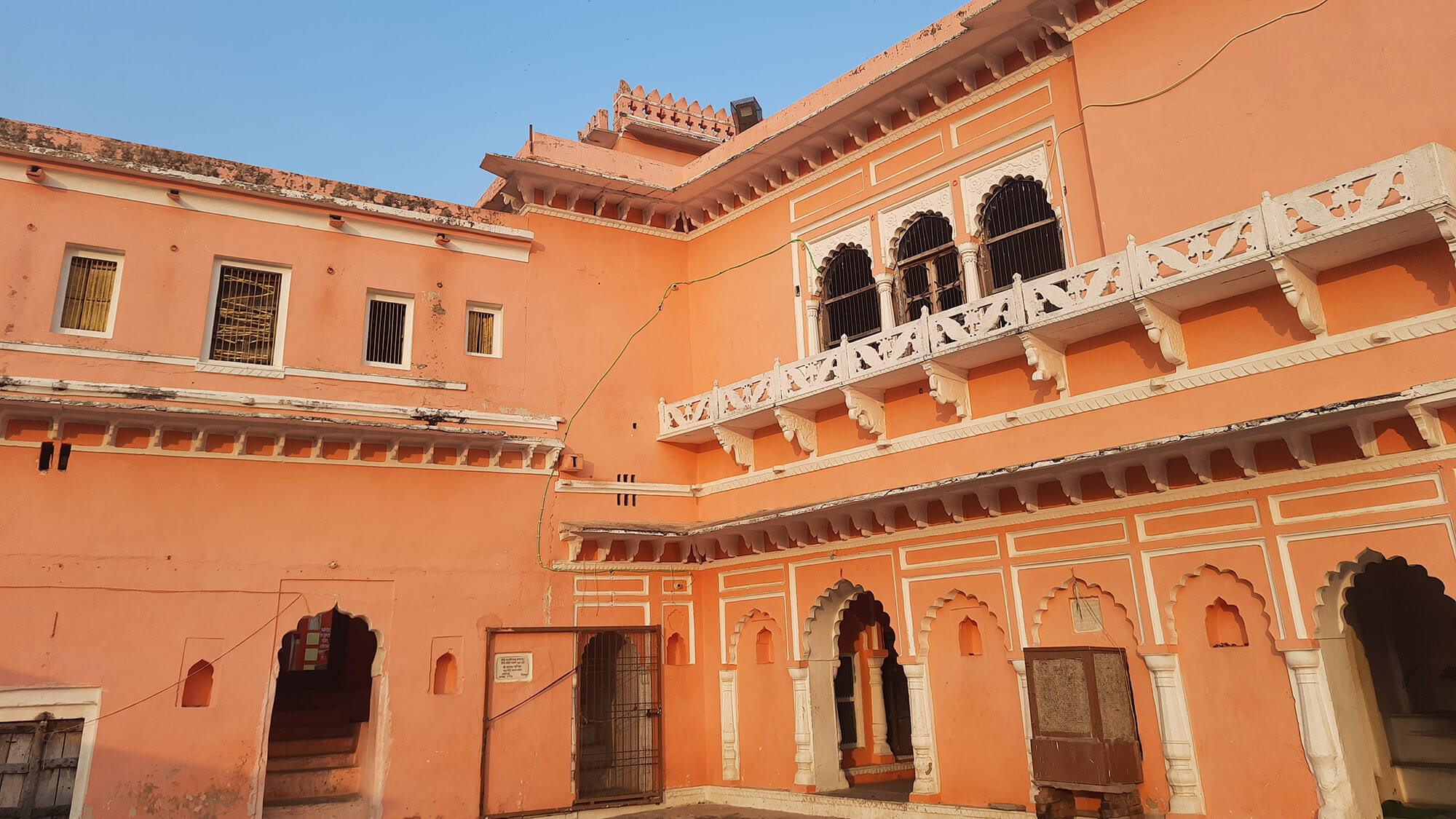
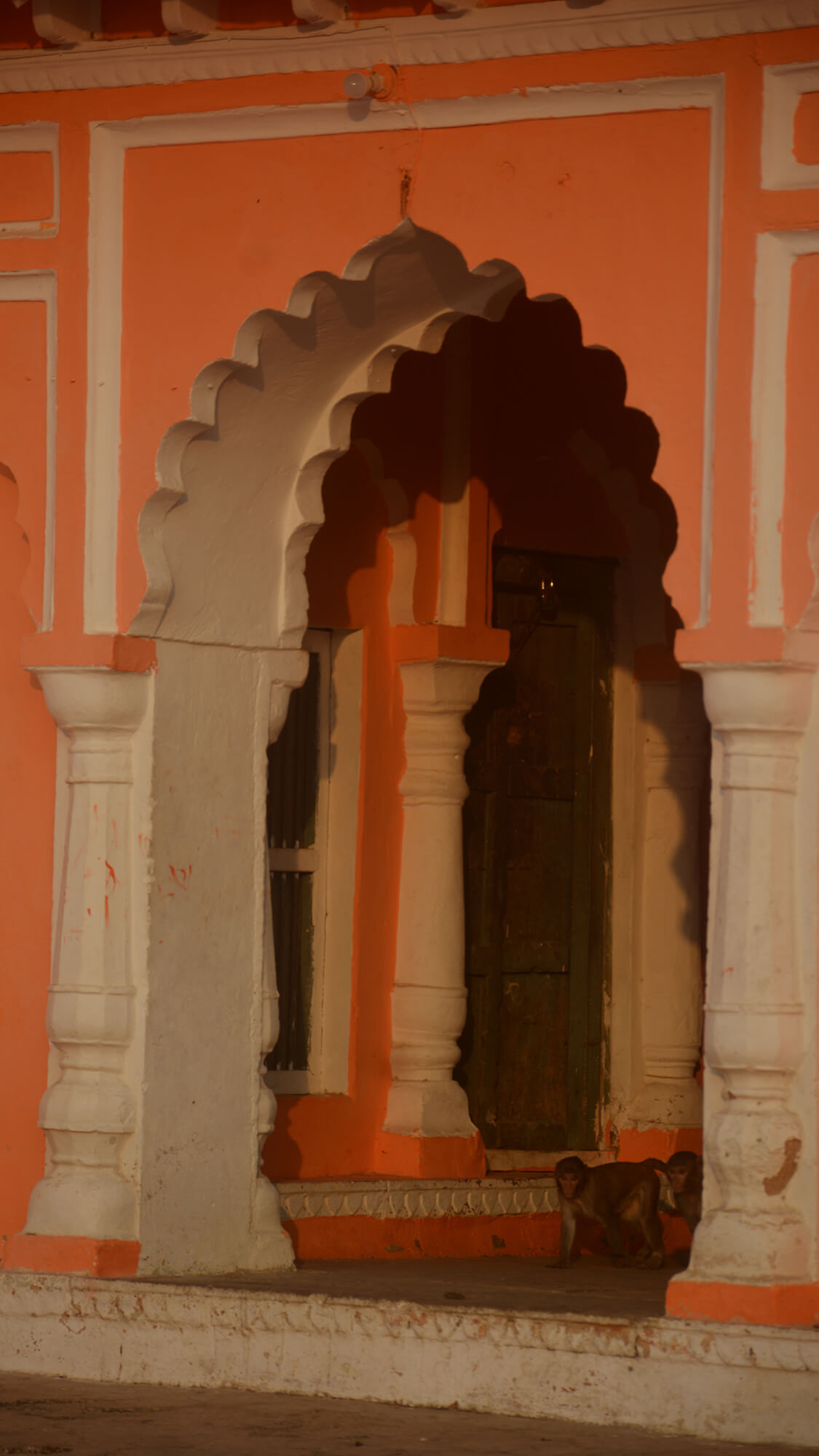
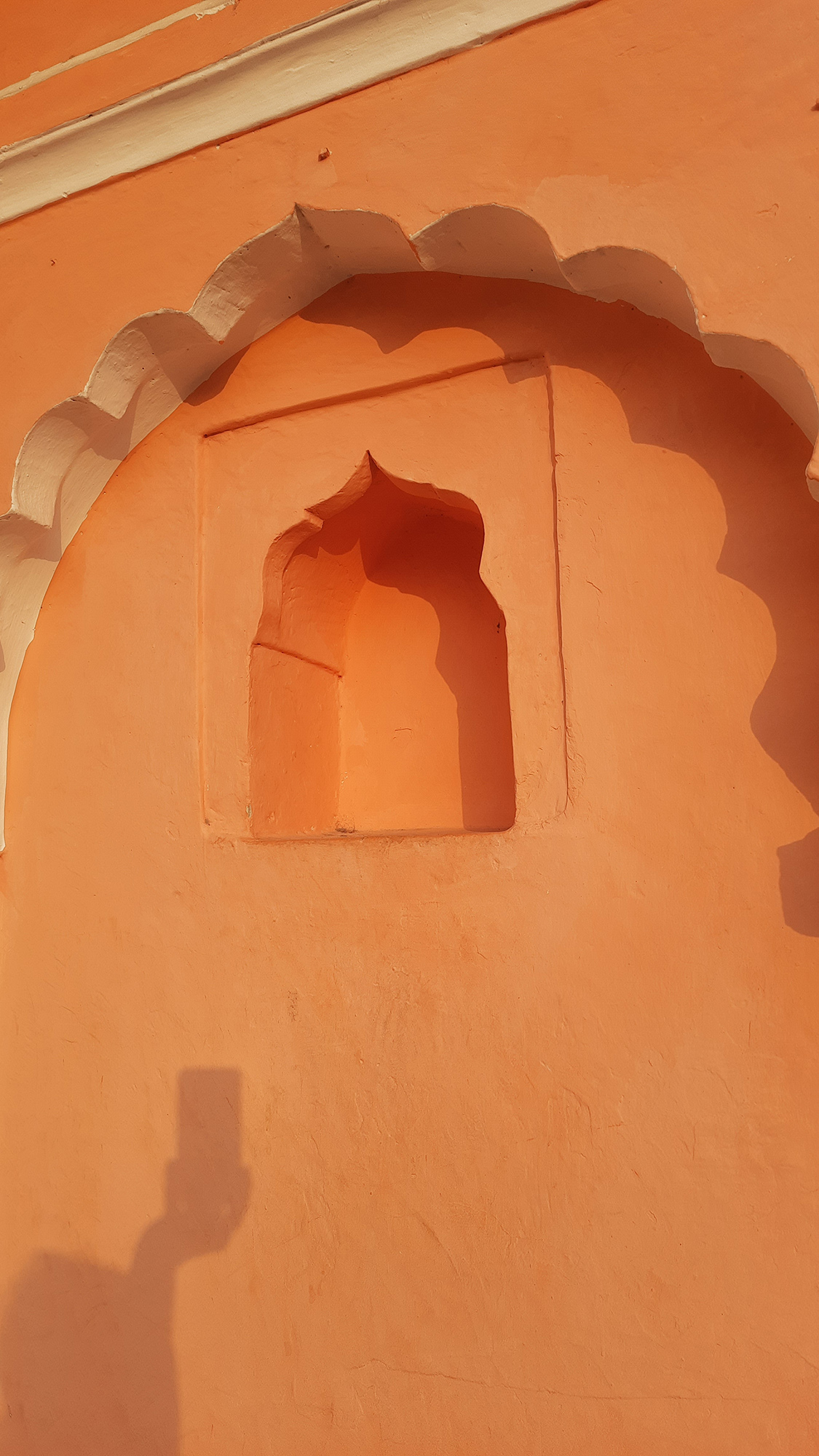
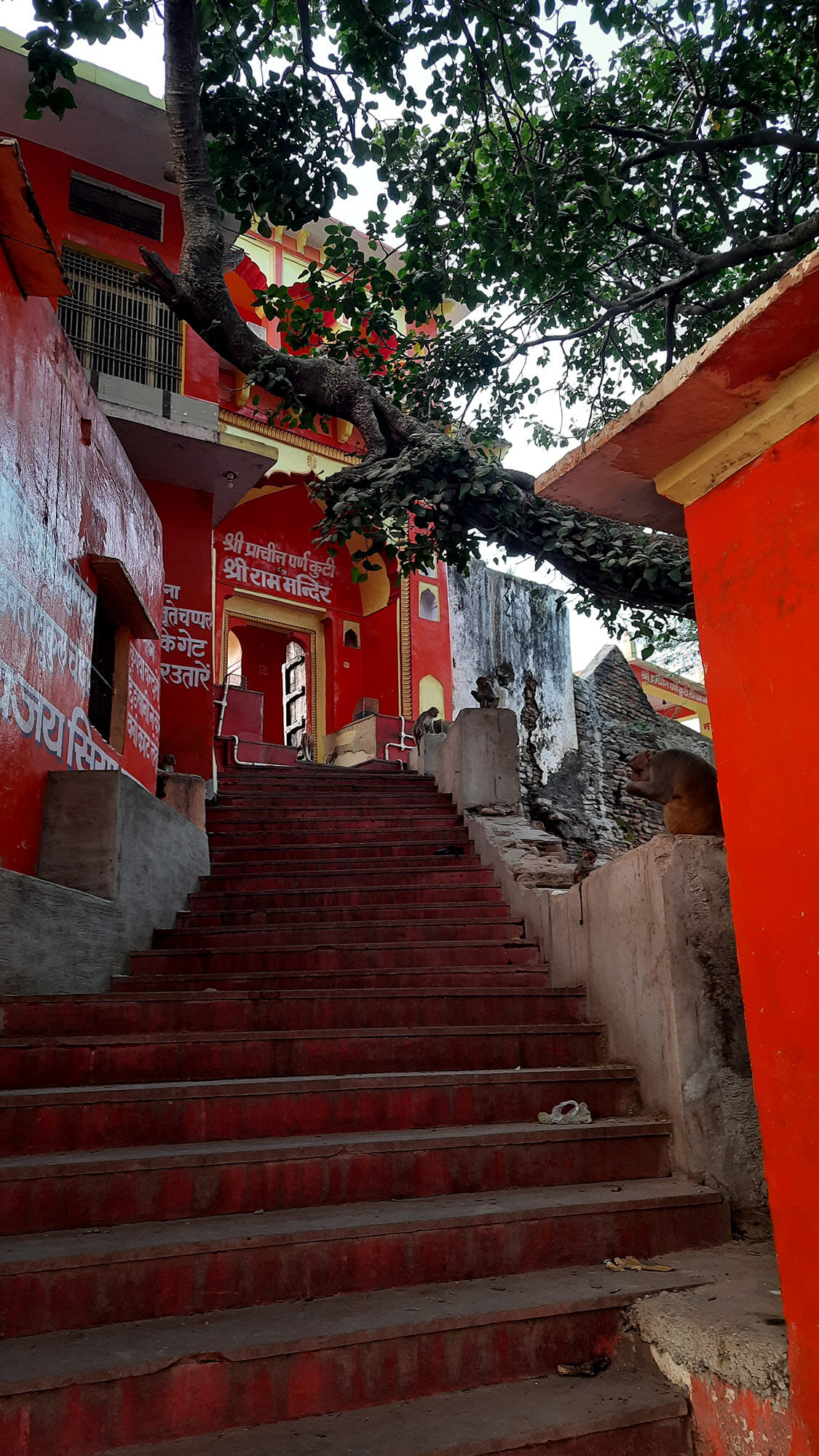
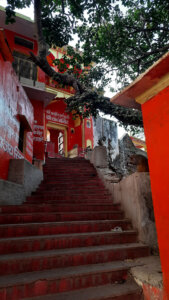 On the right bank, there was a series of haveli temples built in Rajputana style of architecture. Each painted in bright colours, these could be reached by a series of long stairs from the ghat, as they were perched on high ground near the river.
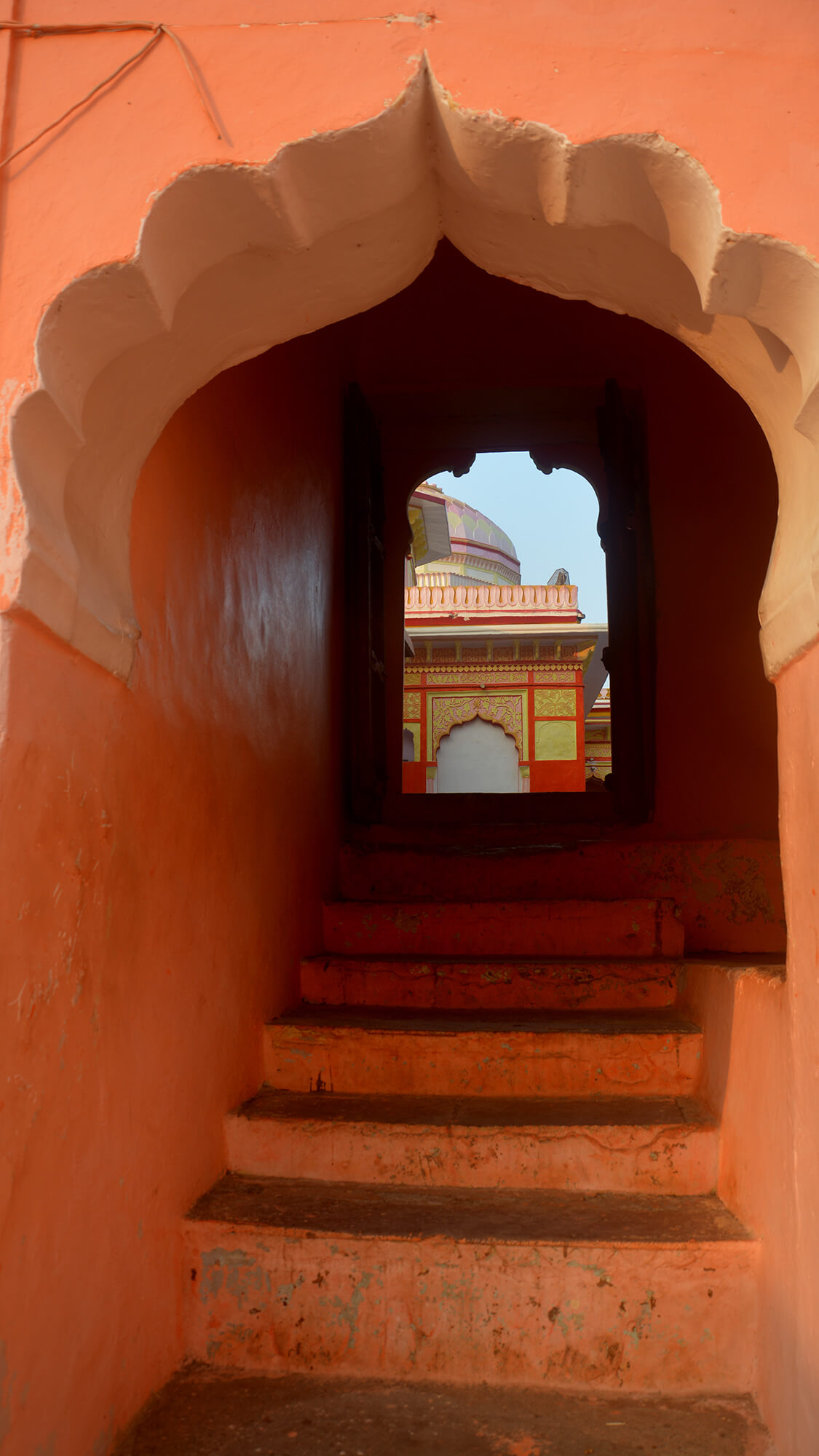
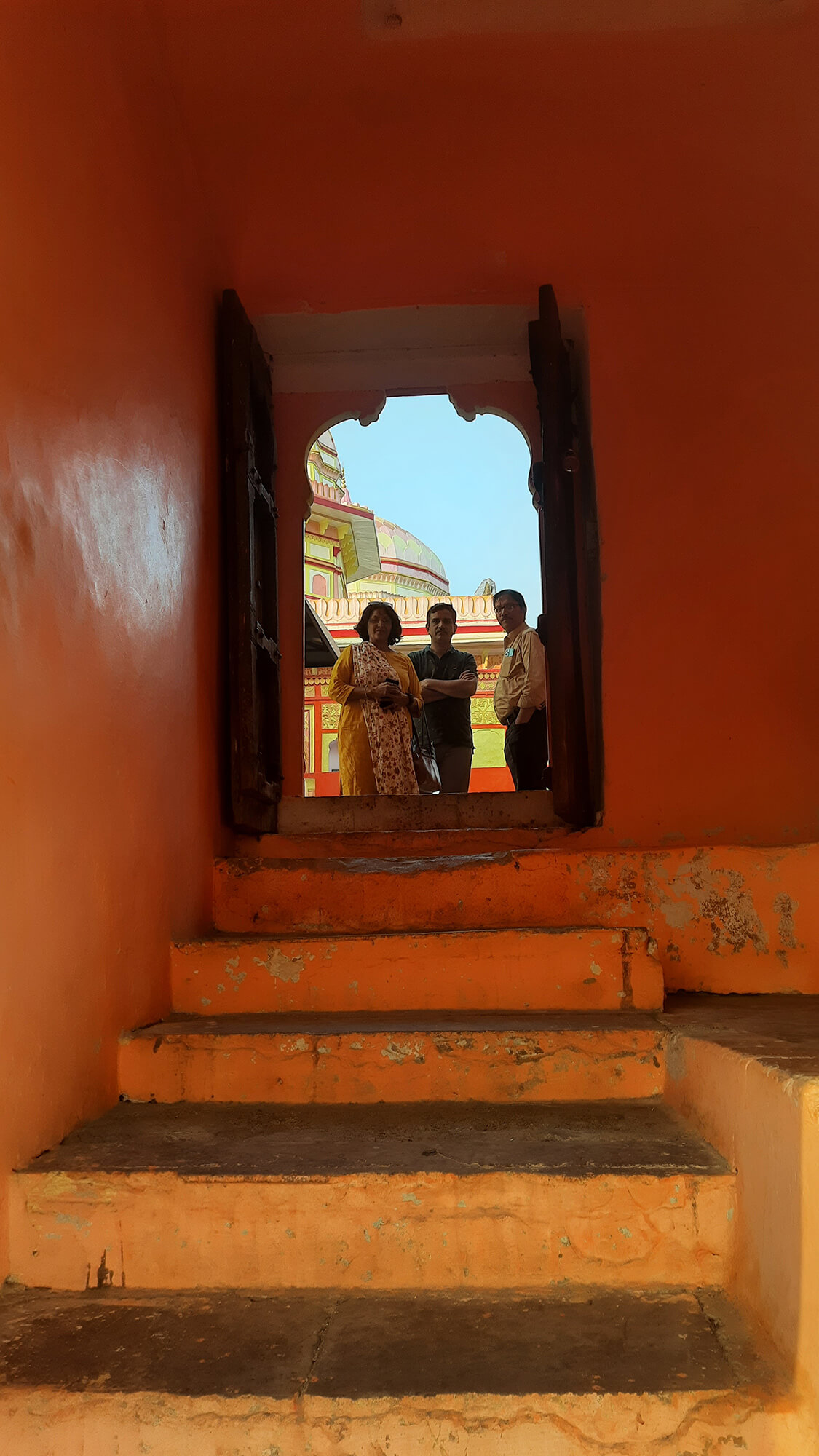
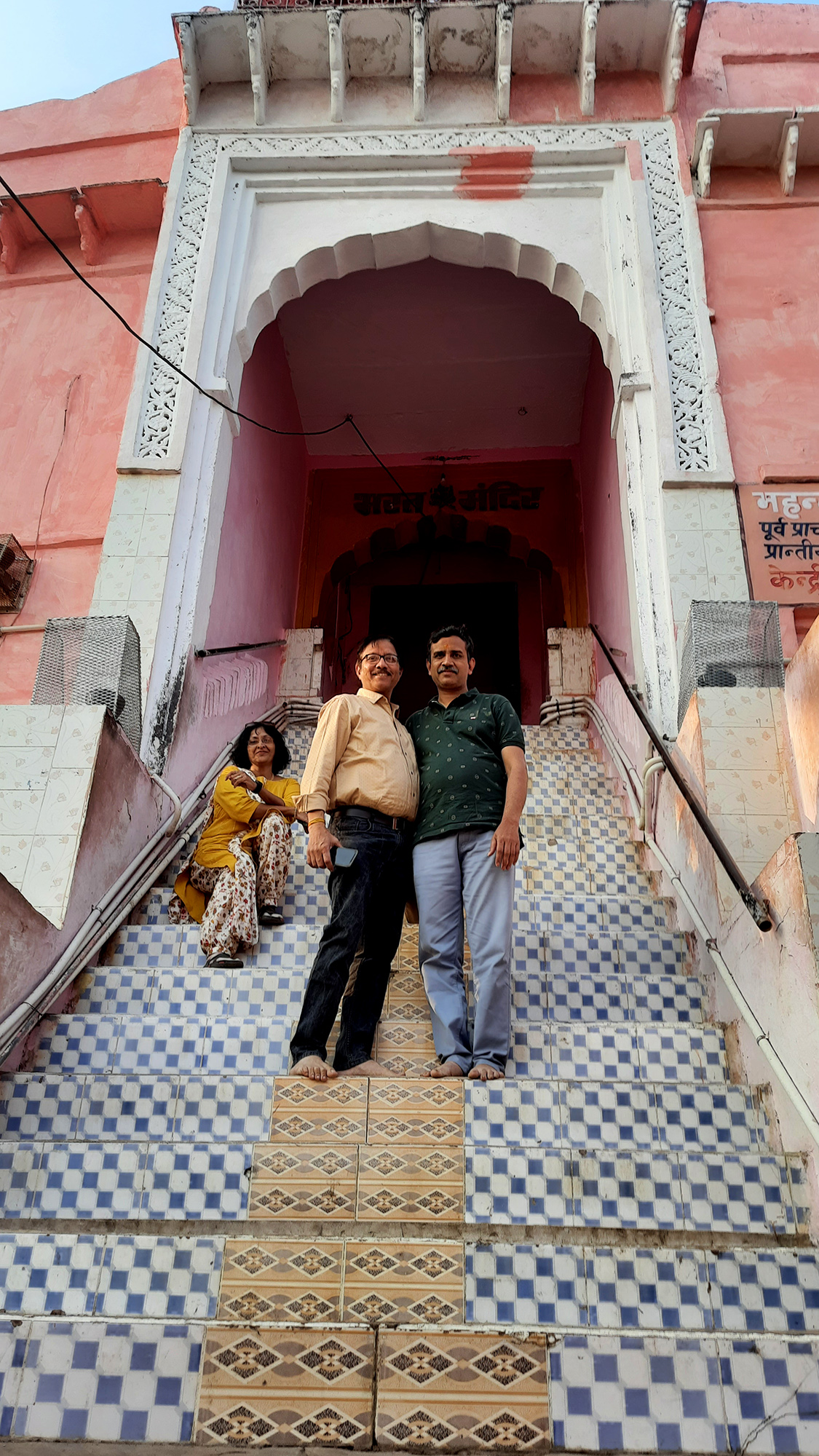
We planned to explore the haveli temples on the right bank first and entered Bharat Mandir through a long flight of stairs. The stairs took us to a small temple along a courtyard. This courtyard led us to a terrace, which in turn opened into a small open space surrounded by houses.
A family, with its patriarch, was sitting and chatting there, with a cowshed nearby. Oblivious to the visitors, these people do not adhere to the notion of privacy we urban people fuss about.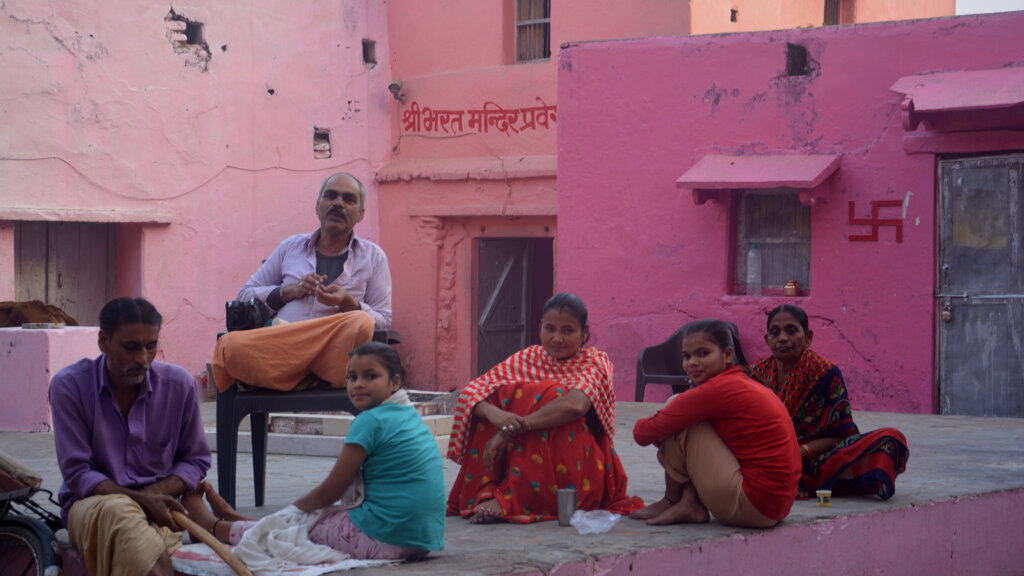
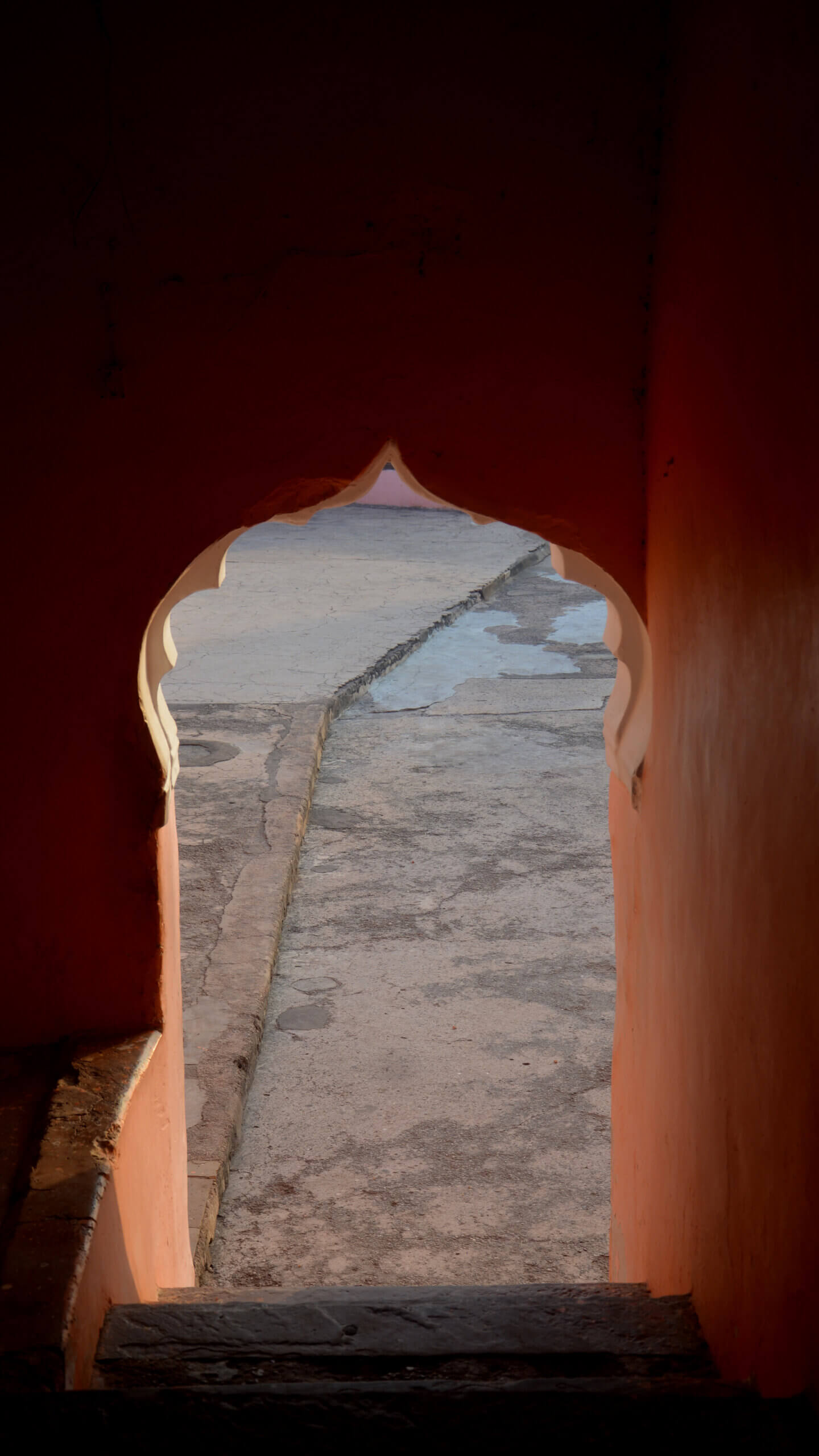
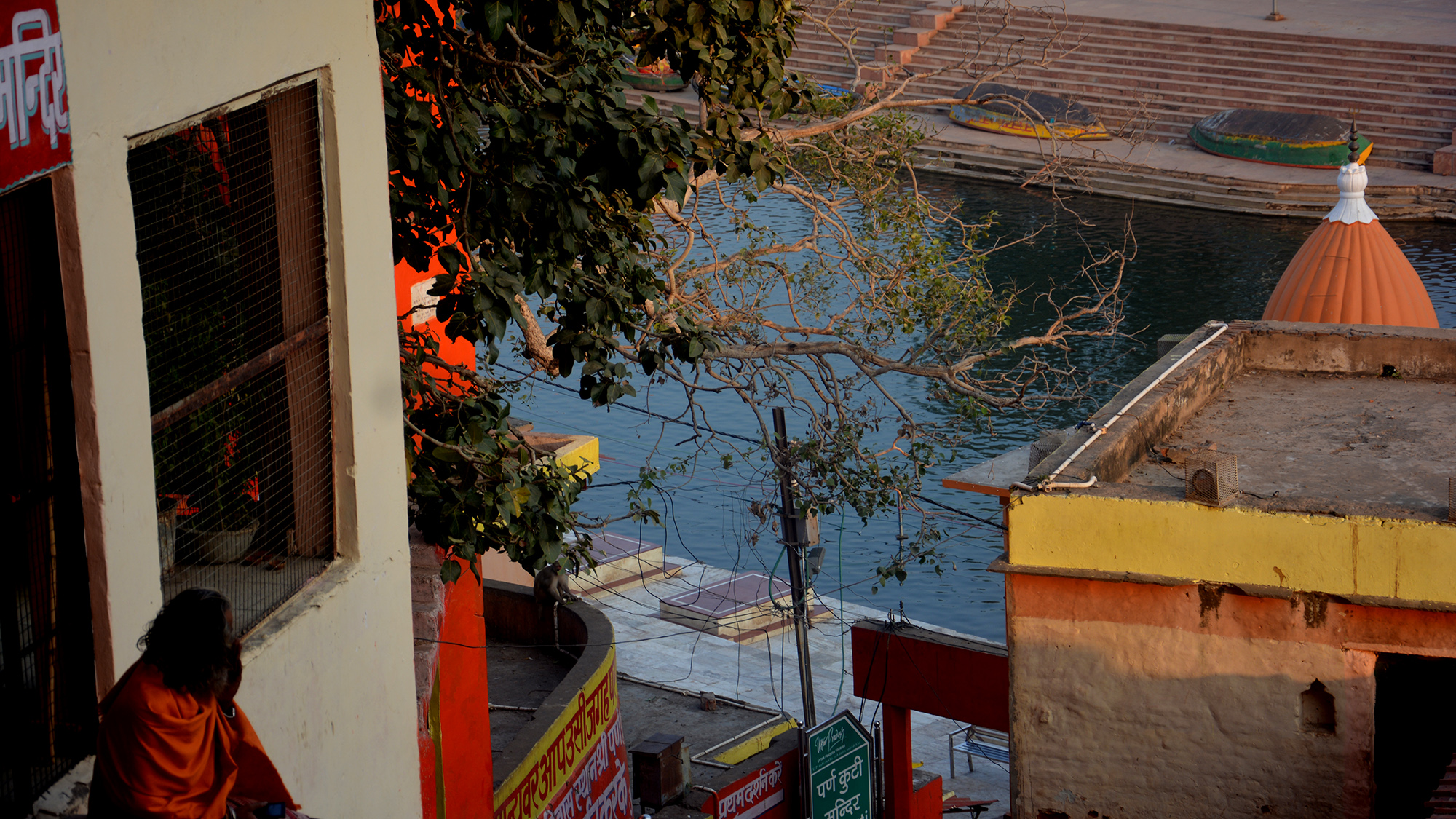
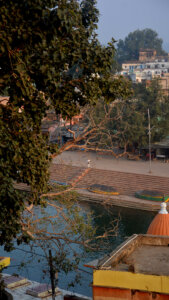 This space led us to a lane, from which we again entered Pant Kuti Ram Mandir. This, again, was a collage of courtyards and shrines—some connected to each other with doorways, others with stairs, as many of these were on different levels. One courtyard led to another, ultimately leading down to the ghats on Mandakini.
All these havelis are temples with shrines dedicated to Ram, Bharat, Lakshman, and others from the Ramayana. Each one has a story to tell; each has a different patron. The maze of stairs, courtyards, and shrines somehow doesn’t overwhelm the visitor. In fact, each of them invites you to pause, to meditate, and maybe to find yourself.
The noise of the pilgrims, the sound of the bells—all work towards making the environment calm and peaceful.
Across the River,Sunset and Stillness
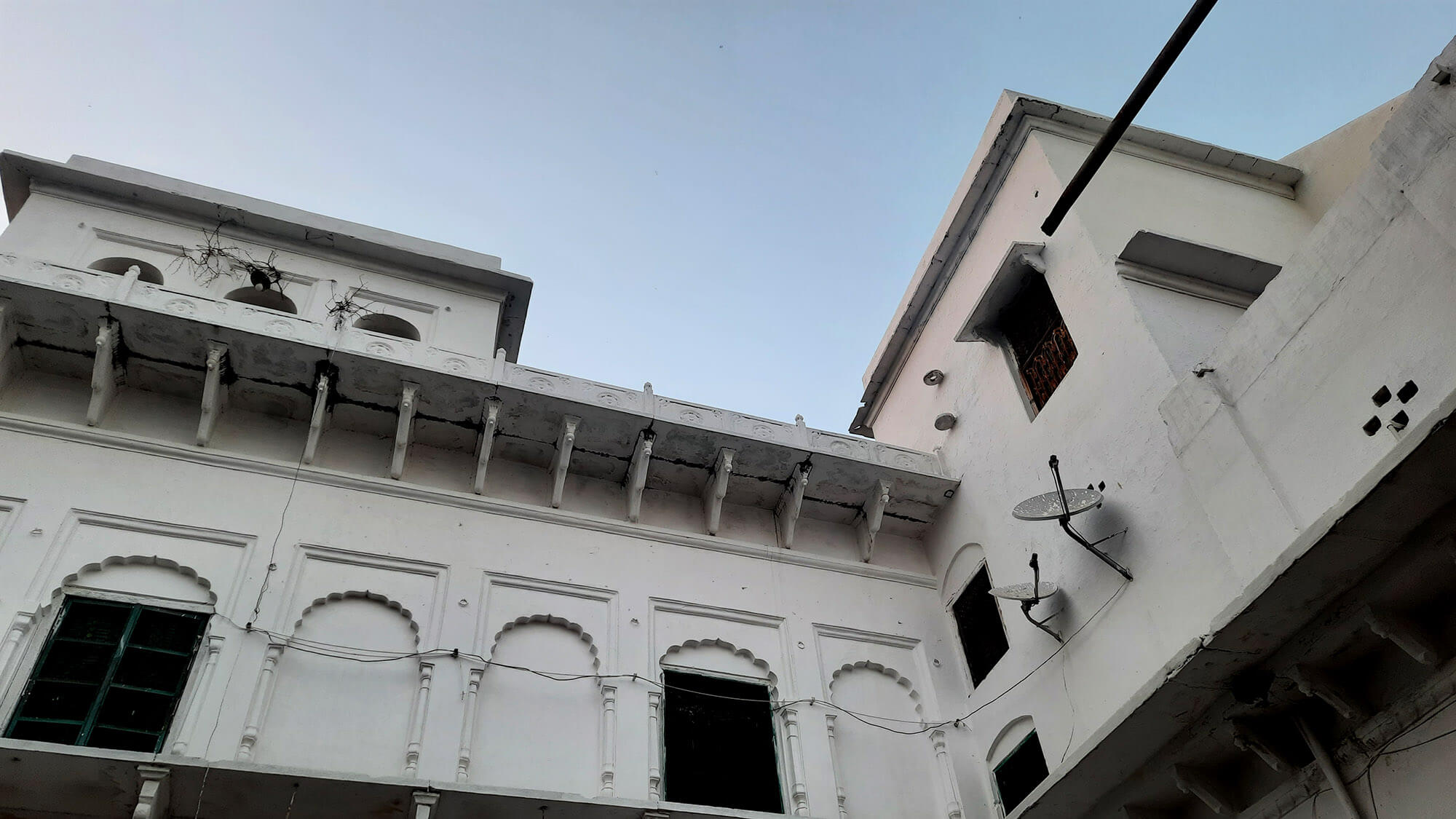
From above, we could see the whole spread. Behind these havelis lay the settlement—a maze of lanes and roofs—where people sat, chatted, and life went on. 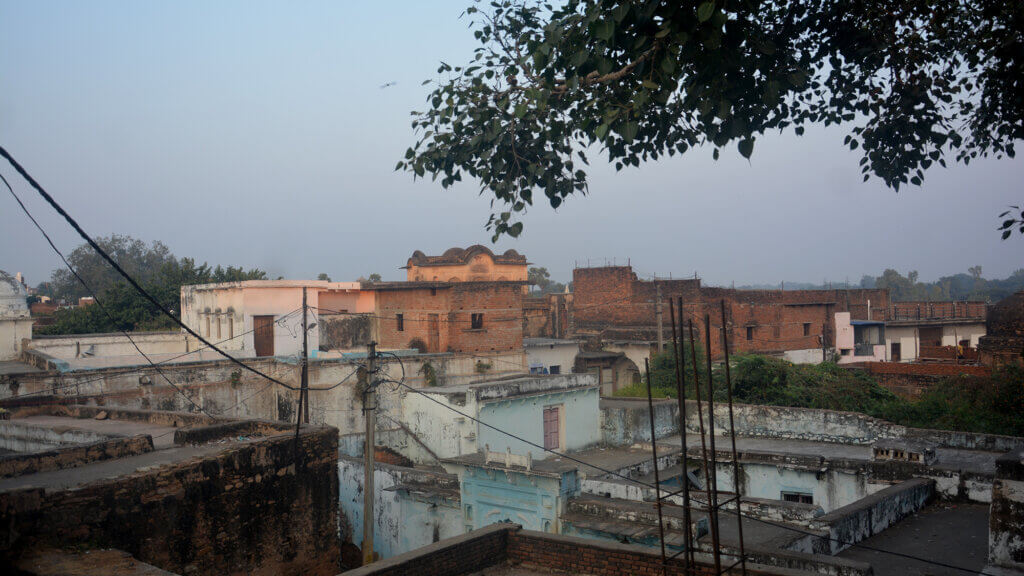
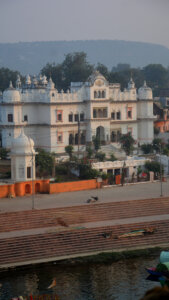 In front, an entire ghat opened up. Small temples and a grand haveli stood on the opposite bank, inviting us to explore them.
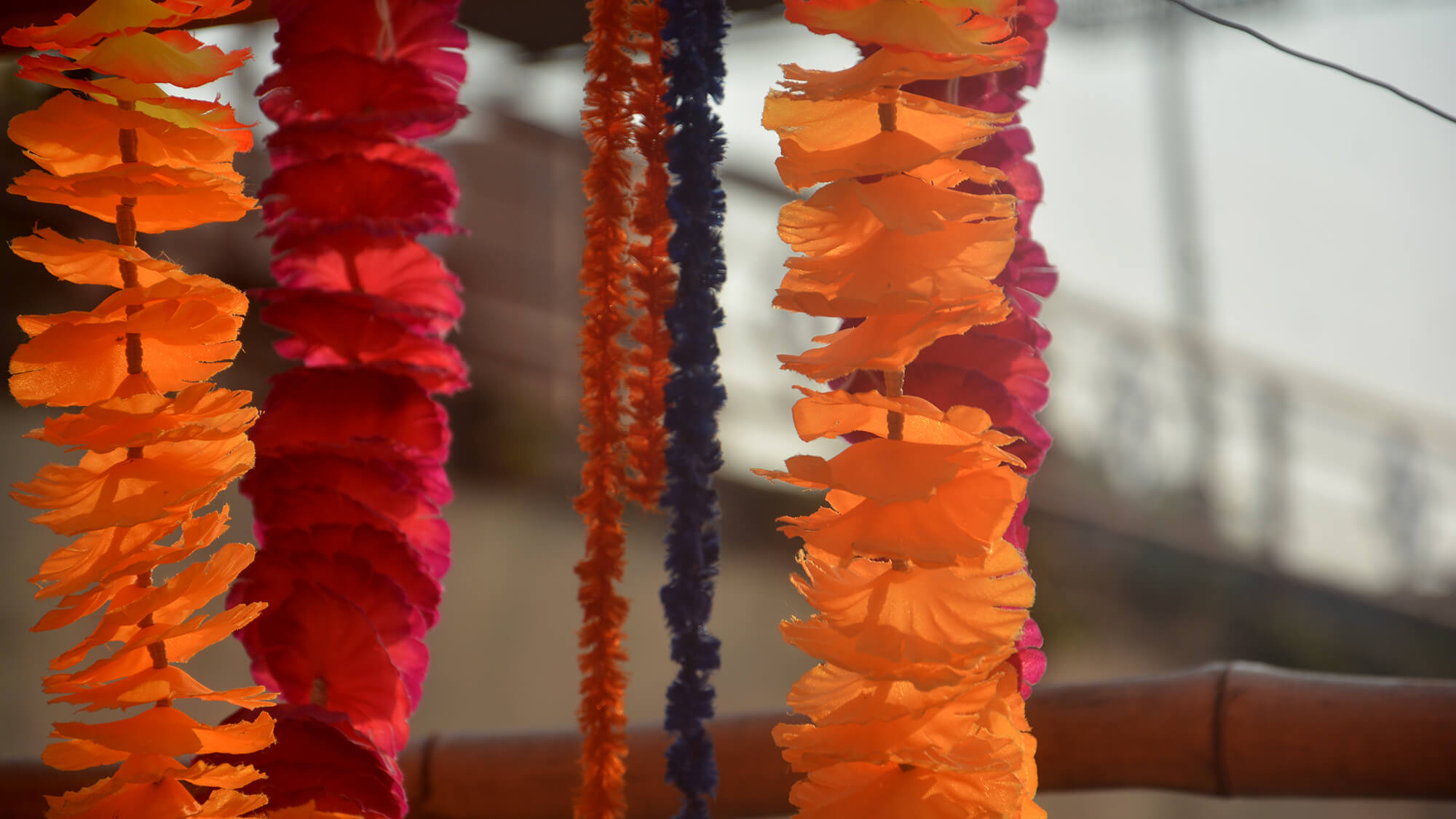
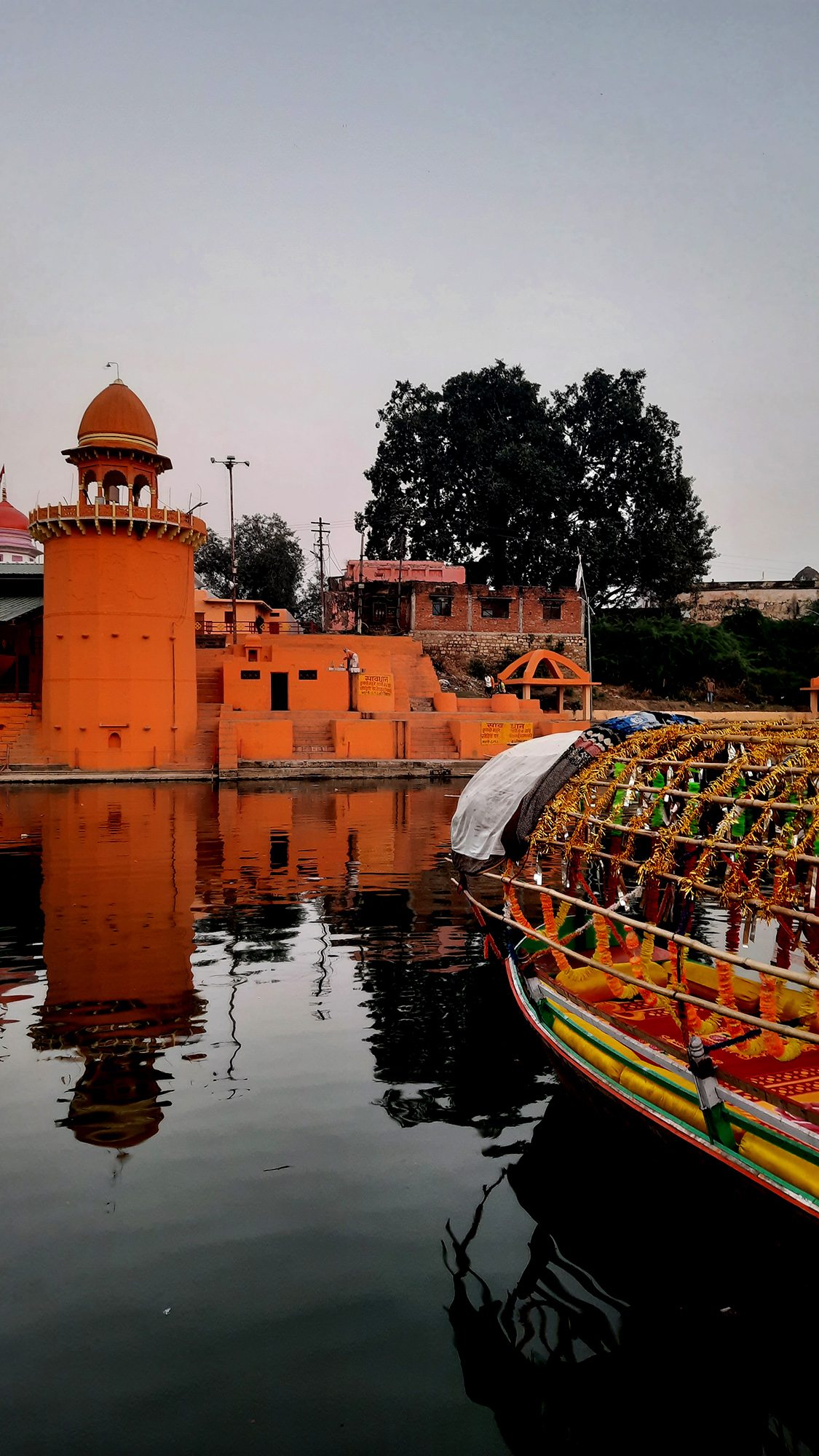
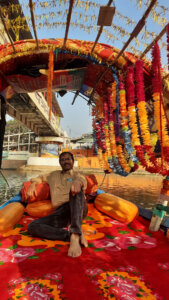 We took one of those decorated, colourful boats to cross. Snug and cosy with plastic garlands hanging on all sides, these boats had a rustic charm. The small ride was delightful and gave moments to capture some great pictures.
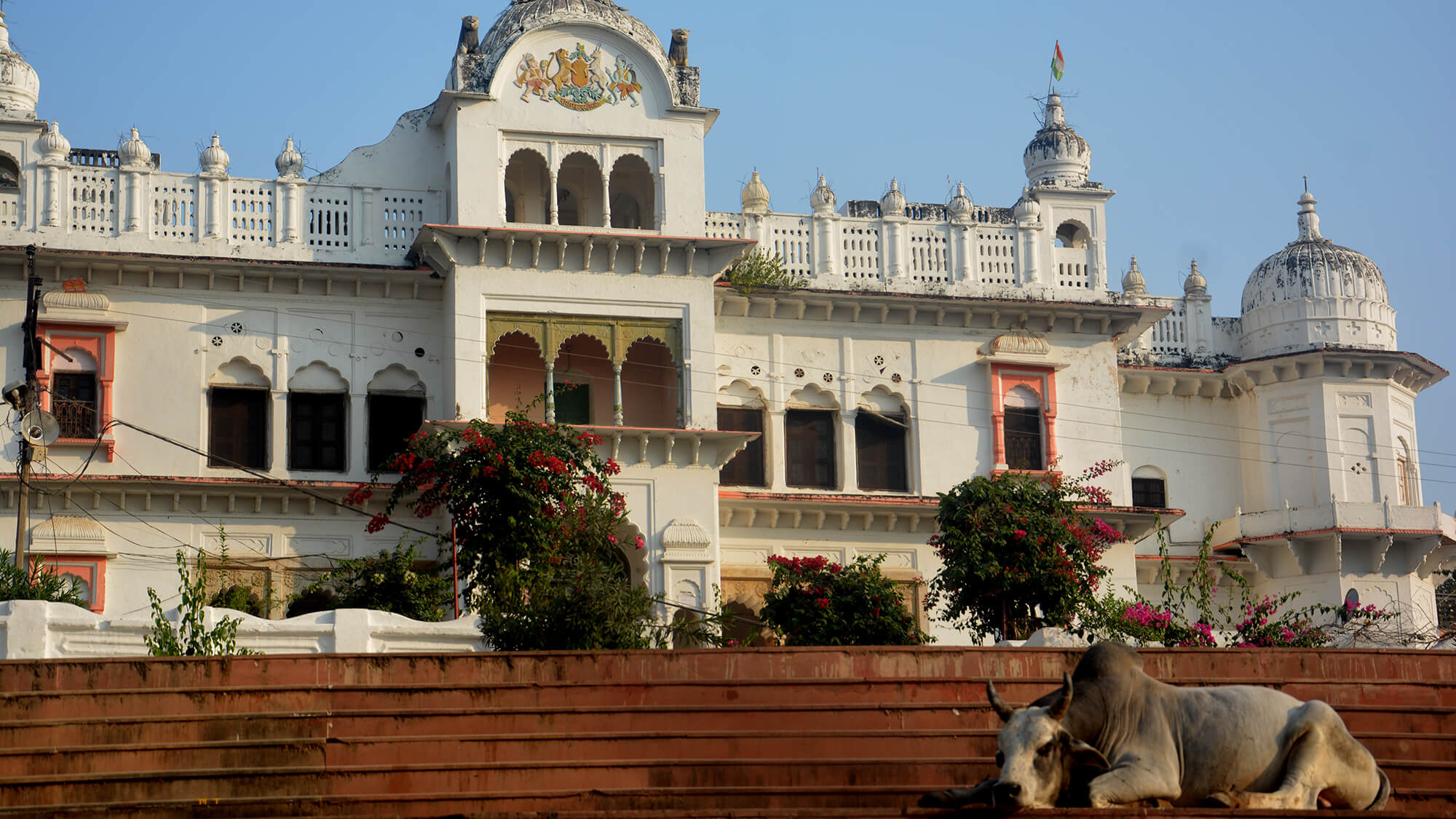
The palace on this bank was again a temple for Ram, like most temples in this place—with huge courtyards, jharokhas, and white walls. With no hillocks on this side, it felt closer to the water.
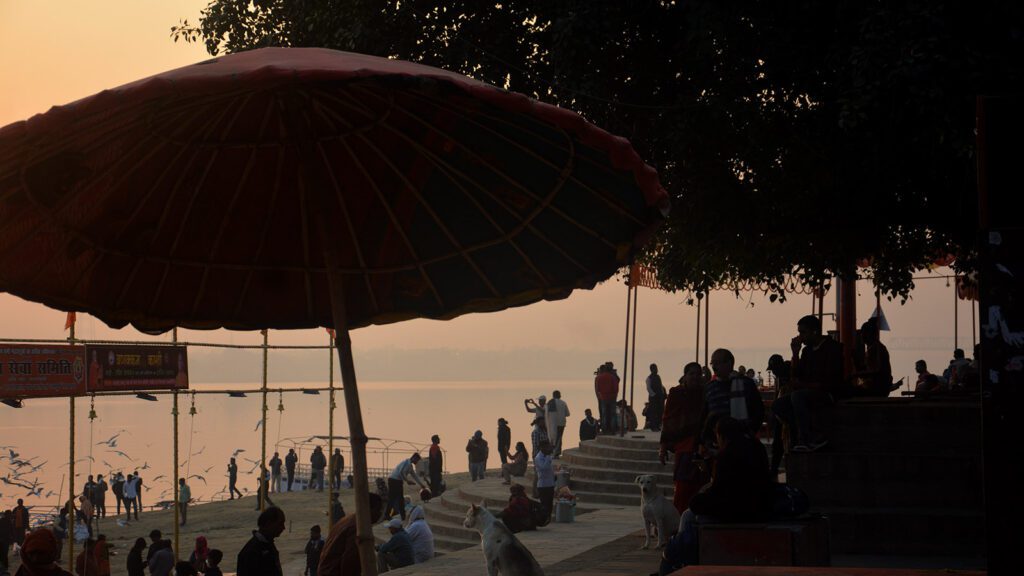
It was already time for sunset, and the time of the day demanded some pause and reflection.
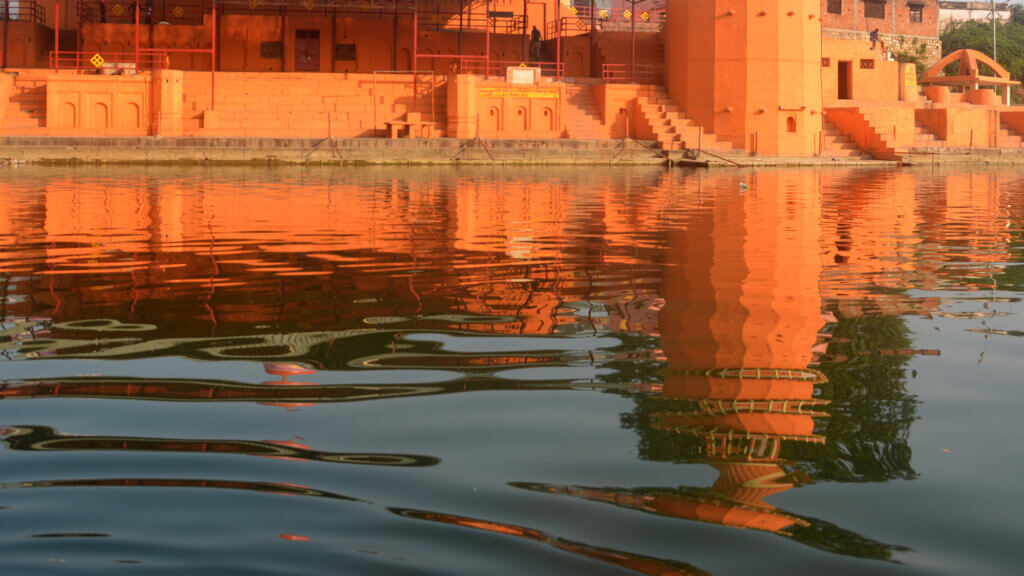
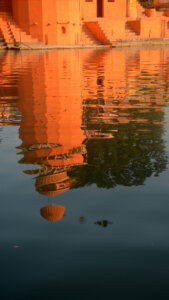
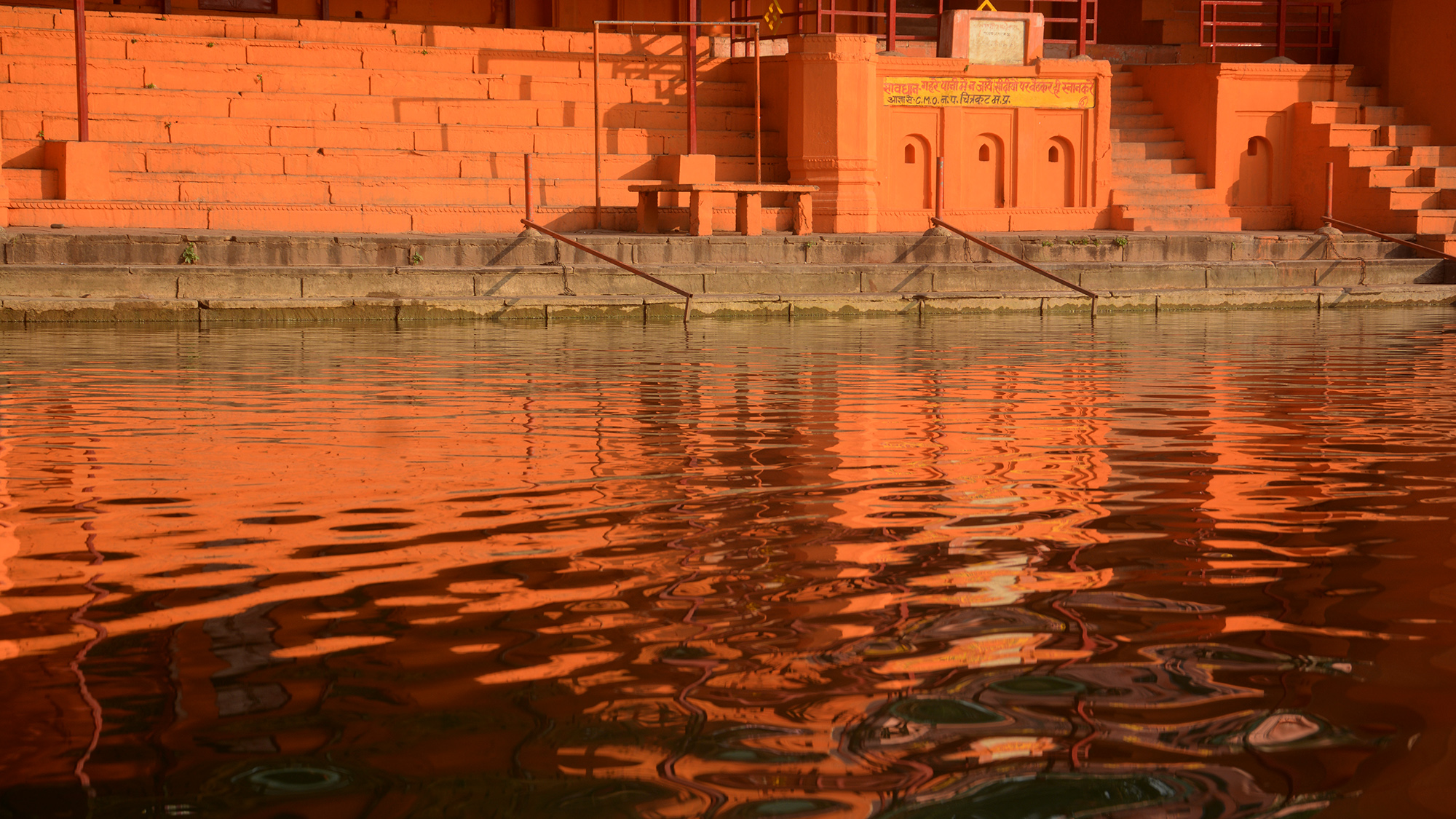
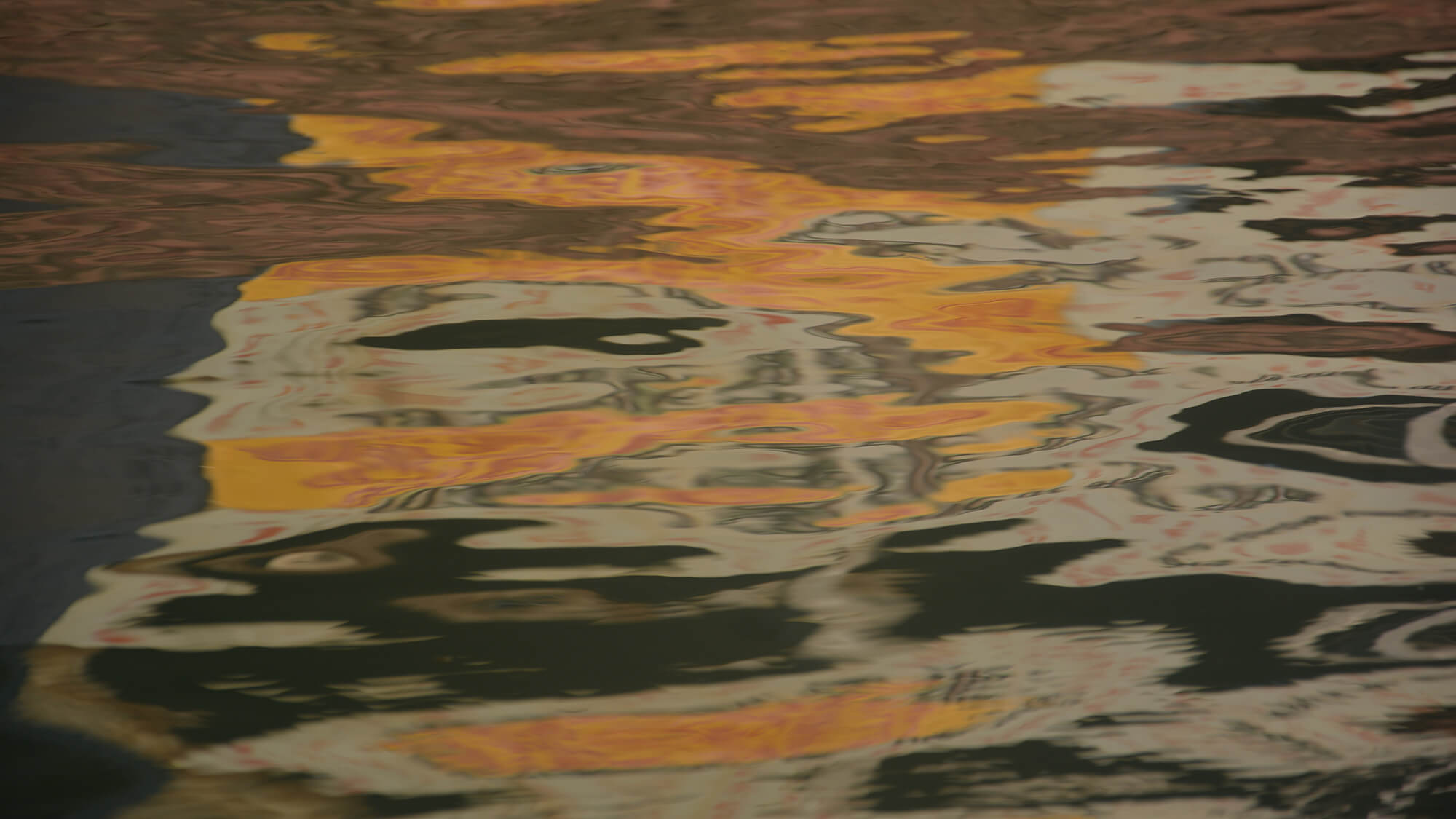
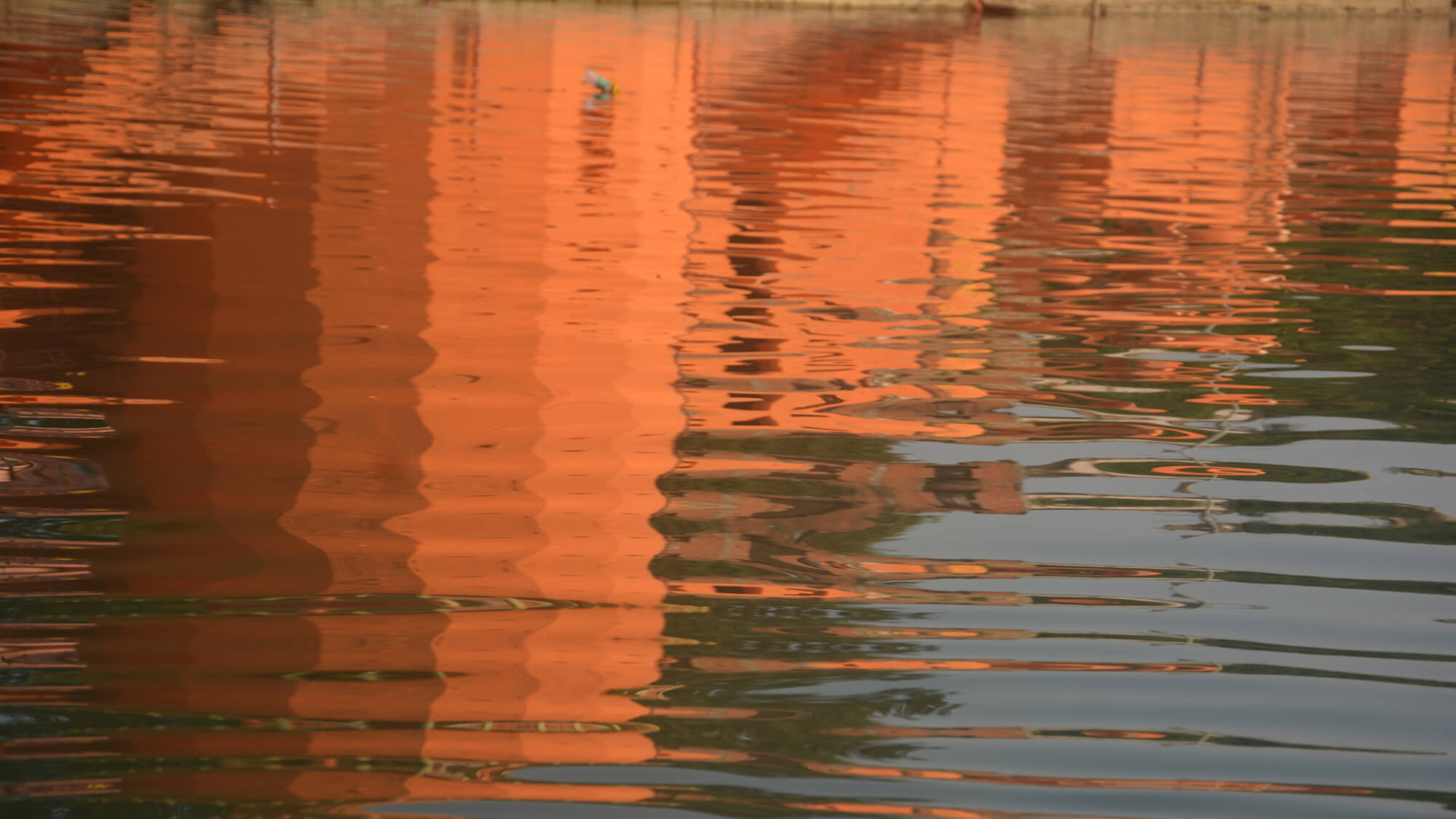
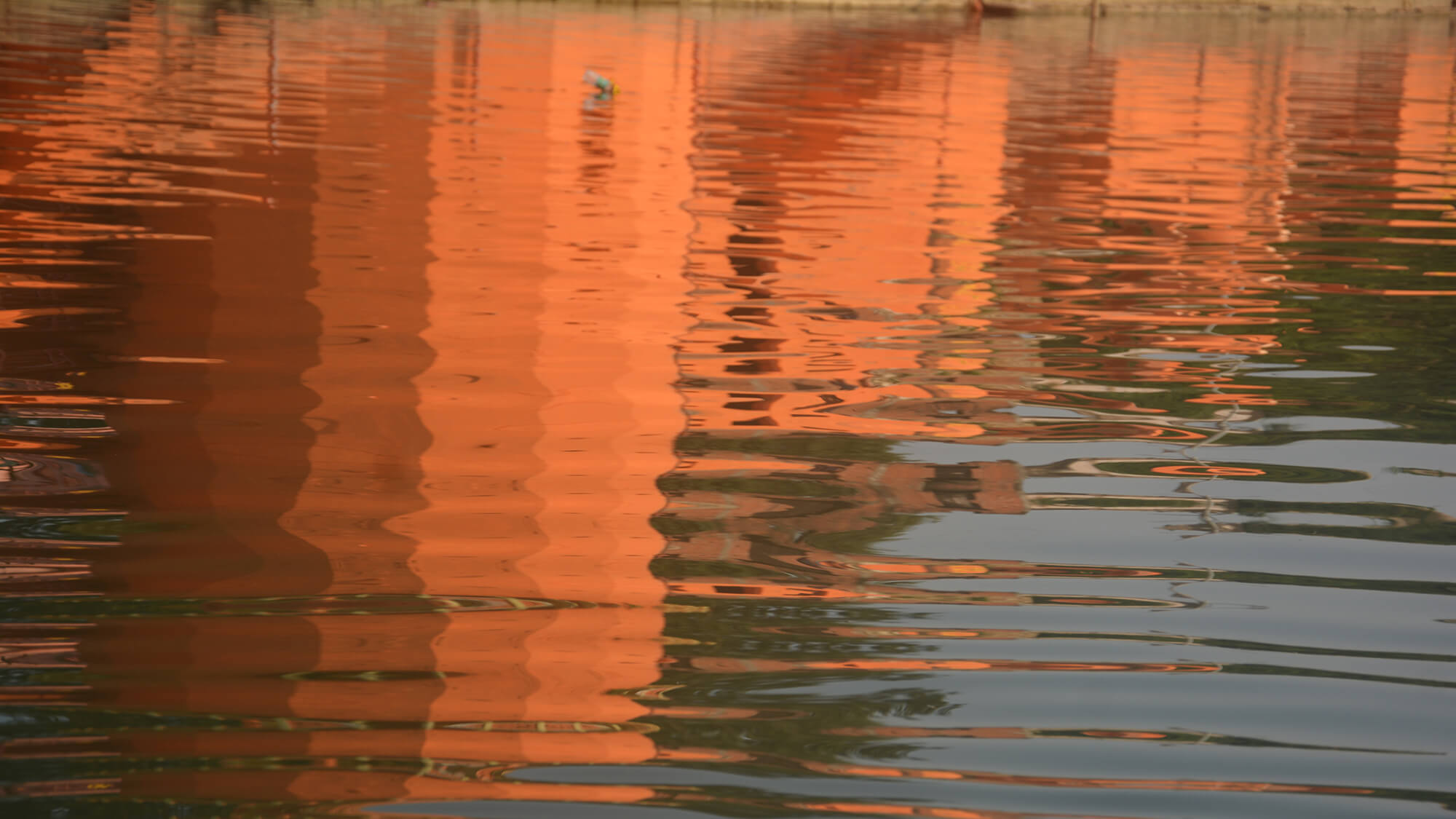
We sat on the ghats, watching the surroundings turn pink with the sky, and all of it getting reflected in the water.
There were many havelis to be explored and much to be seen around this ghat, but we were short on time. 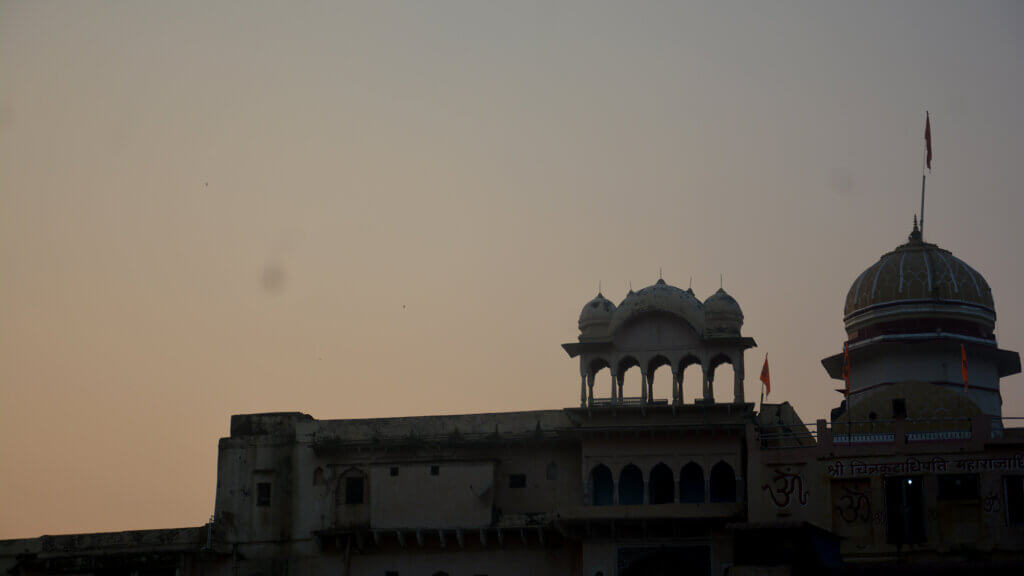
A Brief Climb, A Last Glimpse
After an immersive evening aarti at Ram Ghat , we rushed to Hanuman Dhara—a cave temple dedicated to Hanuman on top of the hill.
We reached there by ropeway which was busy with devotees rushing for a darshan before the closing. The deity placed in the cave has a continuous stream of water falling from above.
From here , we watched the town lie in the dark of the night, with tiny lights visible intermittently.
As we climbed down, an eerie silence prevailed near the now deserted stands.
What Remains
 As we drove back to Allahabad, I found myself thinking less about the places we had missed – Kamadgiri,Sphatik Shila, Bharat Milap or Gupta Godavari – and more about what my mother must have found here.
The stillness. The stories. The quiet presence of something beyond the visible.
Maybe this journey was not just about reaching Chitrakoot, but about seeing it through her eyes—if only for a few hours. Perhaps that is reason enough to return.
And return I will—not to see more, but to feel it, slowly, and in my own time.
Superbly written dear about Chitrkoot
I have been there thrice, I was PD at Lucknow Projects.
Sonit was easier to Go there along with Prayag Raj + Banaras + Ayodhya 🕉🚩🙏🏹
After reading your details, it feels that I am there again …
Jai Shri Krishna…..
We must Write Prayag Raj Instead other name.
Thanks
Thanks Bhattadji
Very nice article written about Chitrakoot. Didn’t know the importance about that place. It will surely inspire readers to visit the place to experience the divinity. Images are captivating. Thanks and Keep it up.
Thanks Sam