
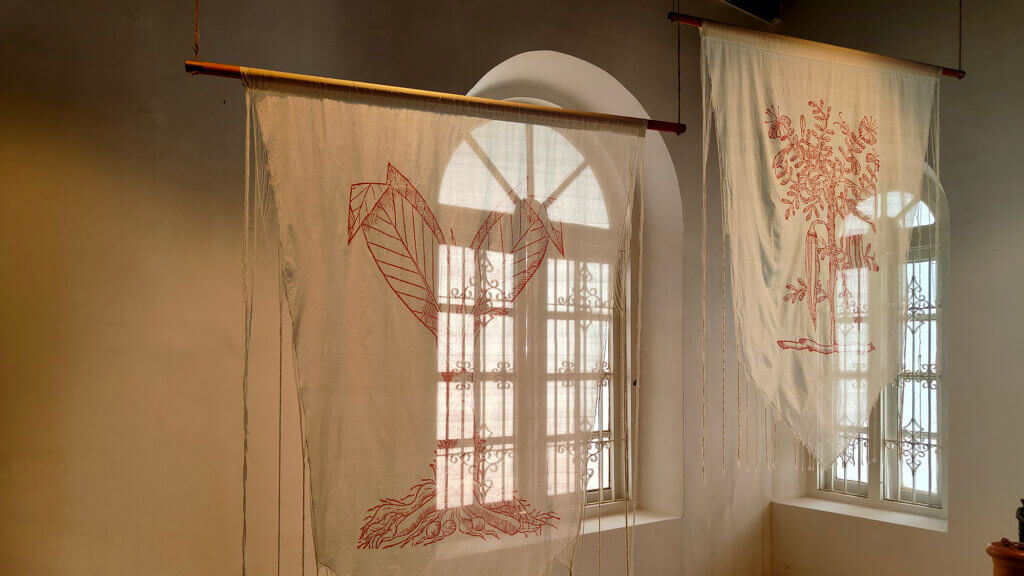
Kochi Muzeris Bianalle: A Kumbha Mela of Art
A Designer’s Fascination with Art
A deep appreciation of the visual and performing arts, as well as various crafts, is essential for design students and professionals, and that has always been true for me as well.
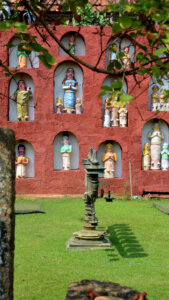 Art practiced in all its forms—folk or contemporary, created for visual delight or guided by a certain ism or ideology, whether by communities or individuals—draws me in deeply.
So when I first learned about the Kochi–Muziris Biennale a few years ago, I was excited and eager to explore what artists had to express through these varied displays in this Kumbha Mela of all exhibitions.
This January, I finally got to visit the sixth edition of the Kochi–Muziris Biennale.
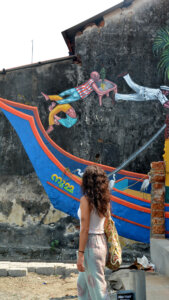 The first one was held in 2012–13, and since then the art festival has been organized every two years, with the exception of the Covid period.
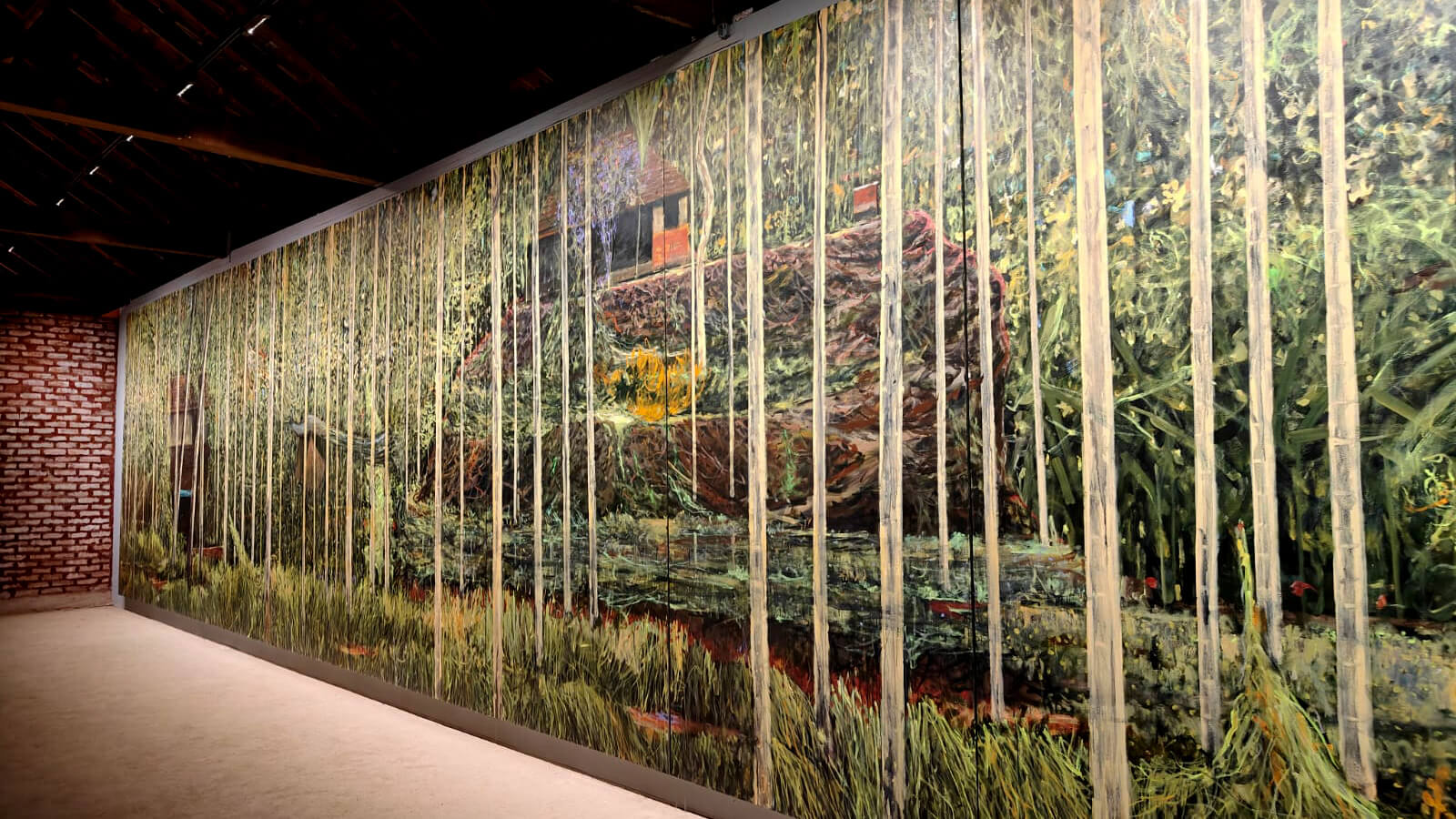
The current edition is open from 12 December 2025 to 31 March 2026, and is titled “For the Time Being.” Curated by Nikhil Chopra, the Biennale is displayed across more than 22 venues in the city of Kochi, mainly in Fort Kochi and Mattancherry, and boasts the work of over 75 artists from across 25 nations.
This is an enormous amount of art for any single city at any given time.
Entering the World of Kochi Muzeris Bianalle
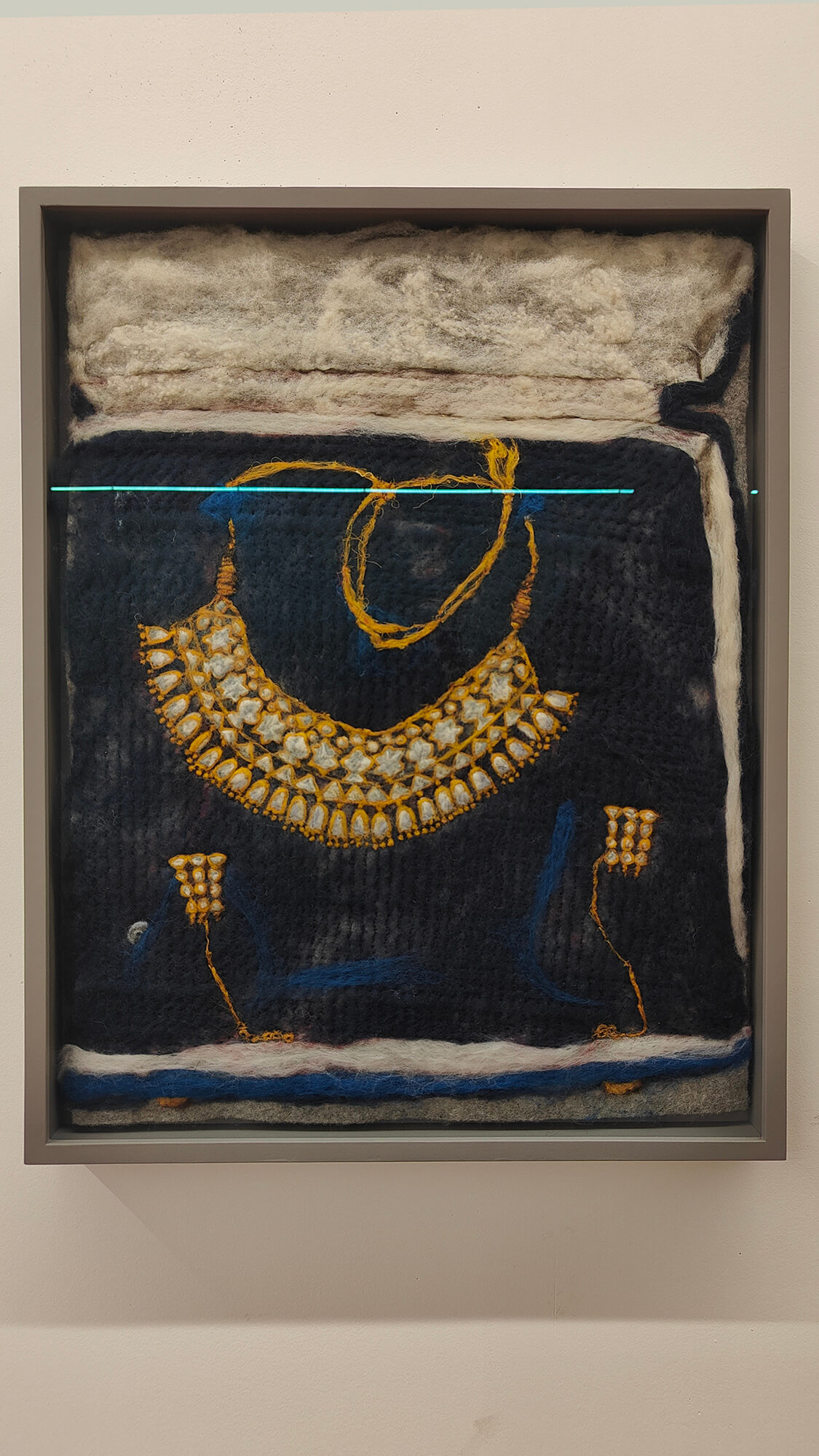
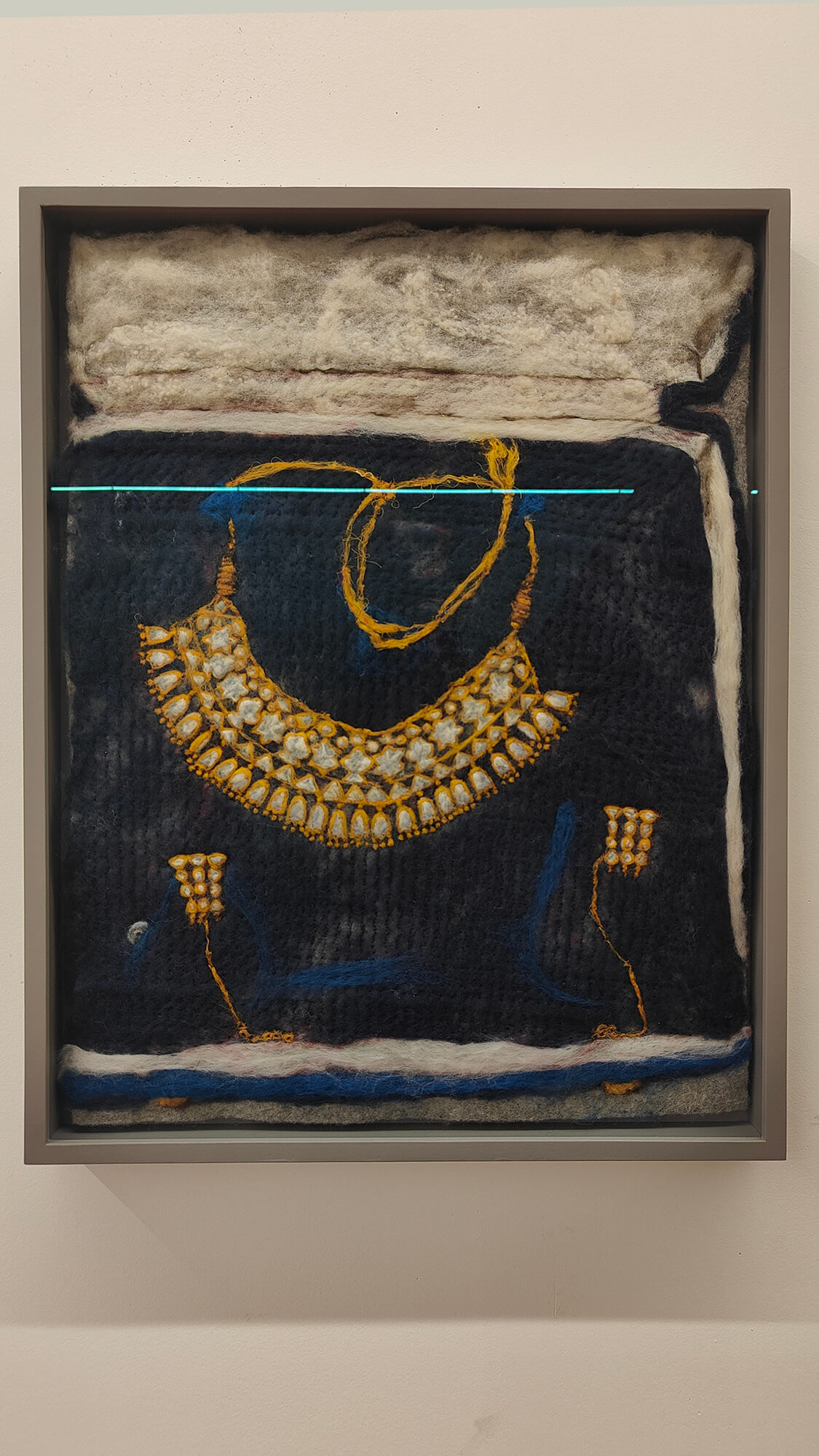
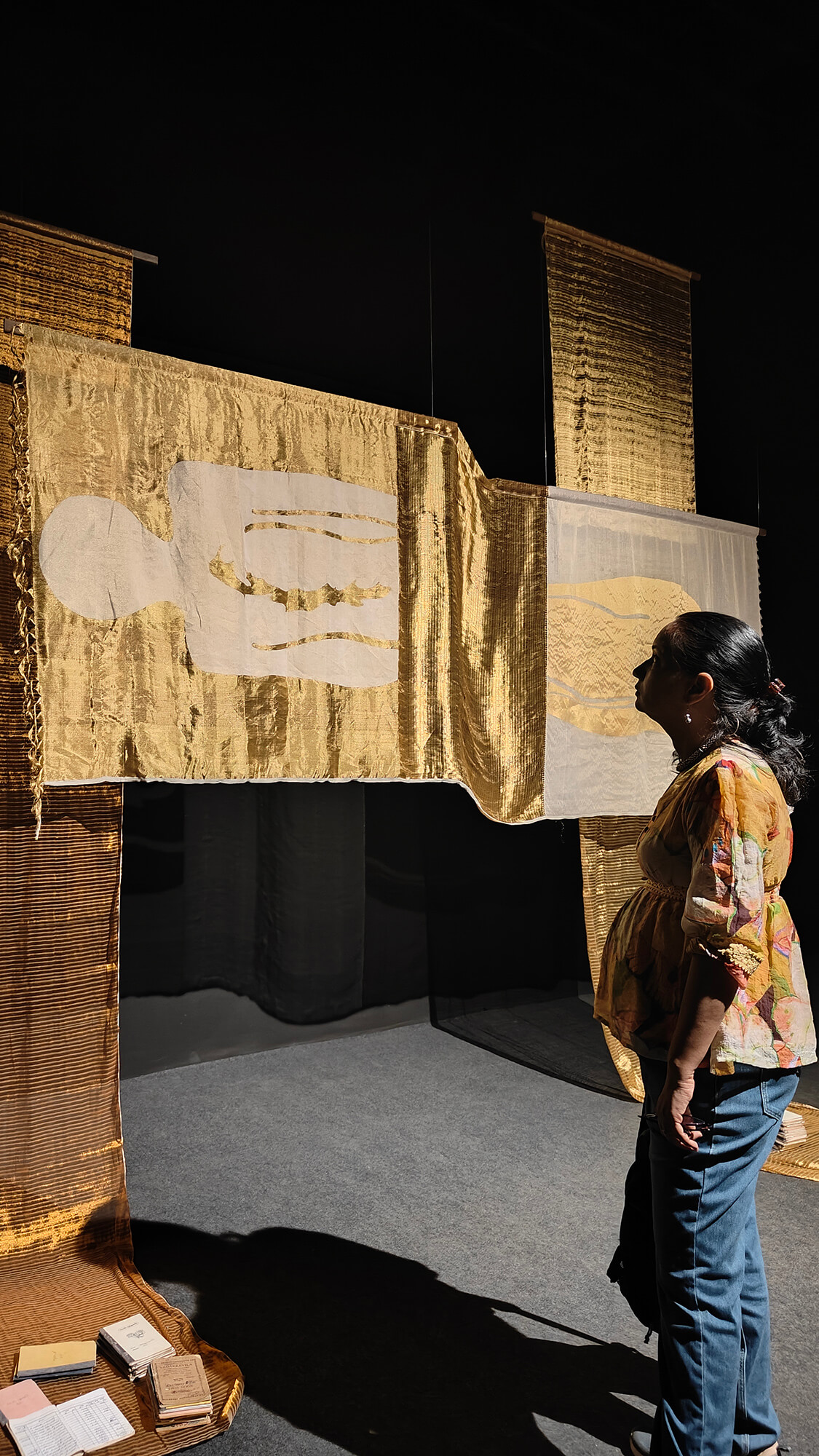
 As we began exploring the city with our guide, the first display we encountered was in the KM Building,titled ‘Like Gold’ by the artist collective RISK Art Initiative. The mythical material and migratory journey of gold were explored through various media, forms, and materials.
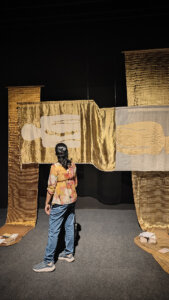
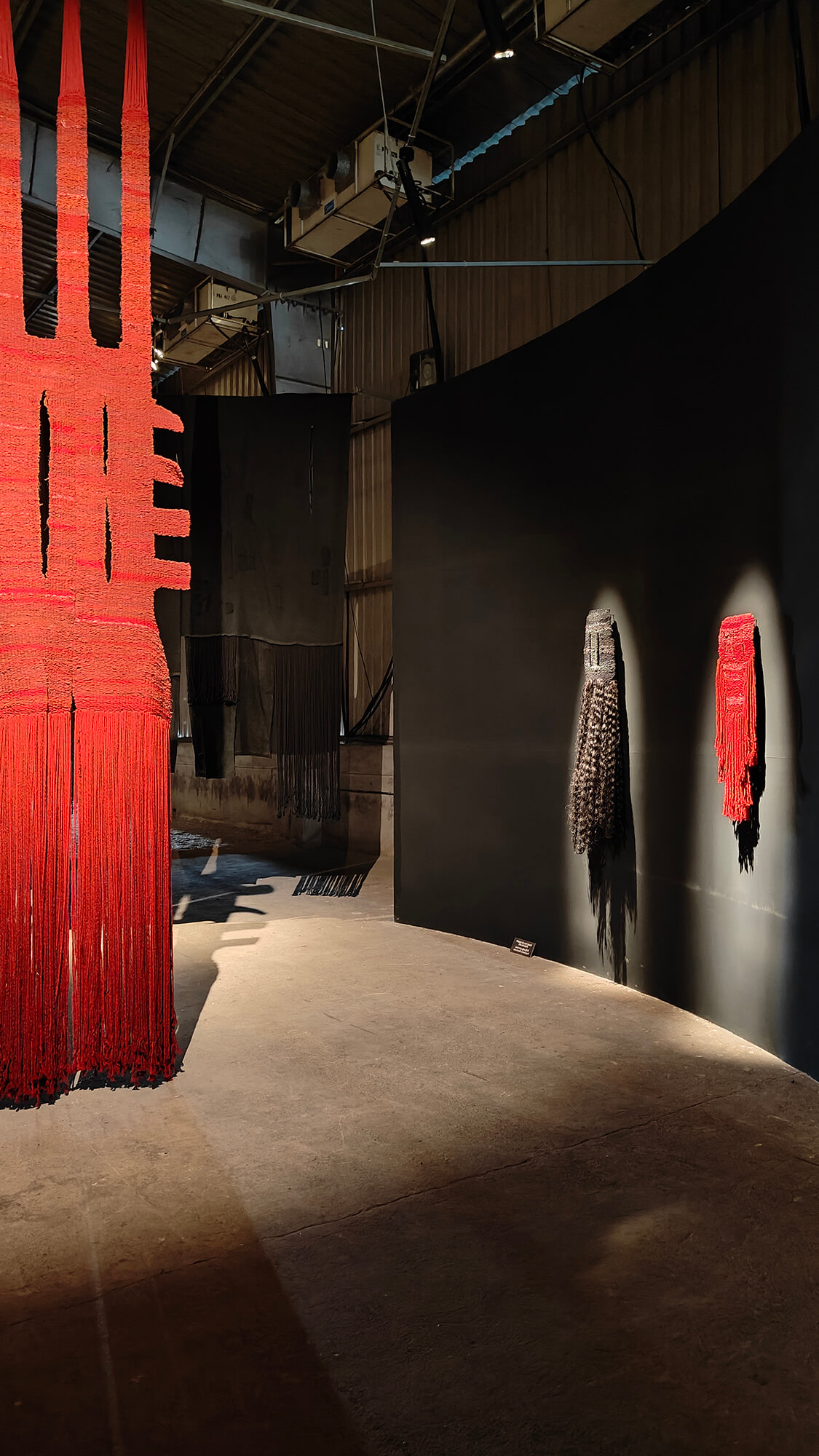
From there, we were led to one of the more engaging single displays, “Looming Bodies” by Lakshmi Madhavan. The artist has worked closely with handloom workers of Kerala, and this display focuses on the labour behind the craft rather than the final product.
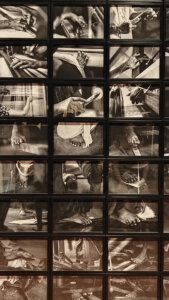 She does this brilliantly by placing a golden fabric, illuminated at the centre, surrounded by a tapestry of black-and-white close-ups of hands and feet working on handlooms. Hundreds of these close-ups, arranged one after another and layered above each other, capture the incessant rhythm of the looms—a rhythm you can almost hear.
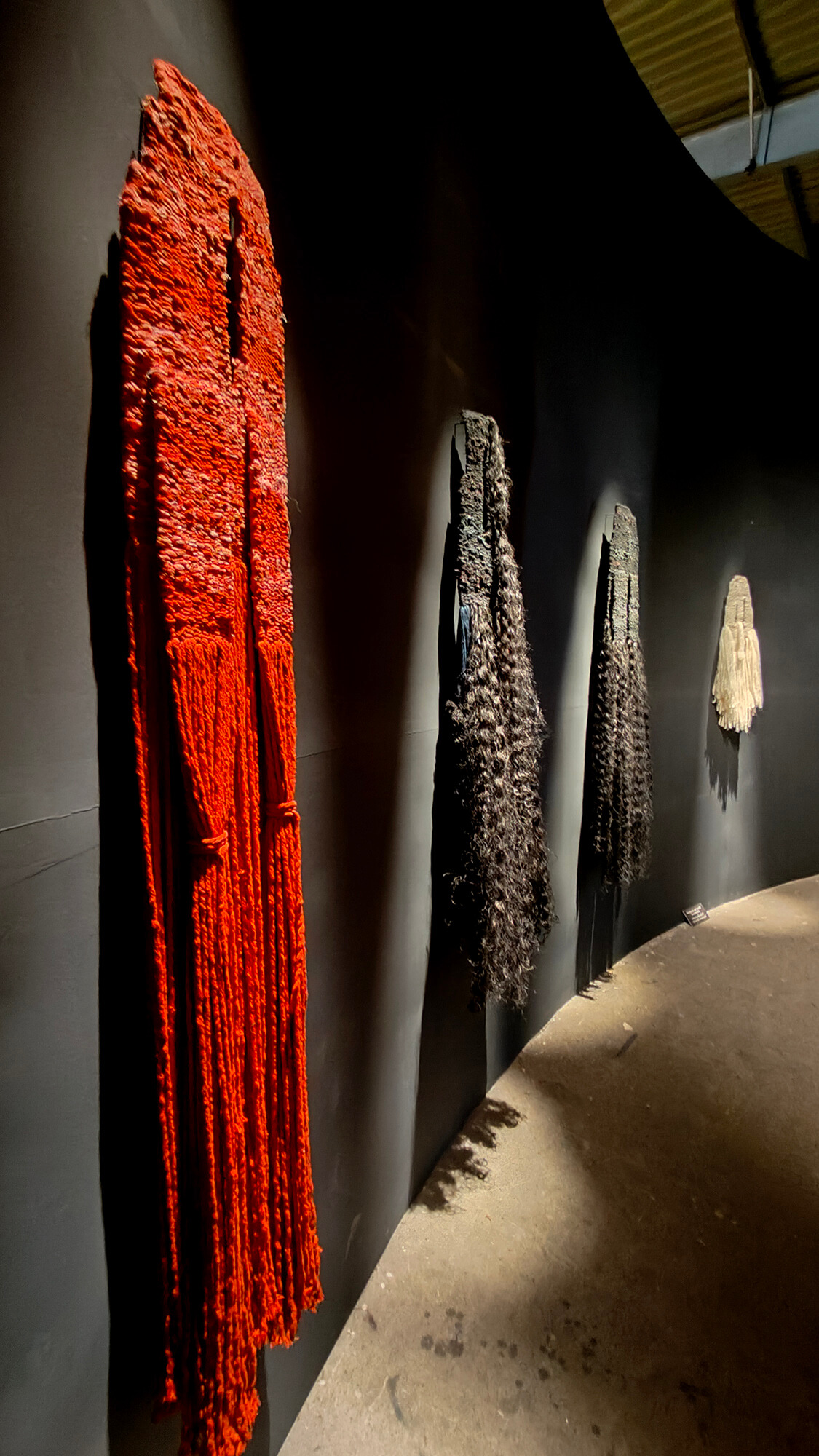
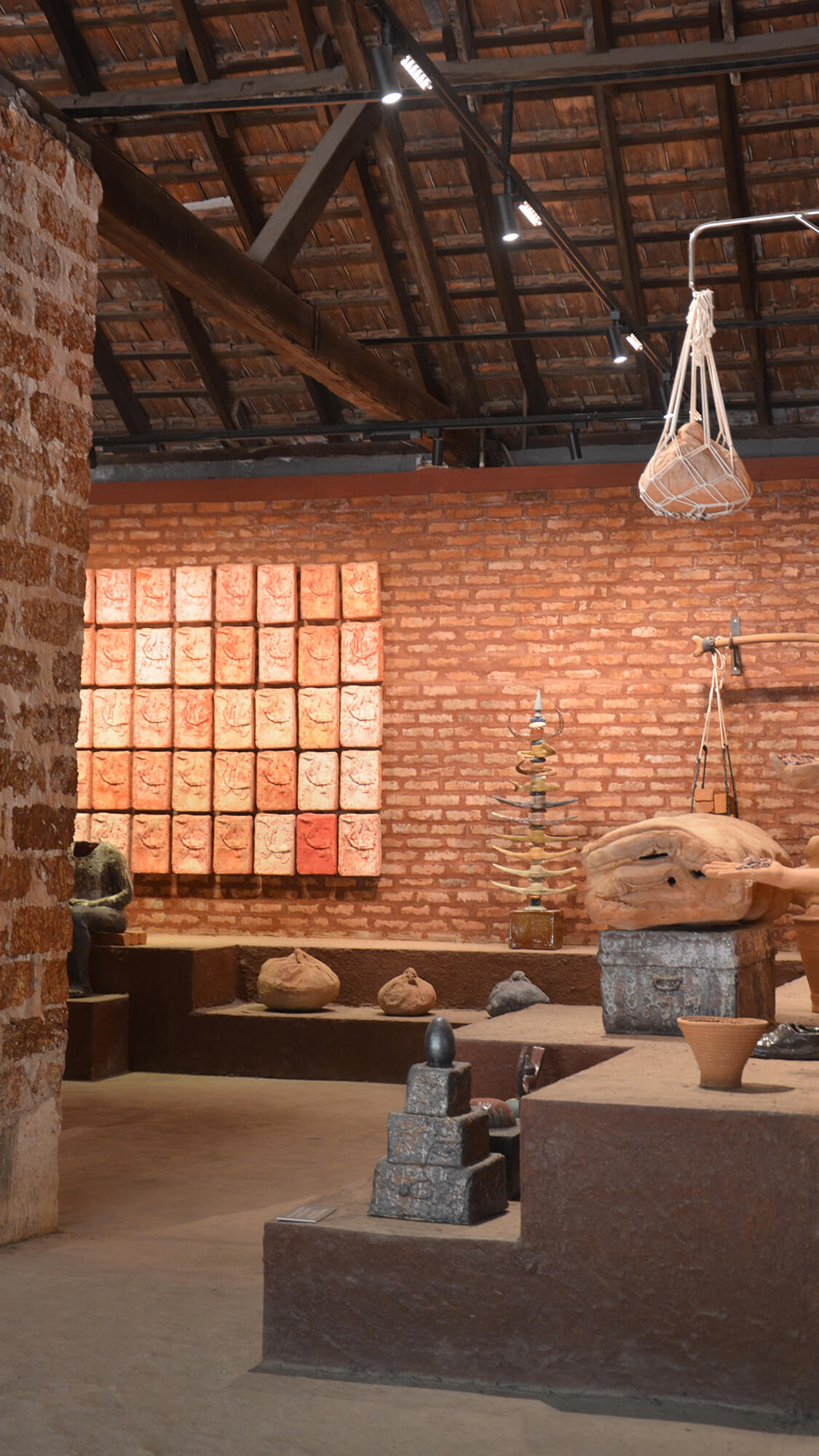
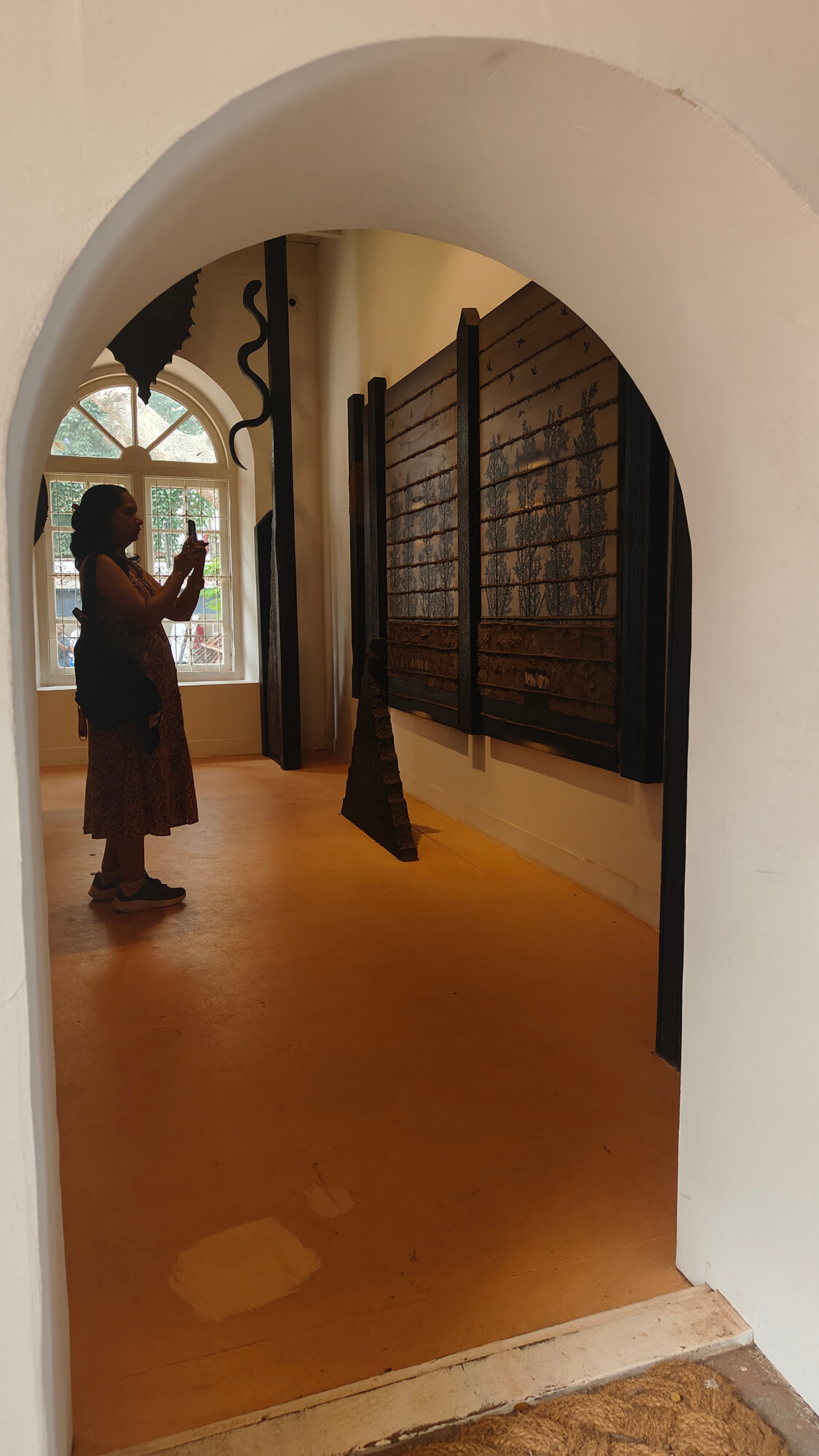
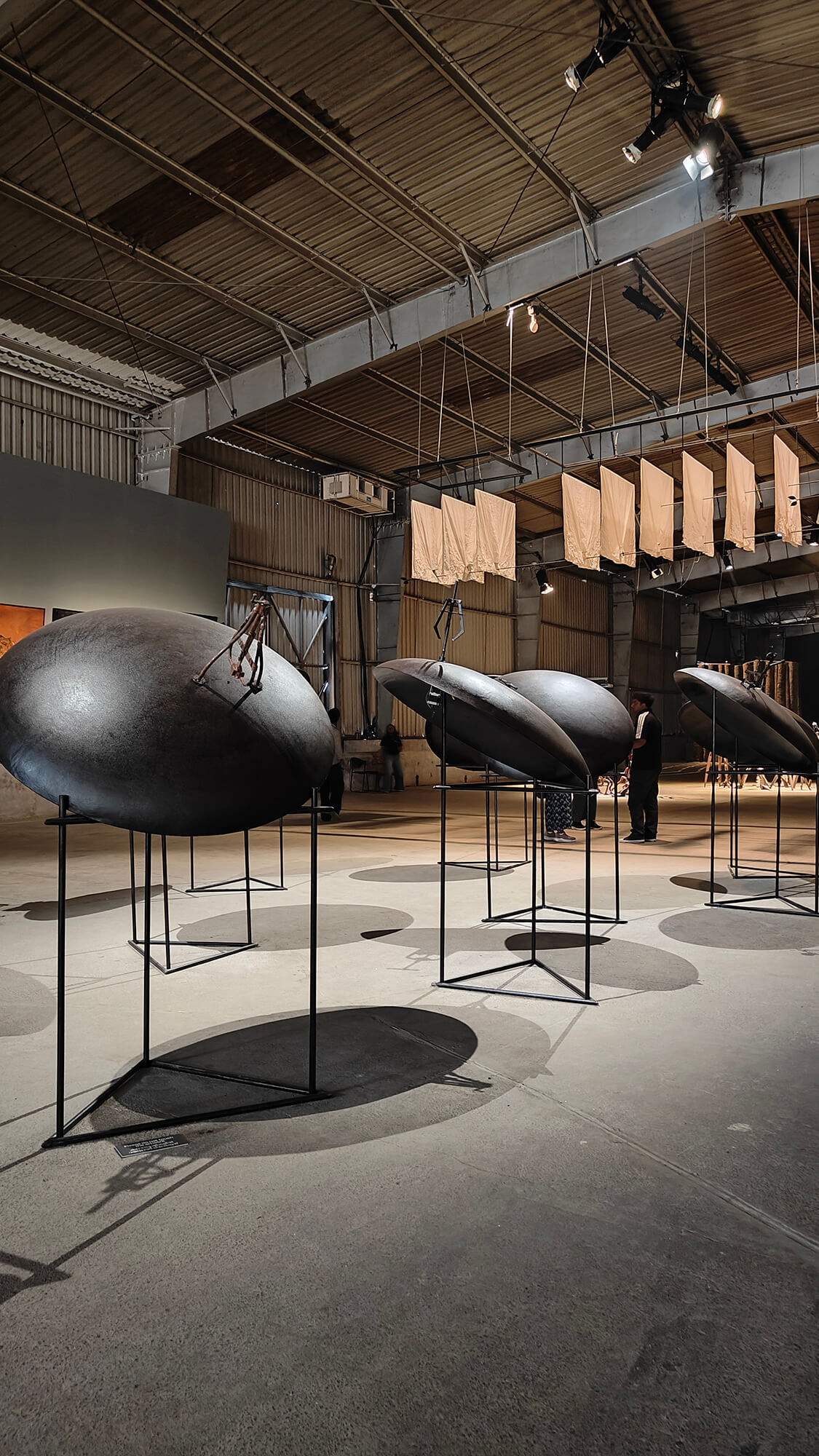
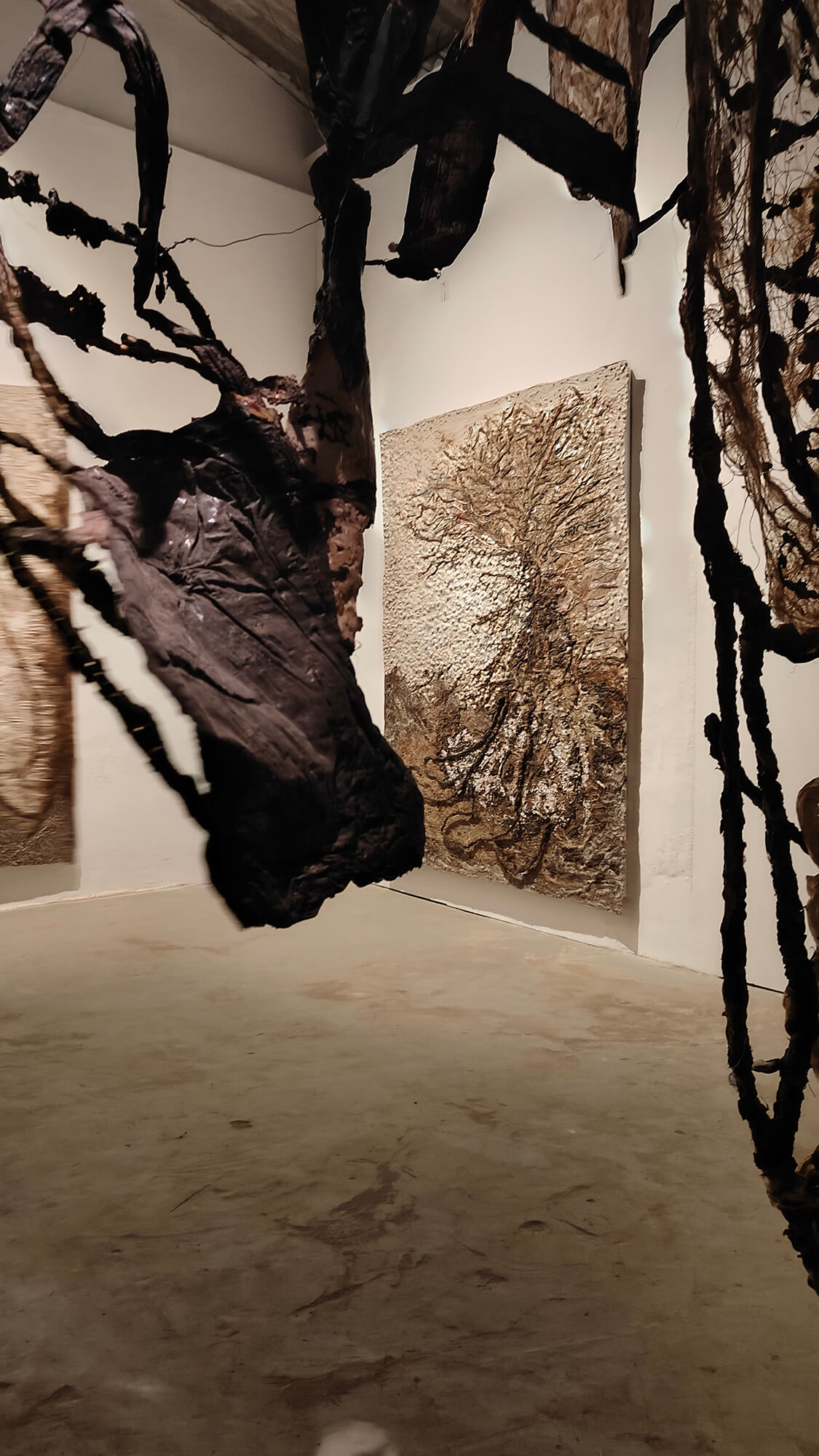
Over the next three days, as we continued exploring the various venues, we encountered astonishing works of art displayed in warehouses that once stored goods for trade—now abandoned. These have been transformed into lively museums during the Biennale. Each venue has witnessed the era of the spice trade and now hosts artists and art lovers – from all over India and abroad – instead.
Exploring Art Across Fort Kochi and Mattancherry
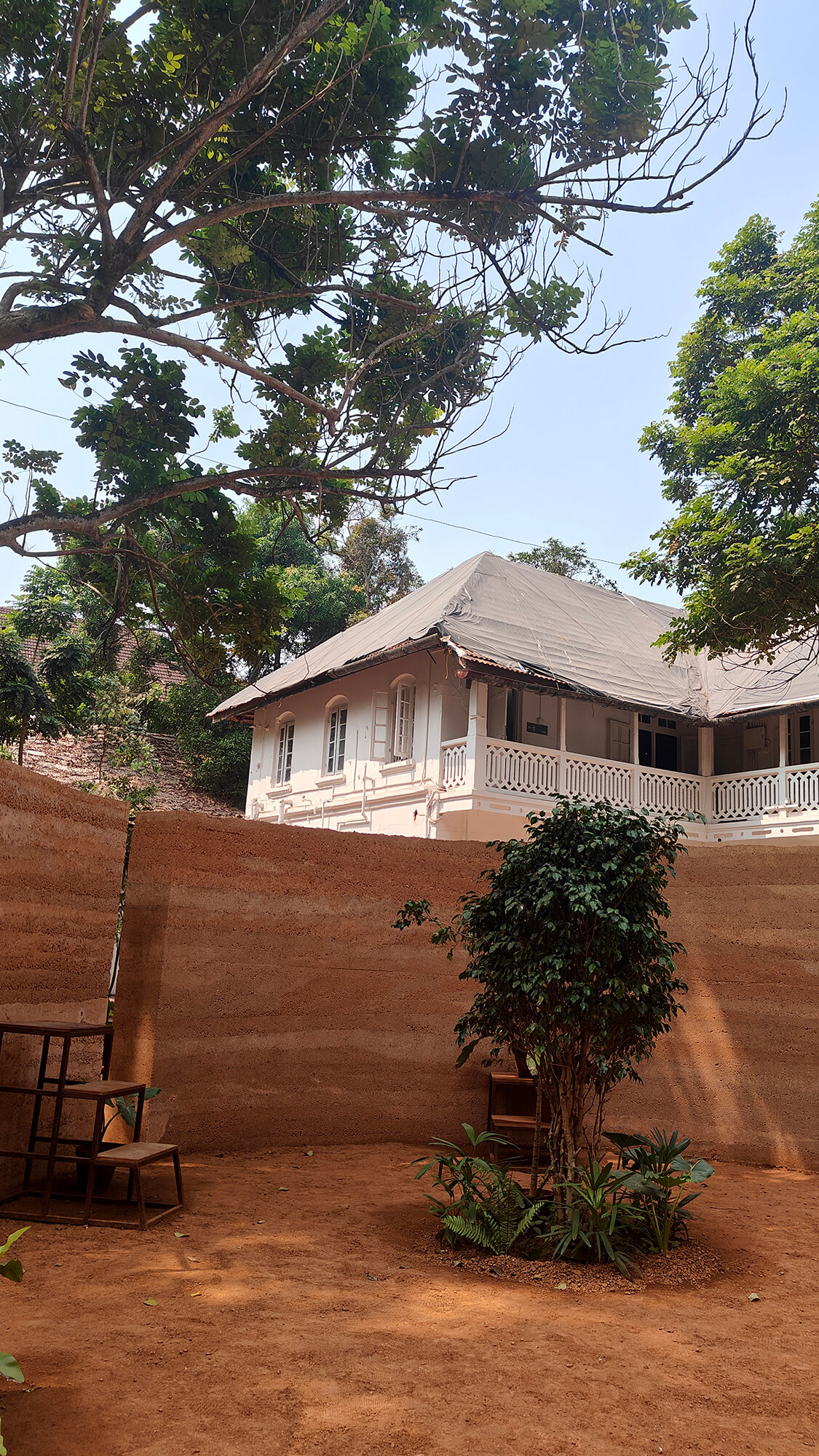
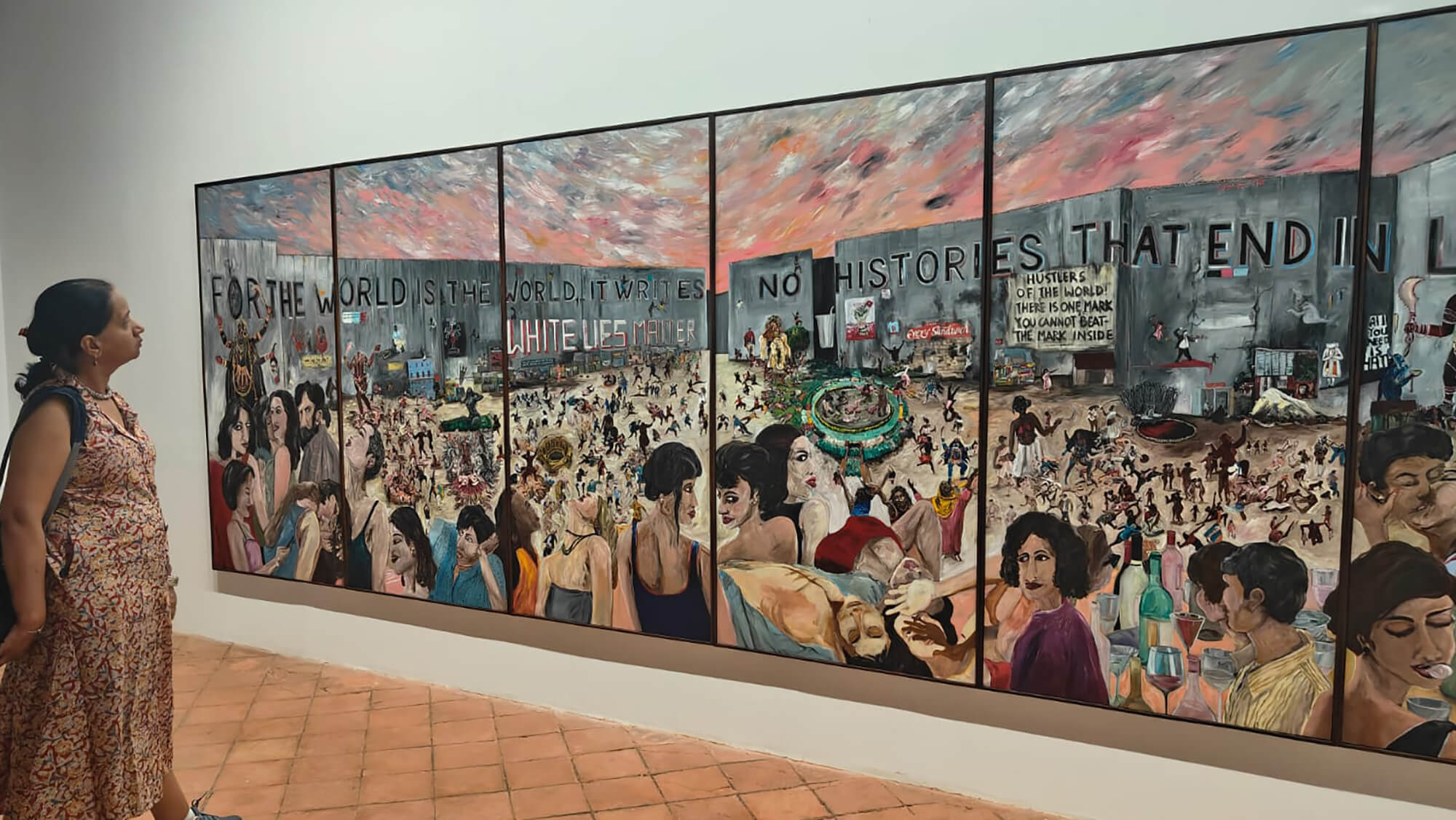
As we began our guided tour of the main venue, Aspinwall House ,we saw refrigerators stuffed with rotting consumables, presented as an expression of over-consumerisation by an artist.The next two hours unfolded into a fascinating journey through installations in different forms, media and material.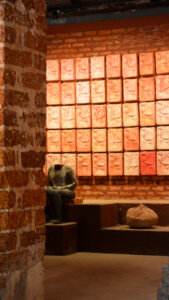
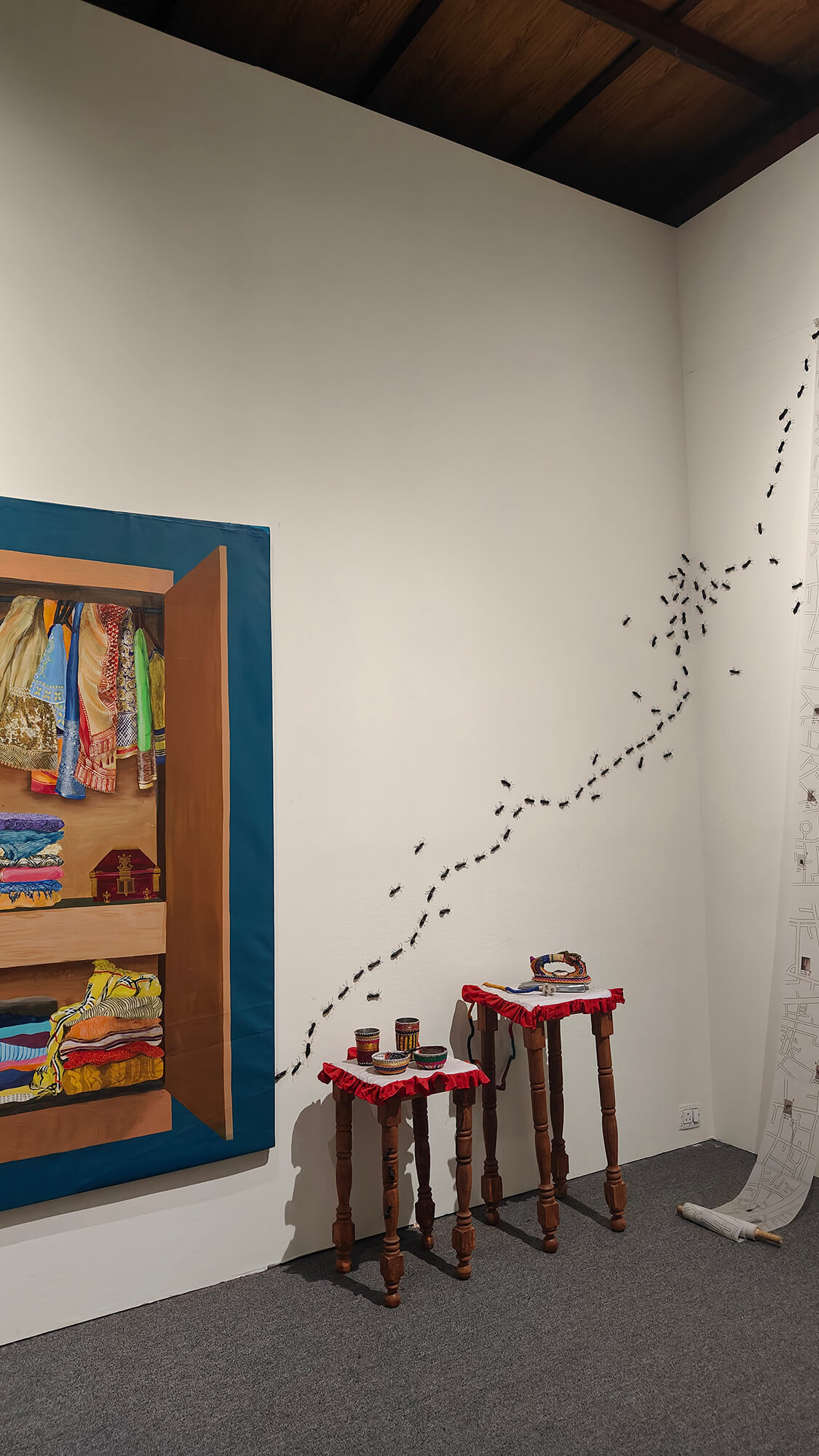
We saw an installation representing folk traditions and the displacement of people from Bengal, created using vernacular art forms.
There were colourful fluorescent installations resembling flowers, symbolising the subjugation of the poor in Bihar.
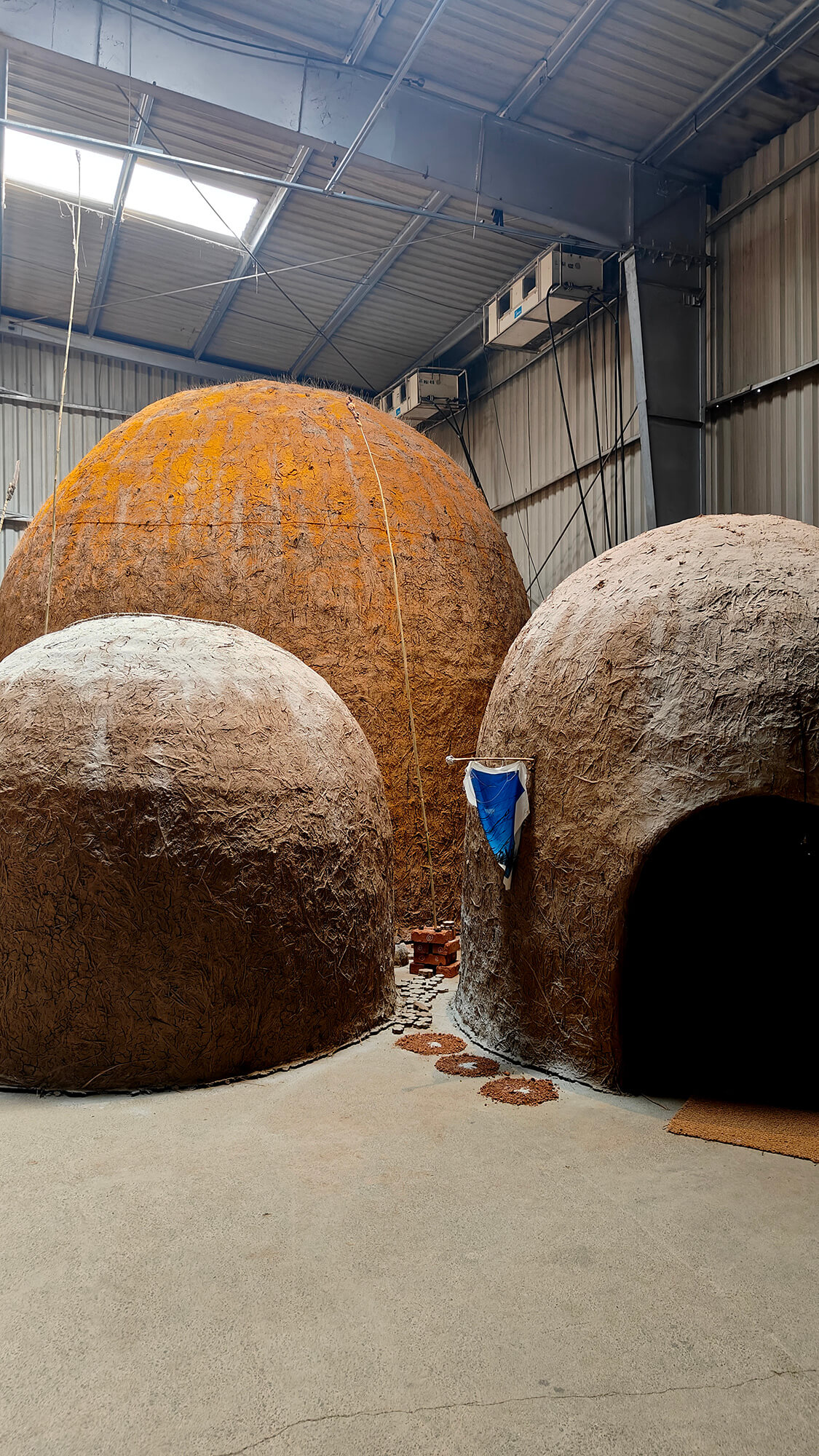
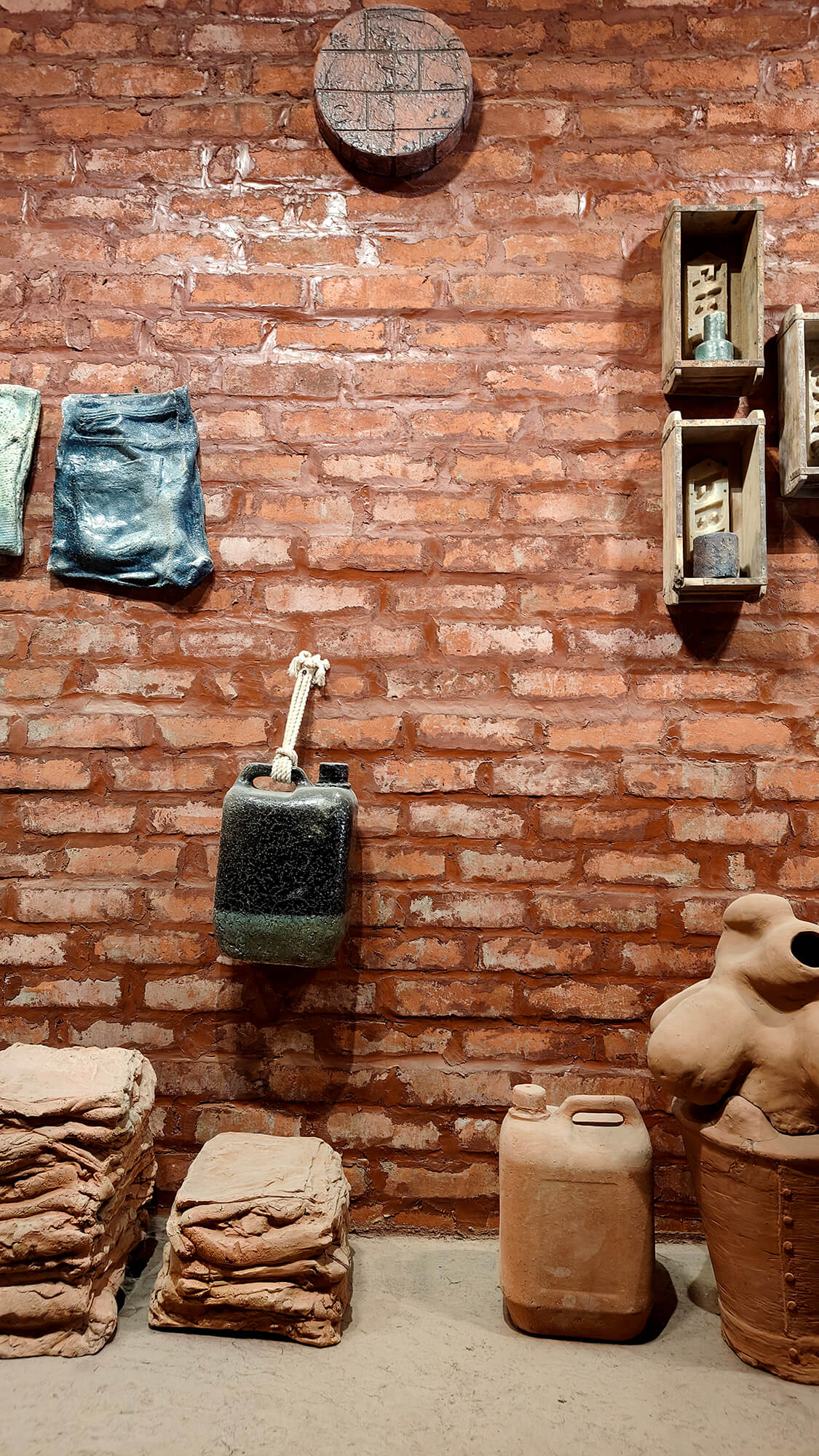
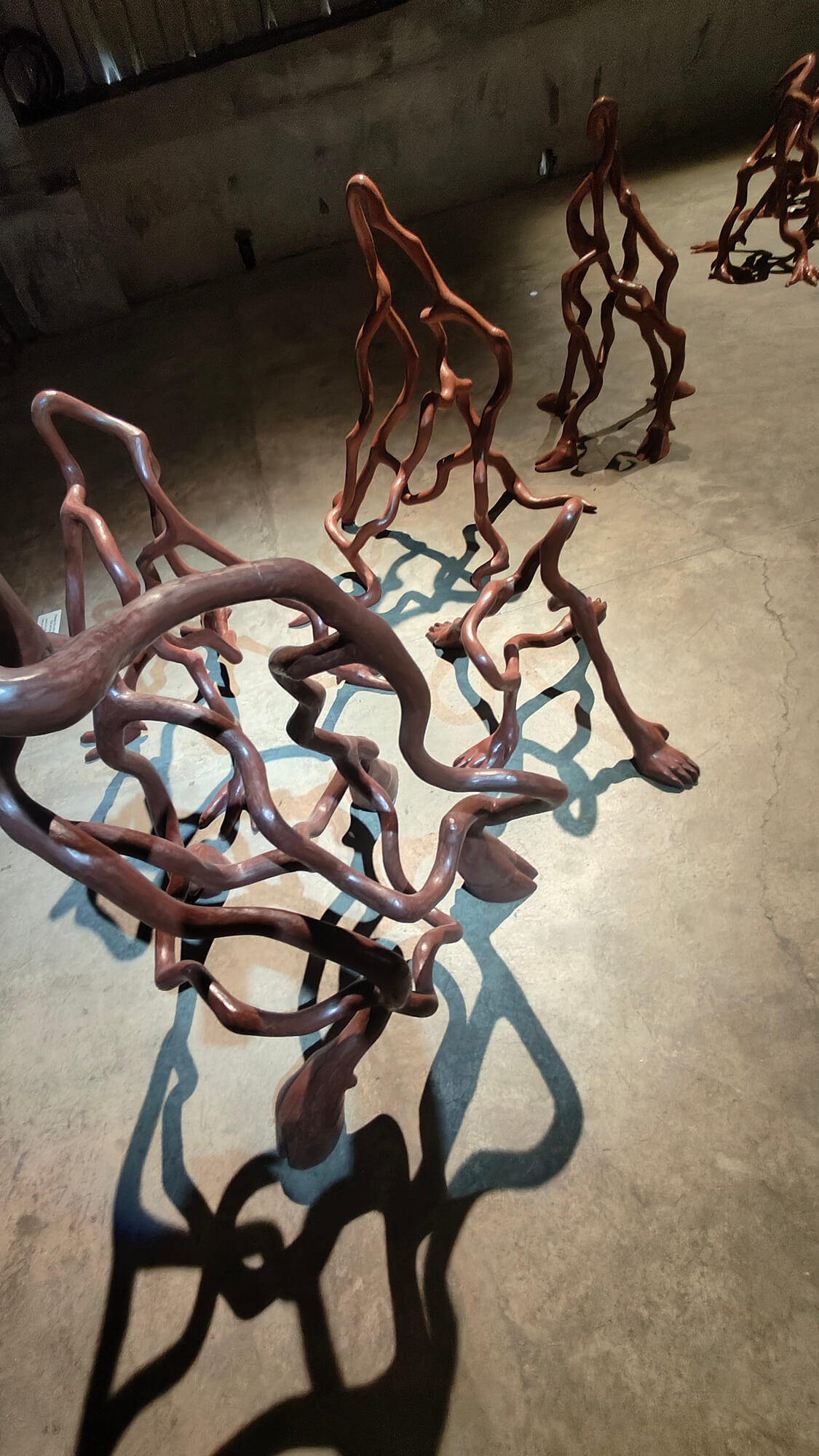
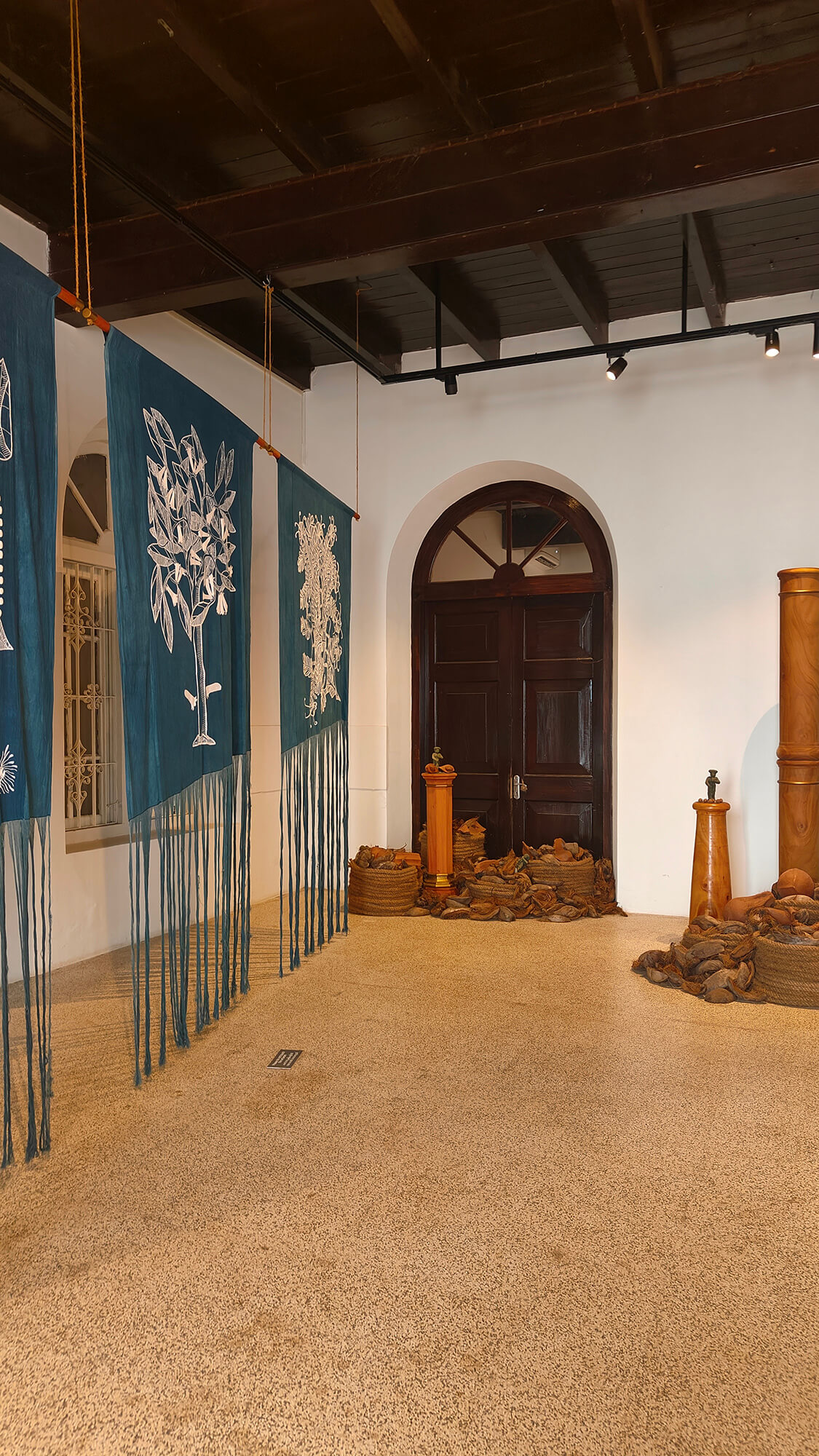
We entered a room filled with terracotta installations by Birendra Yadav, highlighting the lives of migrant labourers and the lives left unlived.
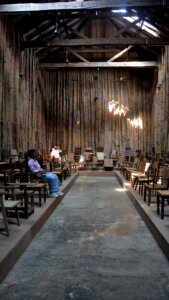 Another installation consisted of colourful quilts with a soft humming sound playing in the background.This was created in collaboration with women who made the quilts while singing folk songs.
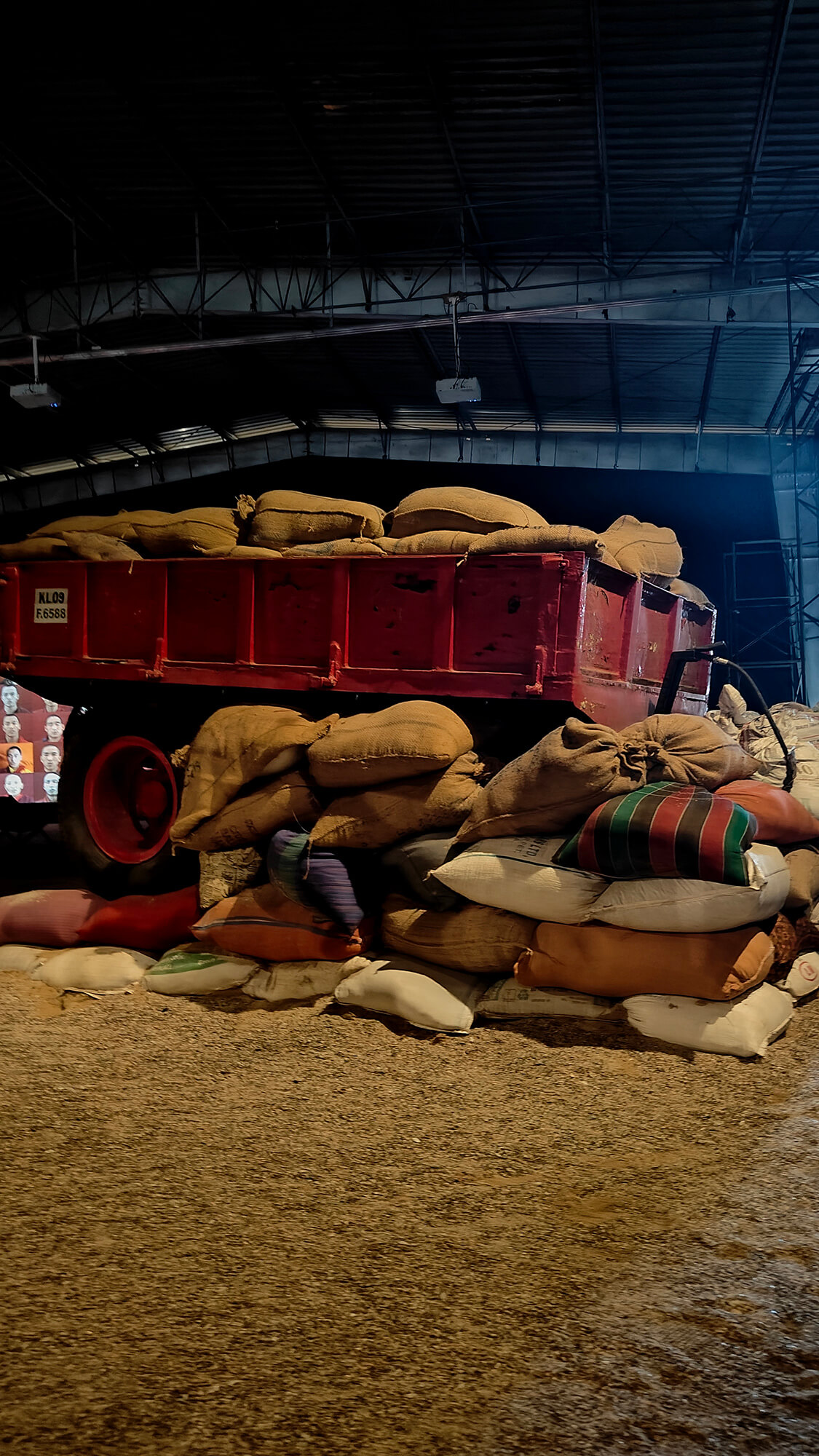
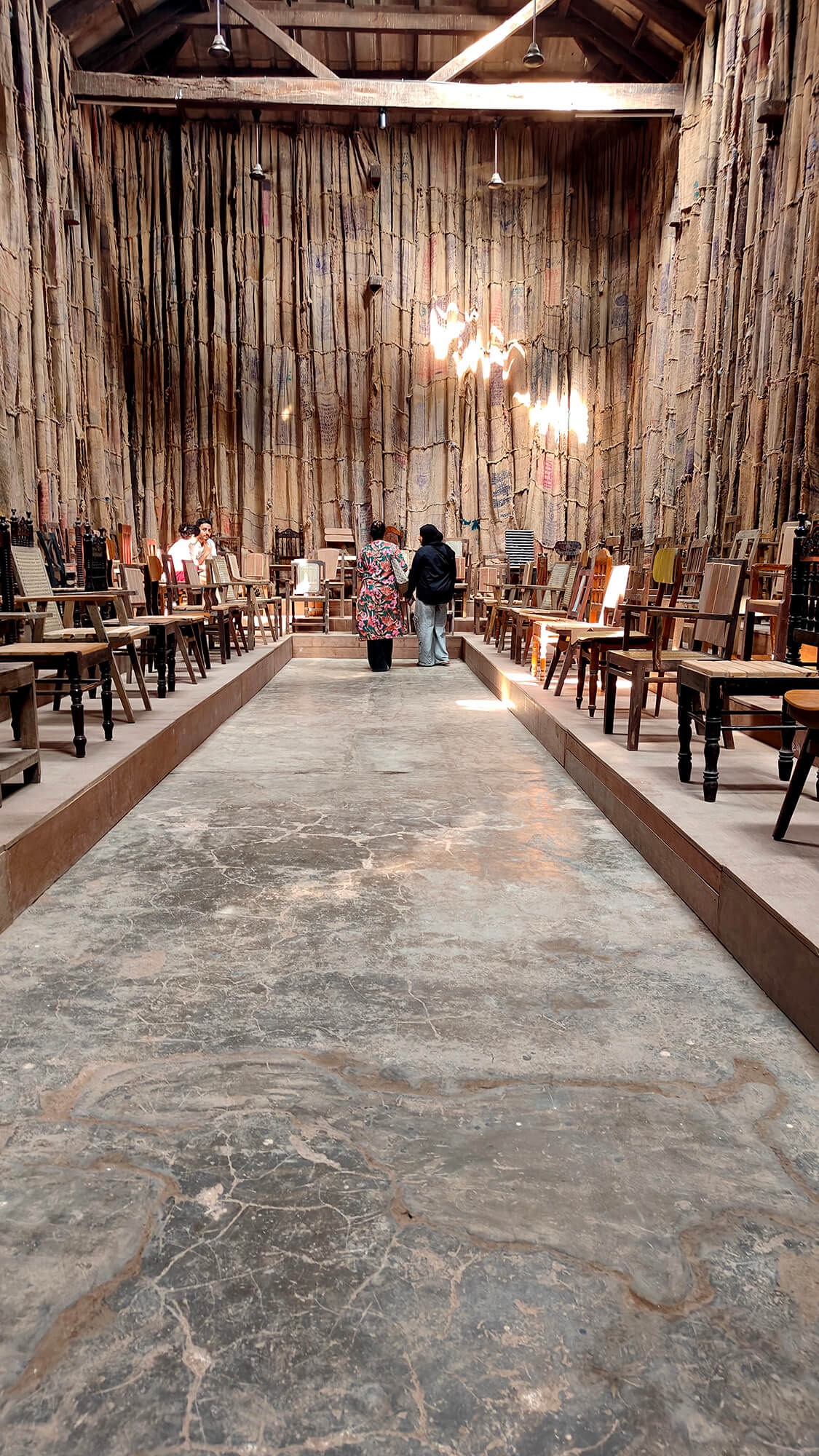
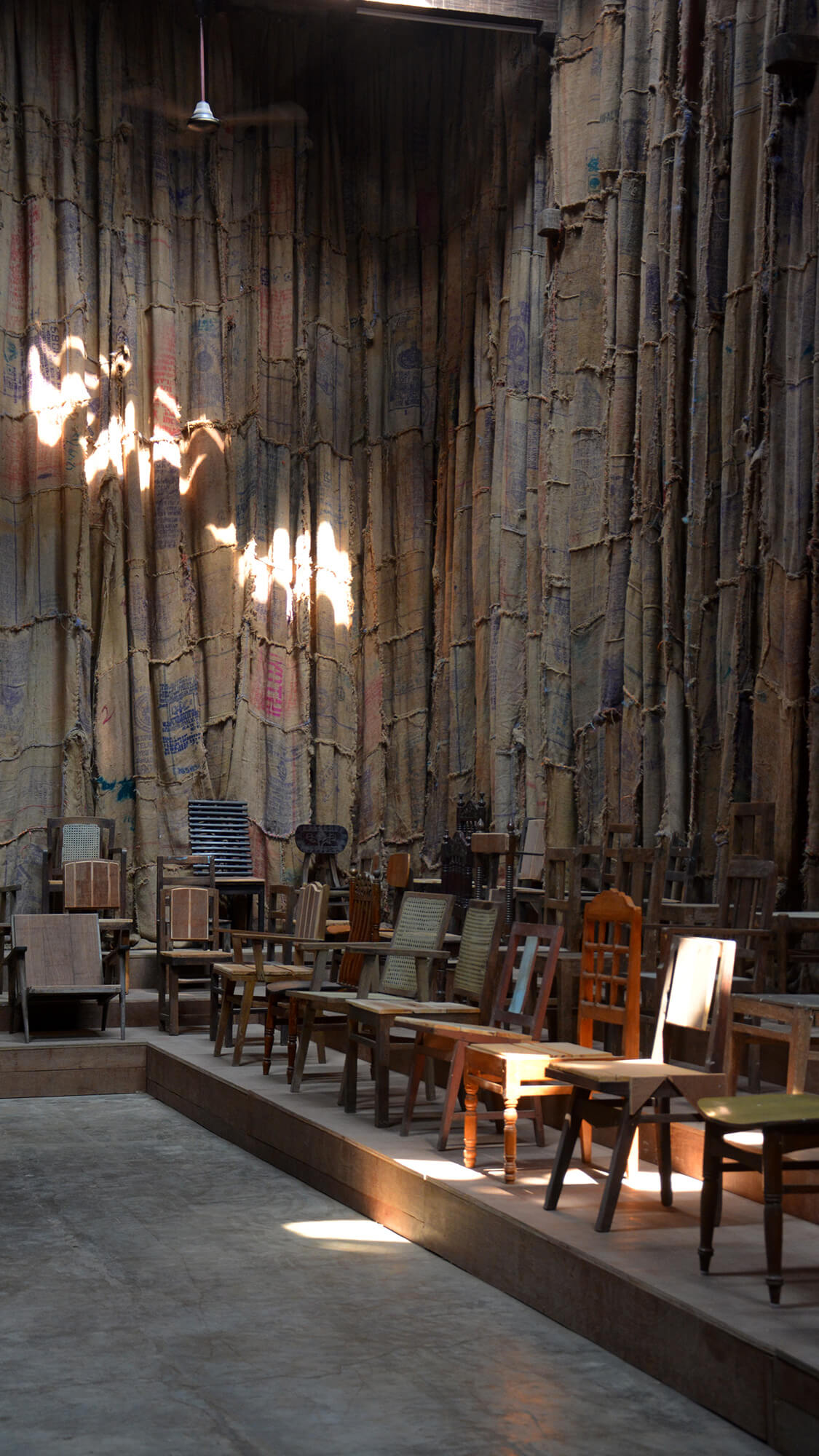
At Anand Warehouse, an installation titled “Parliament of Ghosts” by Ibrahim Mahama, created with old jute sacks and sourced vintage chairs, stood as an impressive evocation of the common man’s power in dialogue and unity.
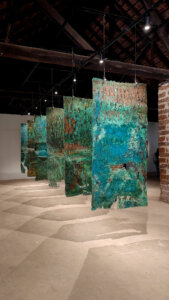
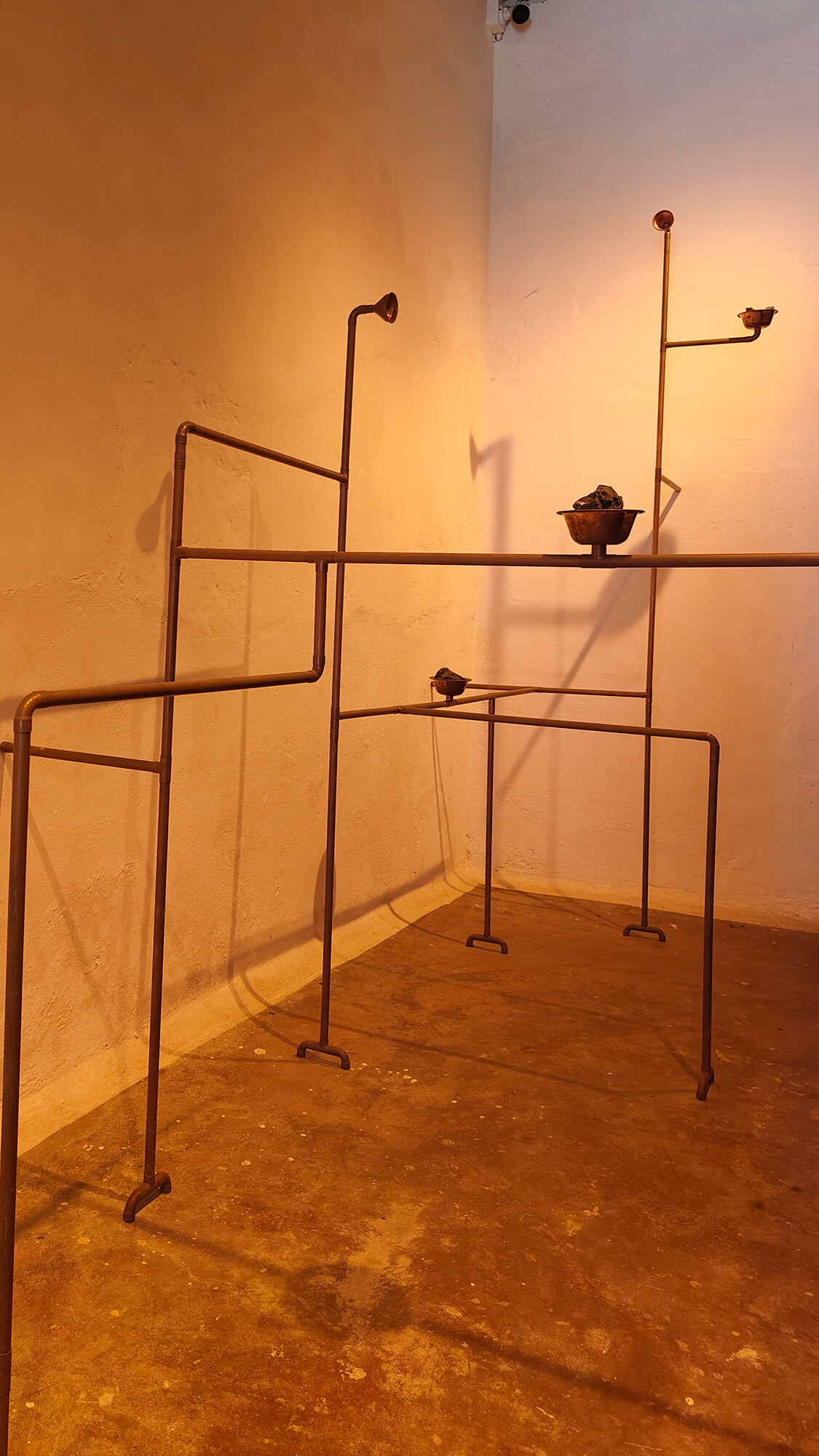
We also saw copper plates oxidised to green, displayed for the beauty of how materials evolve and transform over time.
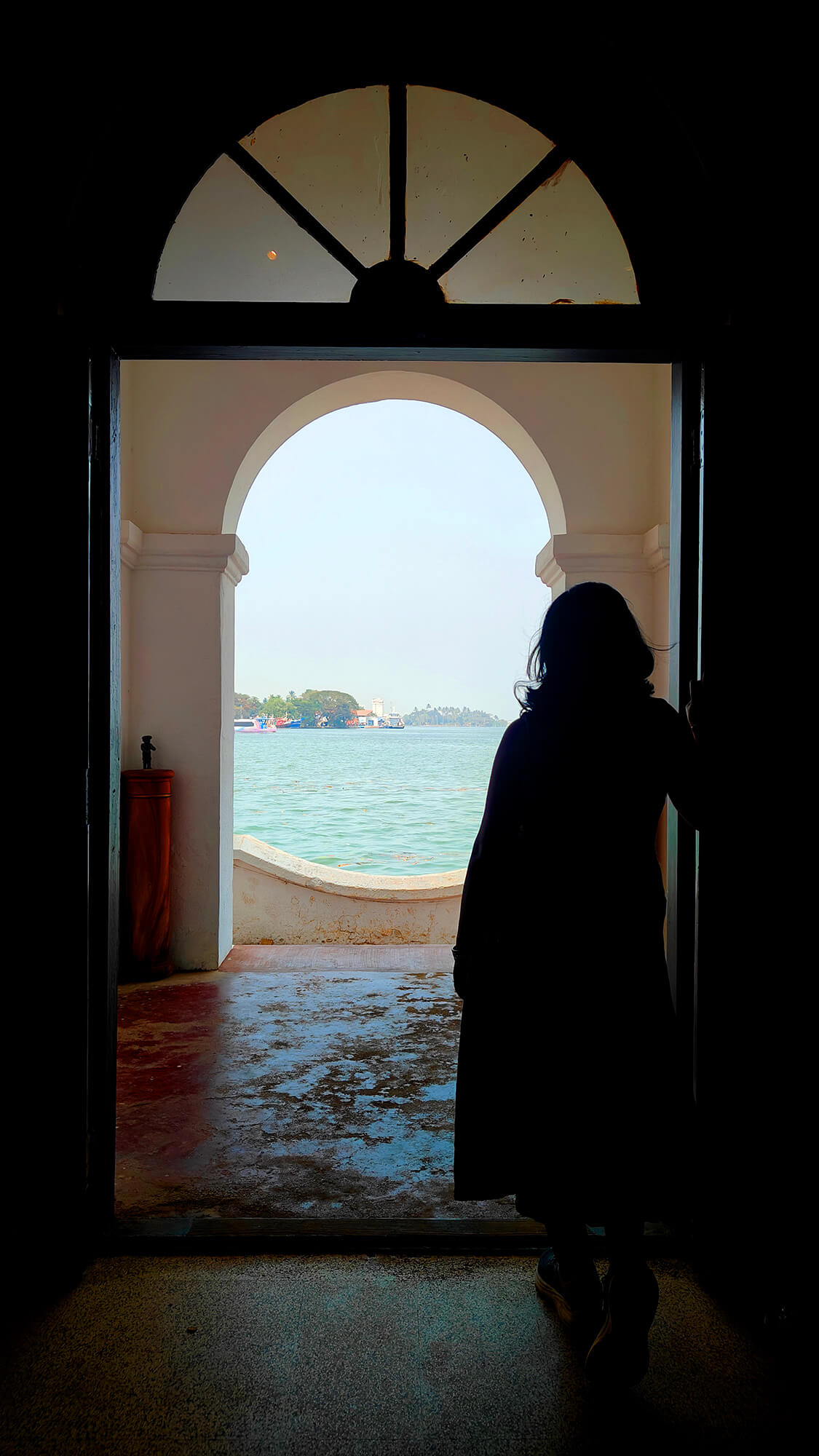
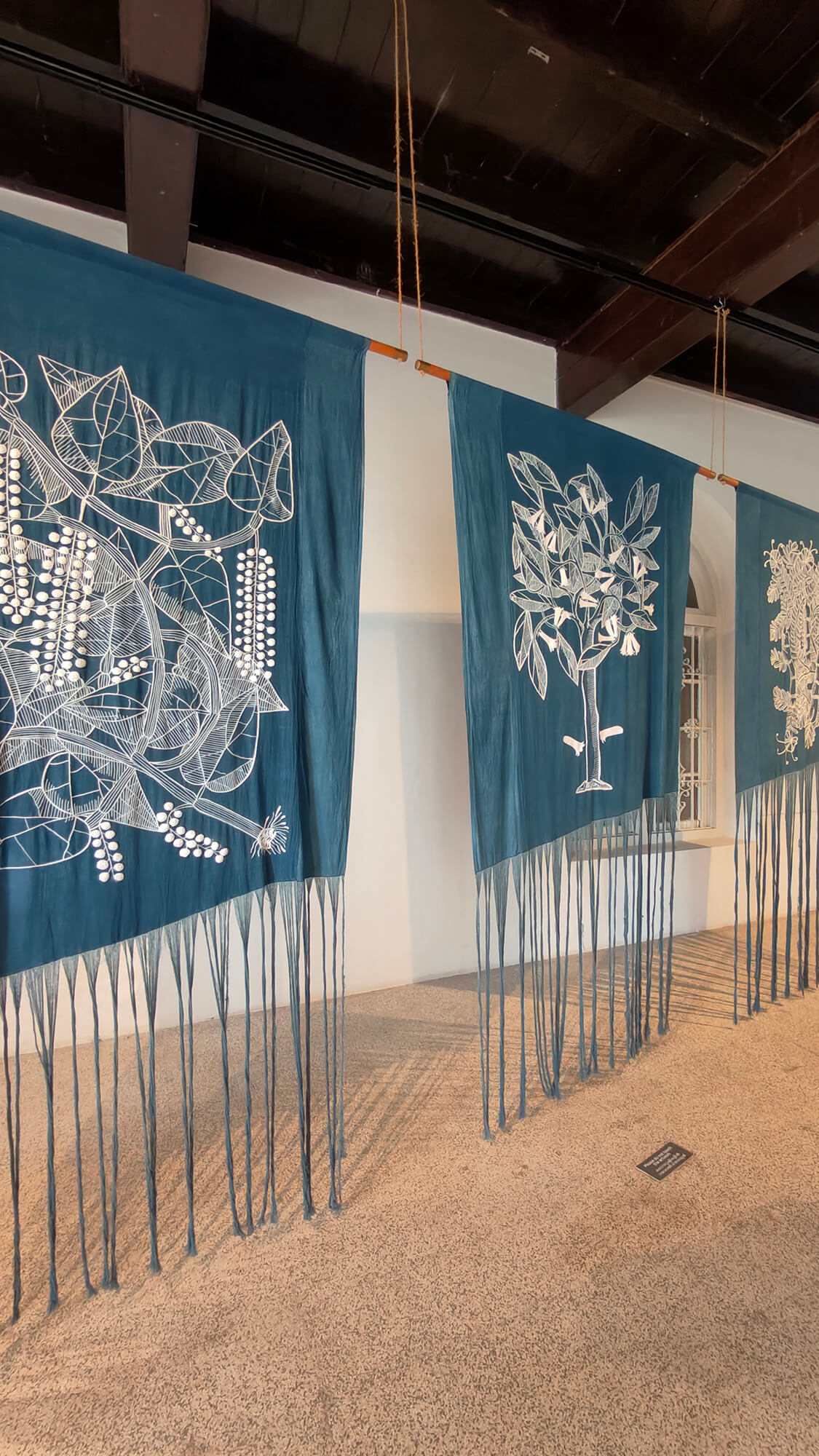
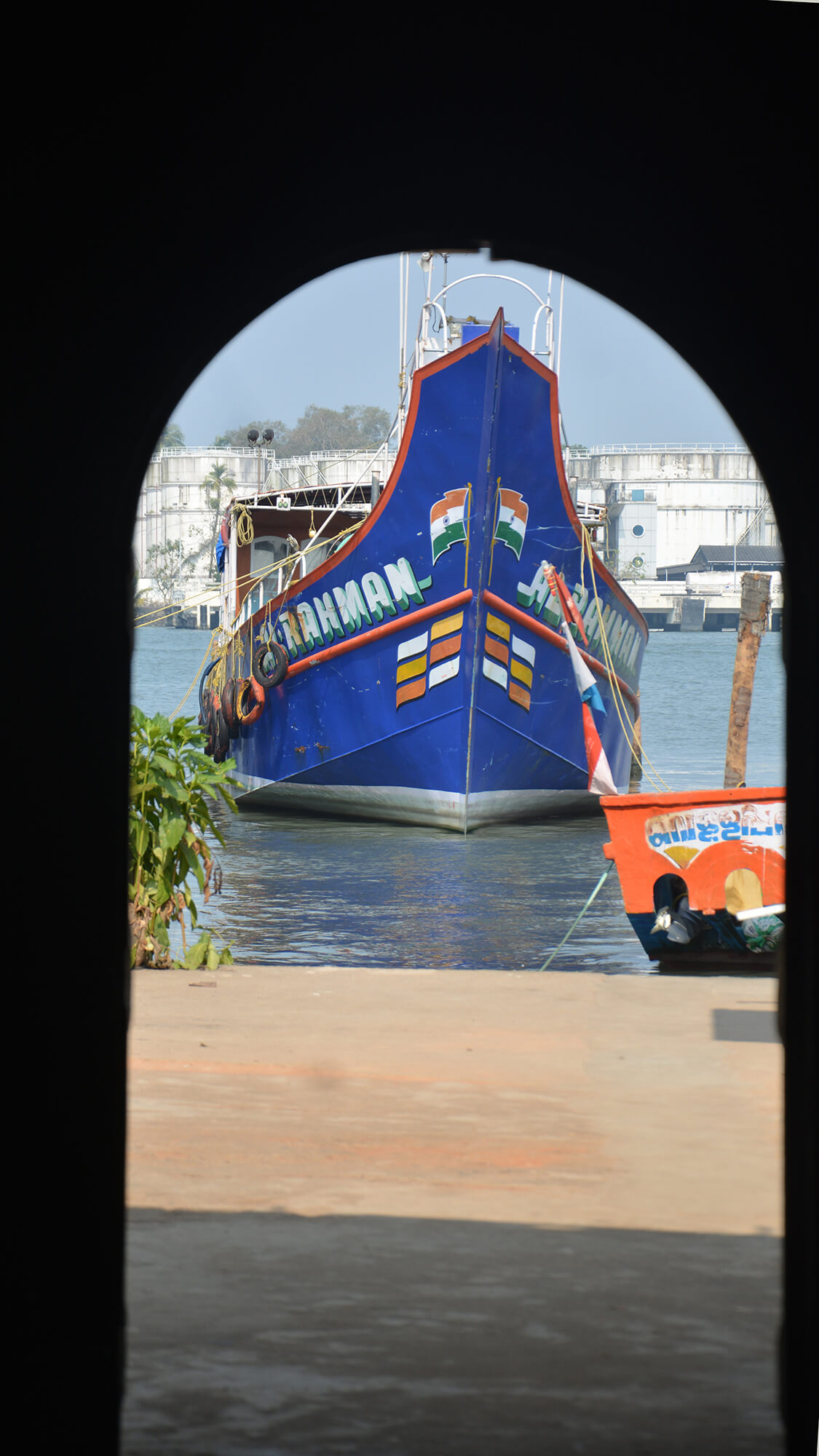
One installation was placed in a space that opened directly to the sea, speaking about colonial trade through cotton fabrics and spice prints.
Installations that Tell Powerful Stories
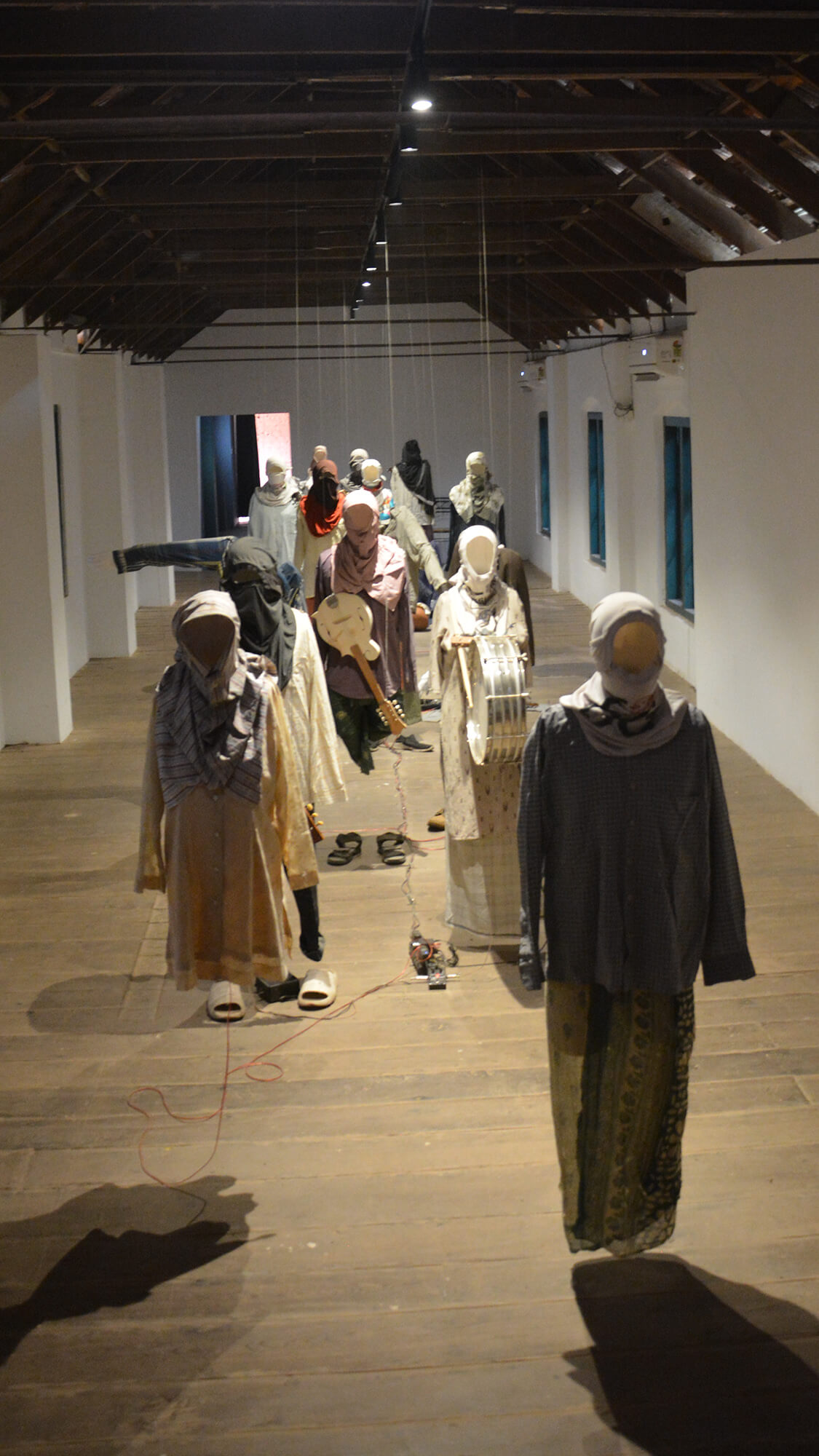
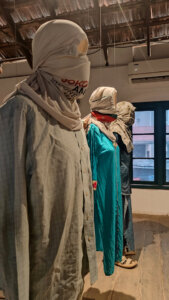 At Pepper House—another venue—there was an installation titled “Ghost Ballads” by Jompet K. It was a moving display of people living in conflict zones: musical instruments playing on their own and clothes hanging without bodies. It felt like a parade of ghosts, marching in protest into nowhere, seen by none. The music produced seemed like an echo of unheard calls. This piece had the power to provoke deep emotion and evoke sympathy for the unseen lives behind such conflicts.
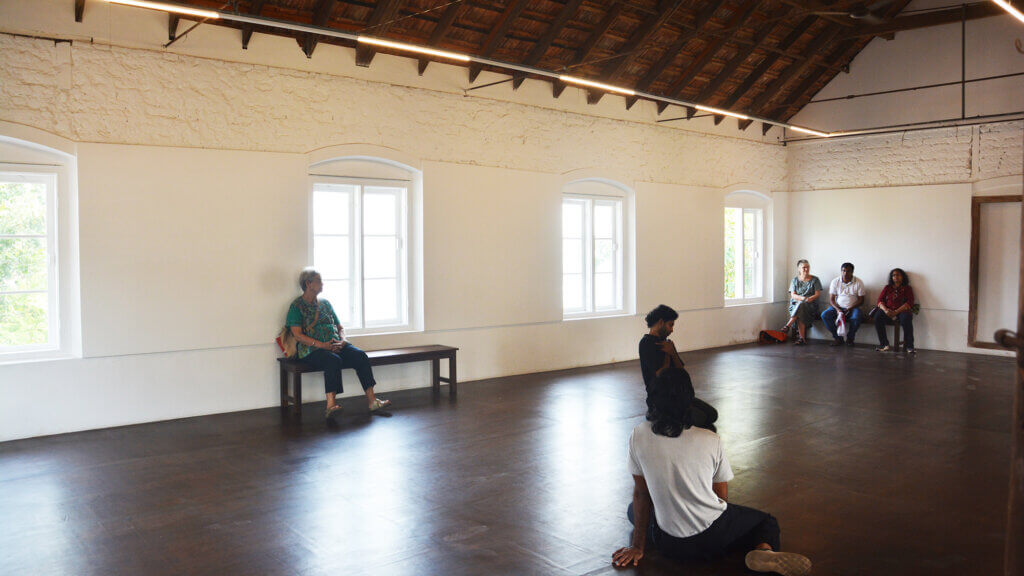
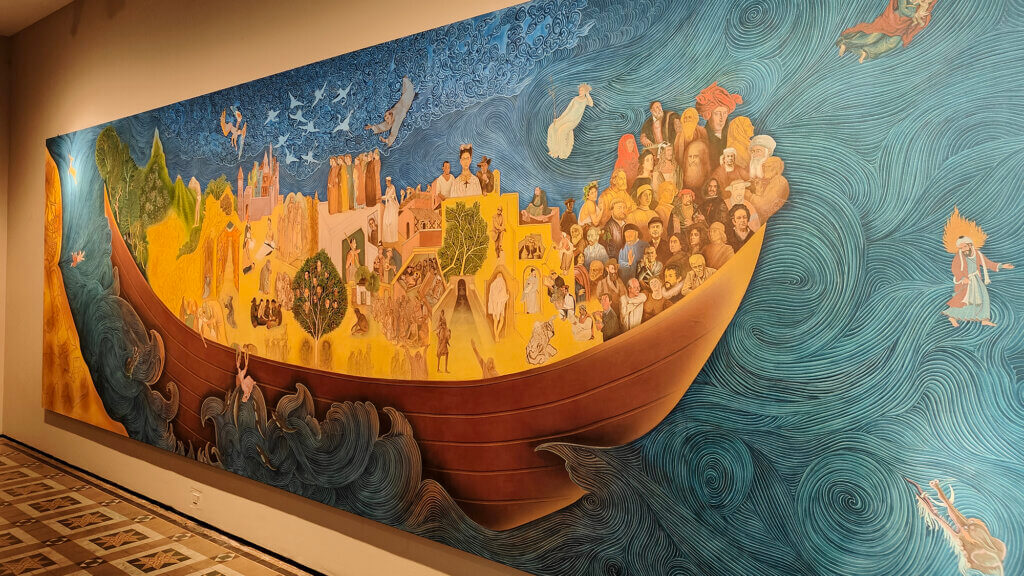
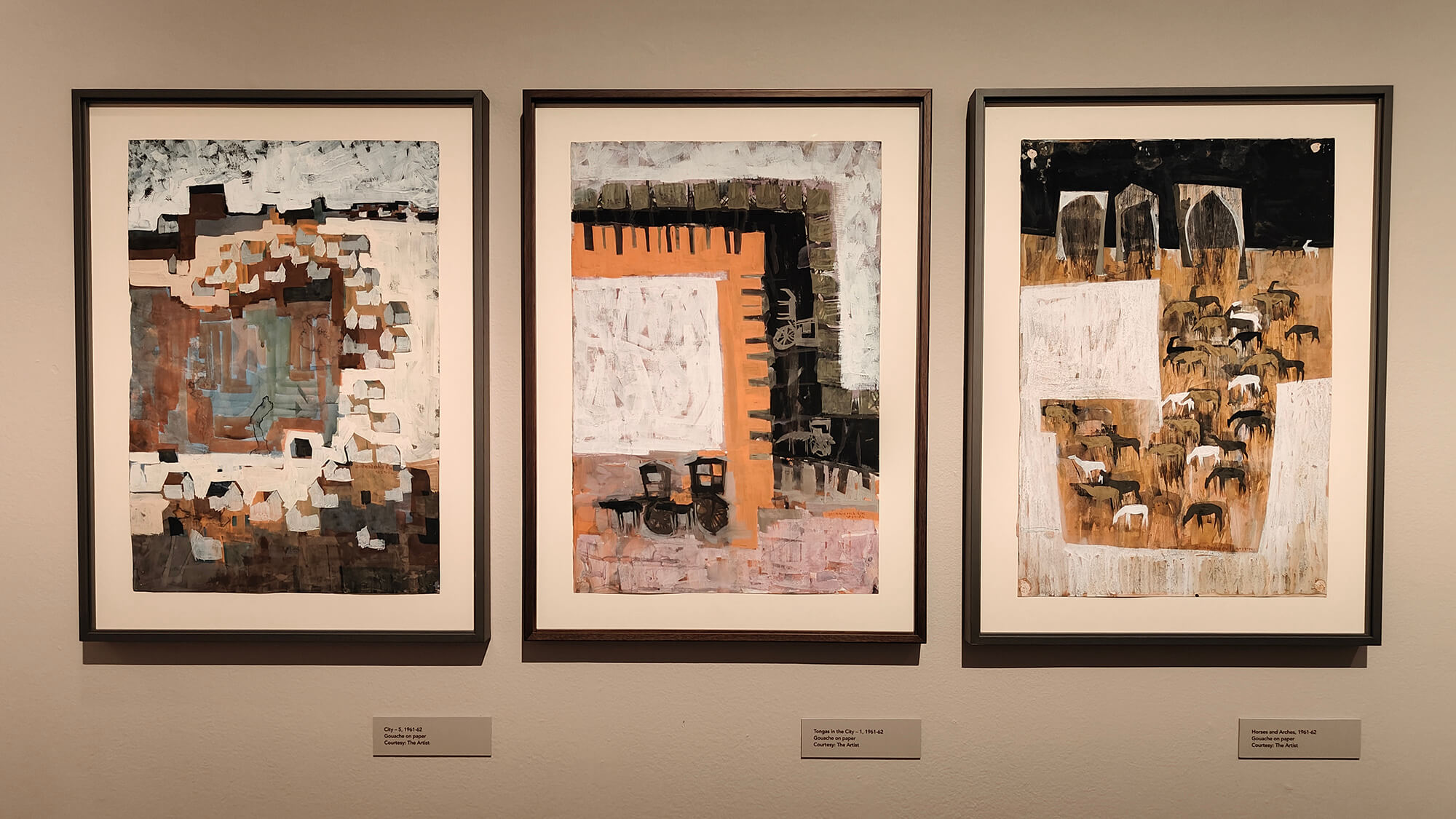
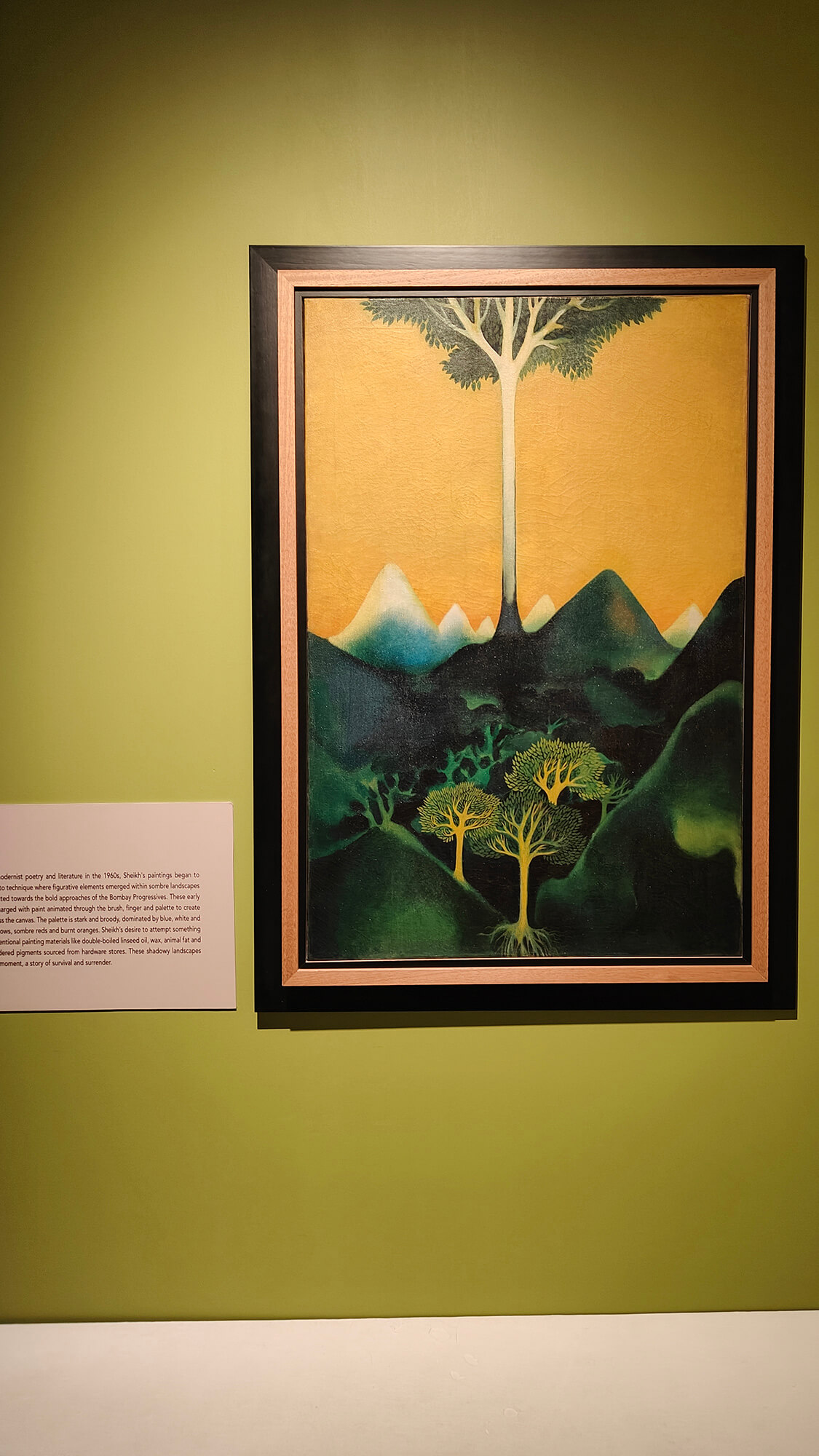
One of the most delightful visits was to Durbar Hall Art Gallery, where a collection by Padmabhushan Ghulam Muhammad Sheikh was on display. His works conveyed space, movement, and the idea of the city as a place of navigation. He depicted Kabir and his philosophy in vibrant colours, and reflected upon Mahatma Gandhi through abstraction.
Here I met two august ladies from Goa who were deeply interested in art. They told me they had attended every edition of the Biennale. “At this age we don’t travel much, but the Biennale is worth stepping out of home for,” they said.
I couldn’t agree more!
Art Beyond the Biennale Venues
Apart from the official venues, many cafés and old buildings across the city were also worth visiting.
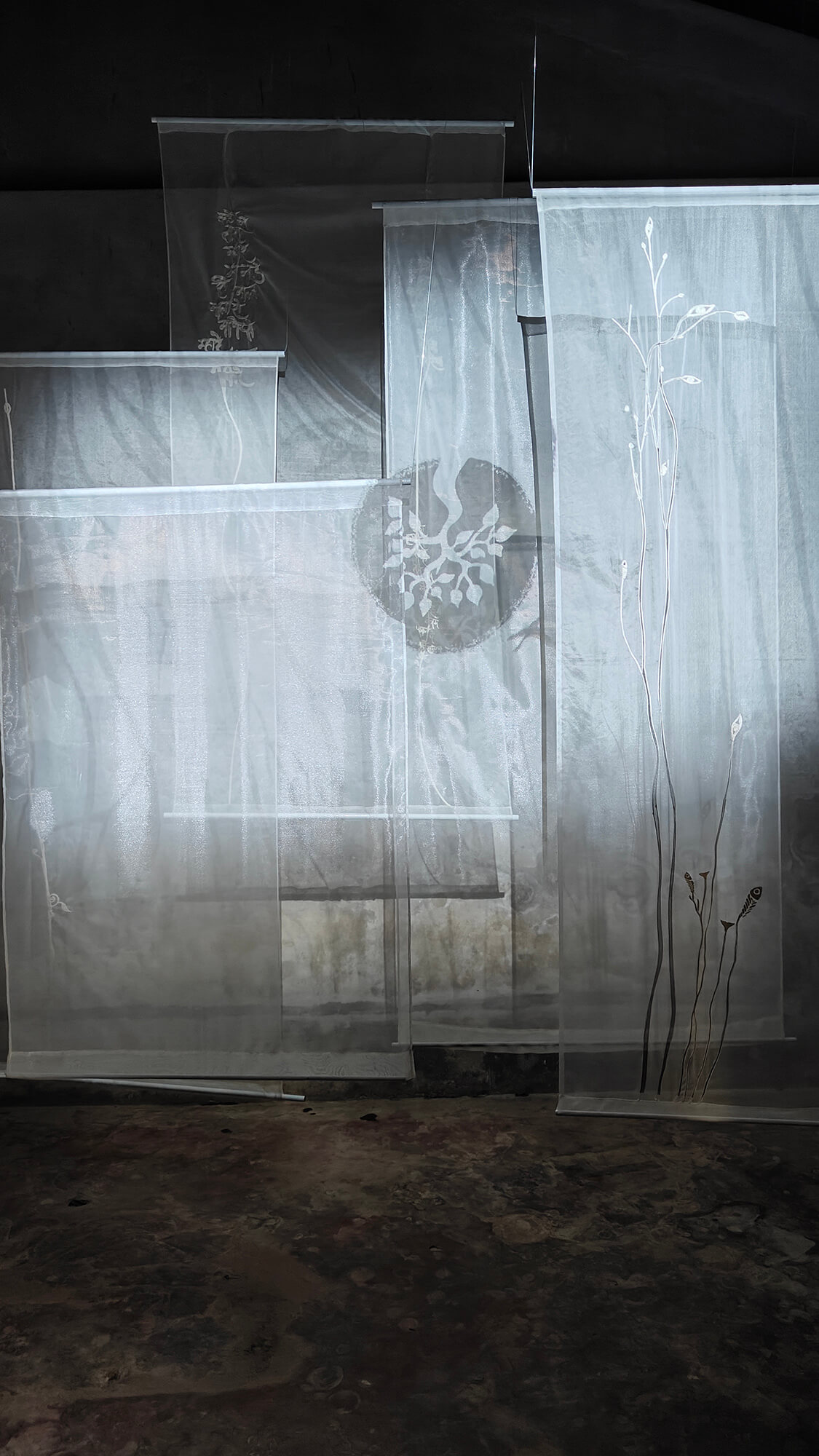
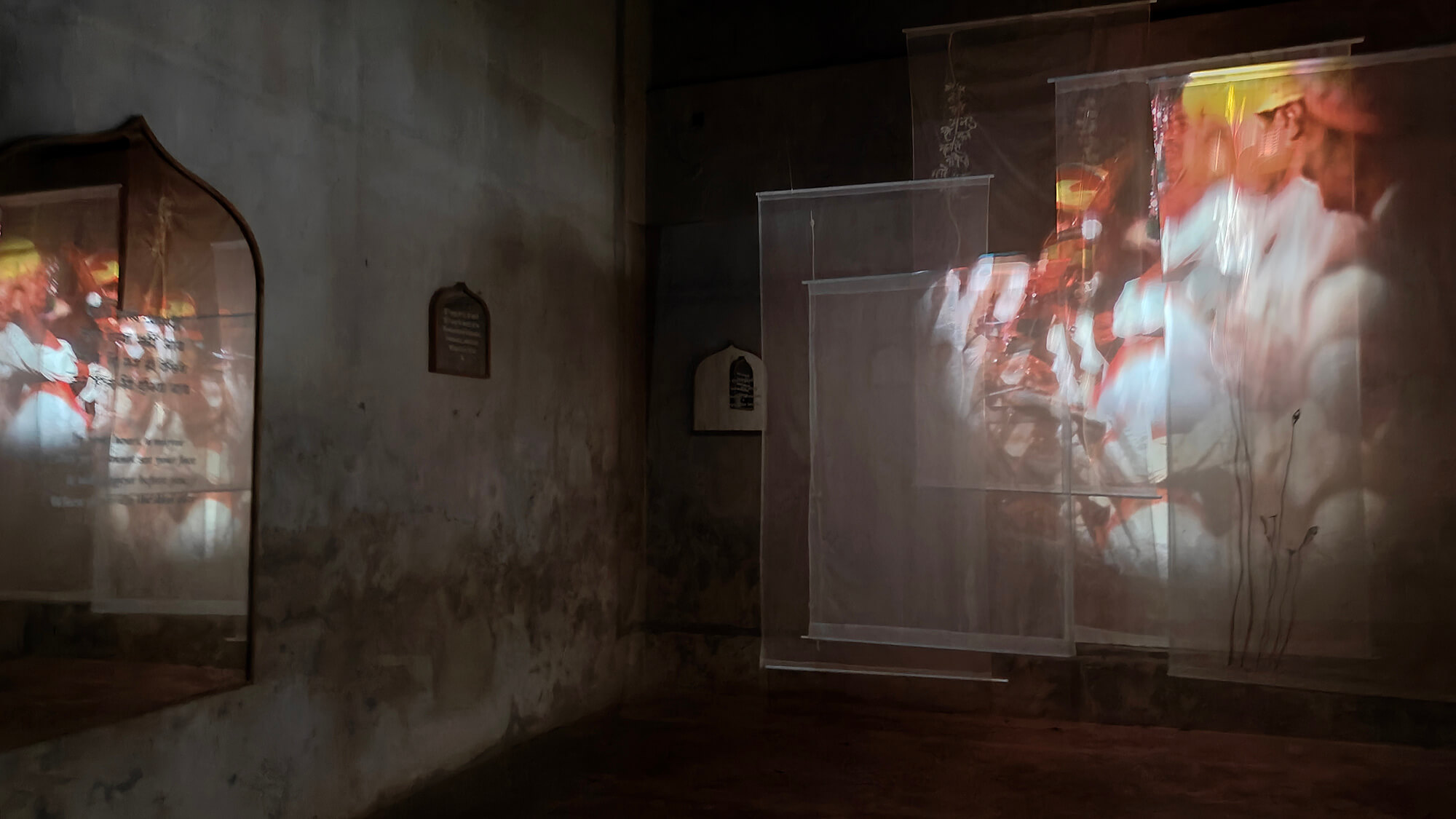
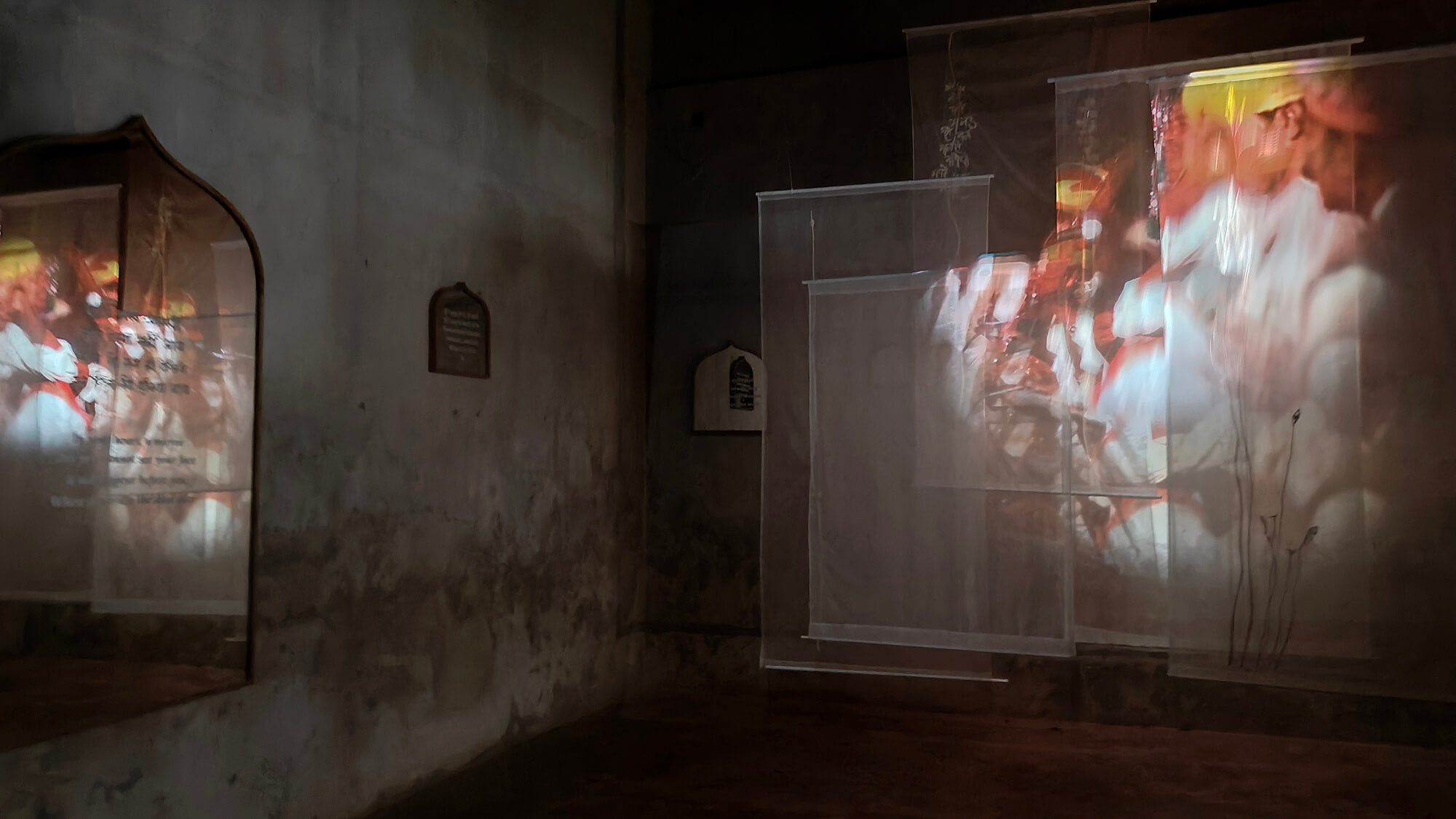
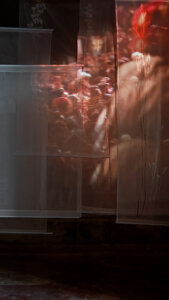 At Kashi Art Cafe, I came across a beautiful display of Kabir and his dohas. A transparent cloth screen carried projections of artists singing Kabir’s couplets. The cloth— which Kabir often equated with the mortal body— and the songs, like the call of the soul, created a deeply evocative setting. One could easily sit there for hours, simply absorbing Kabir’s wisdom.
Though we were exhausted at the end of each day—dragging our feet, tired from moving from one venue to another, sometimes even hopping across islands—the next morning we were ready to explore more. And even though the sheer number of displays occasionally left us numb, at times almost mind-numbing, we found ourselves eager and hungry for more.
And though some displays left us underwhelmed—either because they felt too explanatory or because we simply couldn’t grasp them—many others left us deeply impressed.
The locals, the guards at each venue, the budding architect who guided us at Aspinwall, and the English literature student who engaged us at the Island Warehouse in Wellington—each tried their best to convey what the artist intended.
I had often wondered why Kochi became the ground for the largest biennale in Asia, but when you see the locals—the cafés, the shops, and the people—so deeply engaged with art, you begin to understand its significance.
They make this city a true art connoisseur’s destination.
Art as a means to tell a story
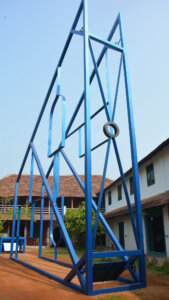 As we explored the venues further, we realized how each display held a story.
Stories of childhoods well lived, accounts of oppression in the far off lands and a narrative of the five senses.
There were stories of Kerala landscape, of people who travel the world, and of those bound to their homes.
There were stories of womanhood, of rural lives, of pollution and stubble burning in Punjab, stories of the labour and of the consumers.
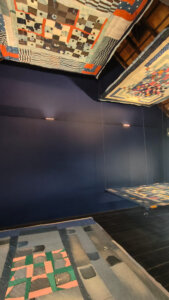 Stories of protests and submissions, of war and of watching the war from comfort, of seas and of ports, of current politics, and of mythologies from time immemorial.
The Kochi–Muzeris Biennale is far more than an art exhibition. It is a dialogue between artists and audiences, between the past and the present, between places and people. In the old warehouses of spice traders and along the sea-facing courtyards, art finds new meaning and invites us to pause, question, and reflect.
It is only after visiting the Biennale that one truly understands that art is not practiced merely for delight.
It exists not just to elevate, but sometimes to provoke; not just to rejoice, but also to remember; not only for the eyes, but for the mind; and ultimately, not merely for the senses, but to nourish the soul.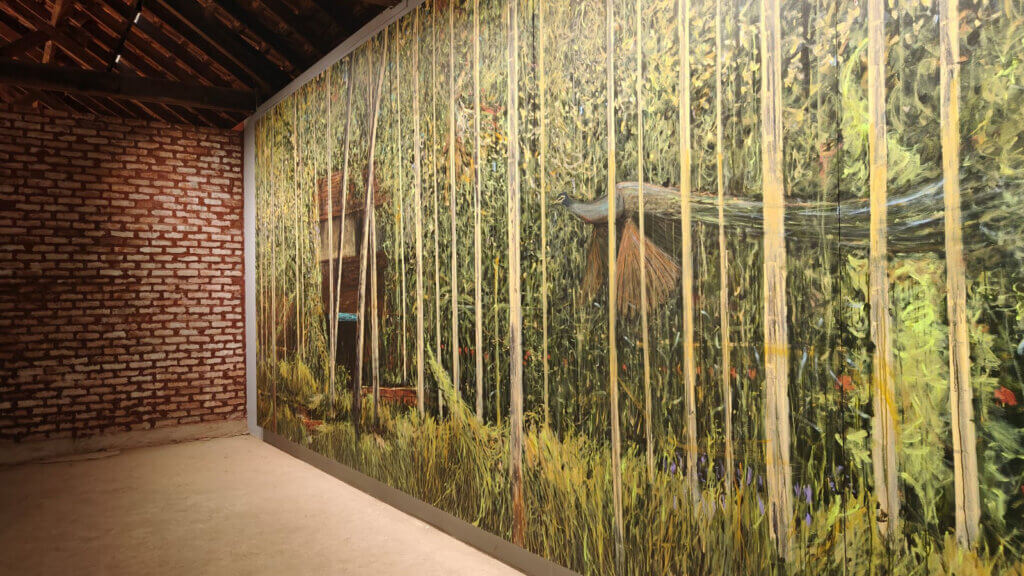
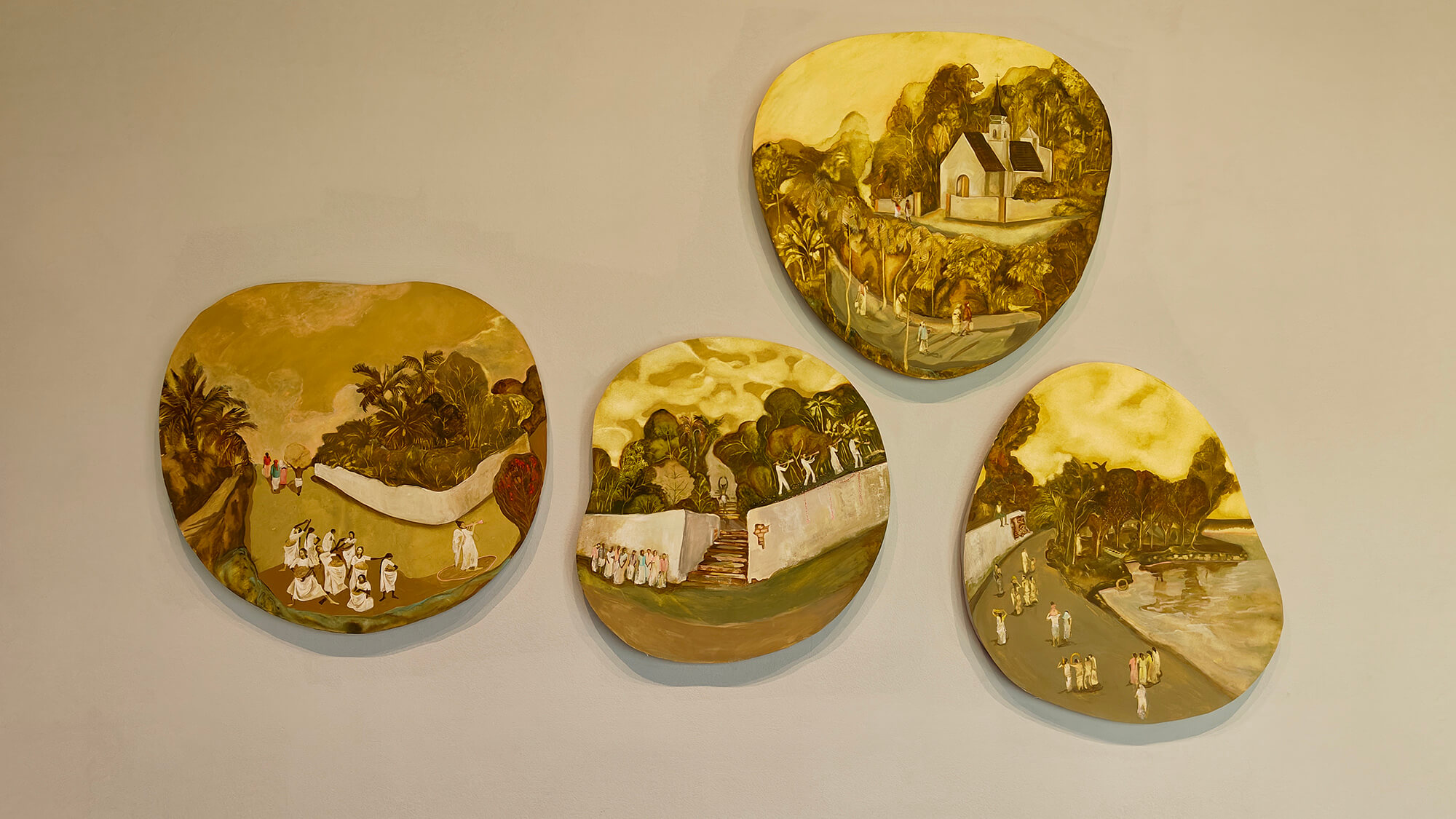


Truly amazing Krushna !! Not only do you take me take one on a detailed tour of wherever you go, but always leave me hungry for more. You have a unique way to look at things and to write it down so beautifully !!
Thanks Juhee. You know you have been one of my language teachers !!!