Stonehenge: Setting the Tone of Permanence
Being a history, heritage, and art enthusiast, it was imperative that I visit Stonehenge during my trip to London a few years ago. One of the oldest surviving sites in the UK, Stonehenge dates back to around 3000 BCE. Believed to have hosted rituals, burials, and astronomical observation, it stands as testimony to the industry, brilliance, and sheer will of ancient tribal communities.
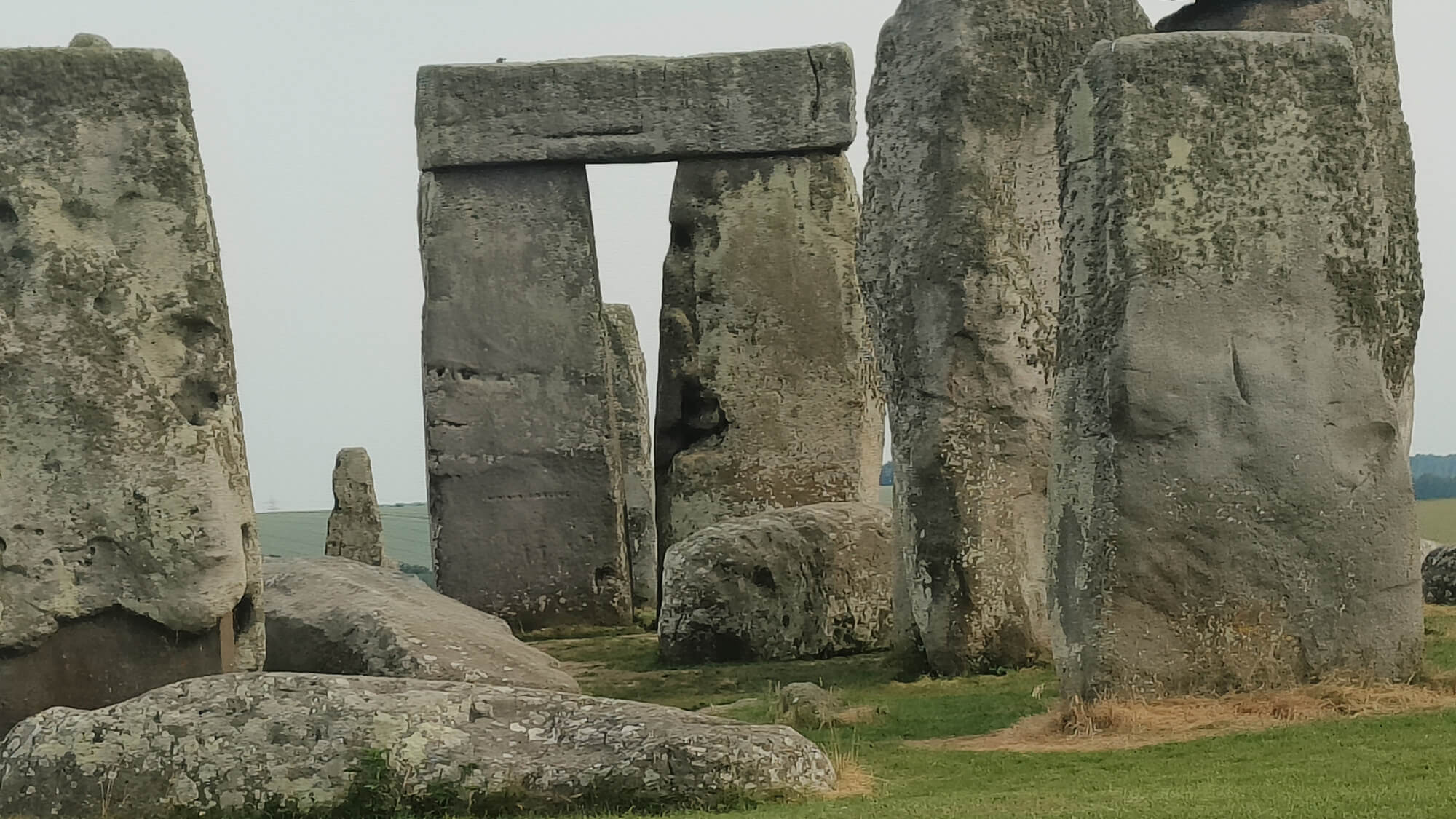
Erected in monumental stone circles, the stones align with remarkable precision—both geometrically and astronomically—with the movement of the sun and stars. The fact that some of these stones were transported from far distances only deepens the awe they inspire.
Located about 90 miles south-west of London, in the county of Wiltshire on the Salisbury Plain, Stonehenge stands isolated within a vast open landscape.
We had booked our tickets in advance. Arriving late in the afternoon at the visitor centre, a bus was already waiting to take us along a two-mile-long rough, unbuilt road to the monument. That journey felt deliberate—it mentally severed us from the contemporary world, preparing us to step into an ancient landscape.
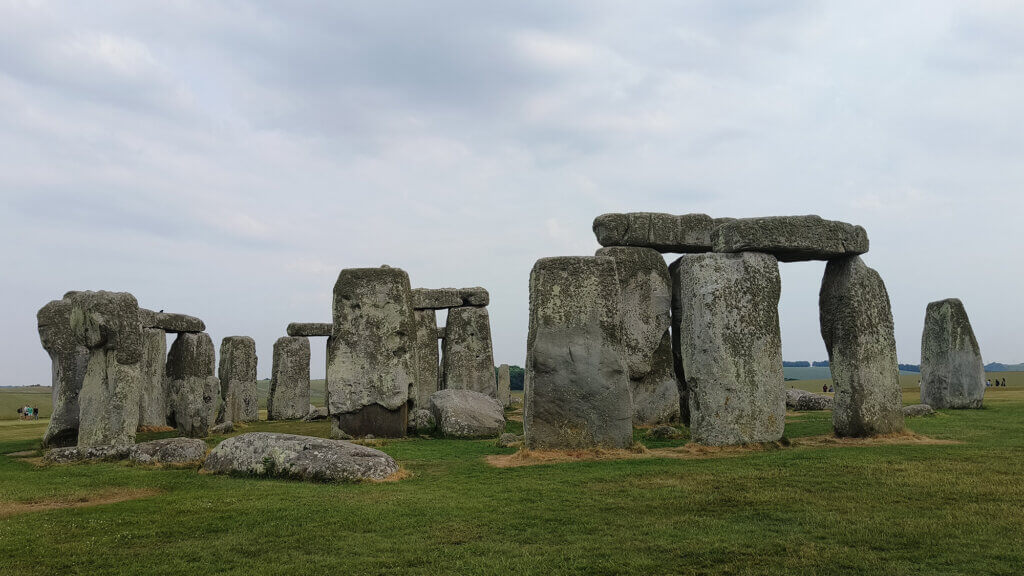 As we approached the stone circles, we were astonished by their sheer scale. Some stones rise over thirteen feet above the ground, several feet wide, connected by massive lintels. How did the ancients make them stand? Forget, for a moment, how they brought them there at all.
Walking along the circle, admiration grew with each step—for the precision, planning, and perseverance involved. Standing there, one becomes acutely aware of the countless seasons and ages these stones have endured.
Modern interpretations endlessly debate how and why. Yet despite being studied and decoded repeatedly, the monument still seems to defy all logic.
It is when material permanence recedes, what remains is memory—how knowledge, belief, and meaning are carried forward.
We were humbled. The ancient humans, without modern tools or techniques, could leave behind something that has stood for millennia. It made many contemporary achievements feel somewhat insignificant.
Returning to the Present
The weight of the stones stayed with me on the ride back, so that when we returned, the visitor centre felt startlingly thin. The shift was immediate and deliberate.
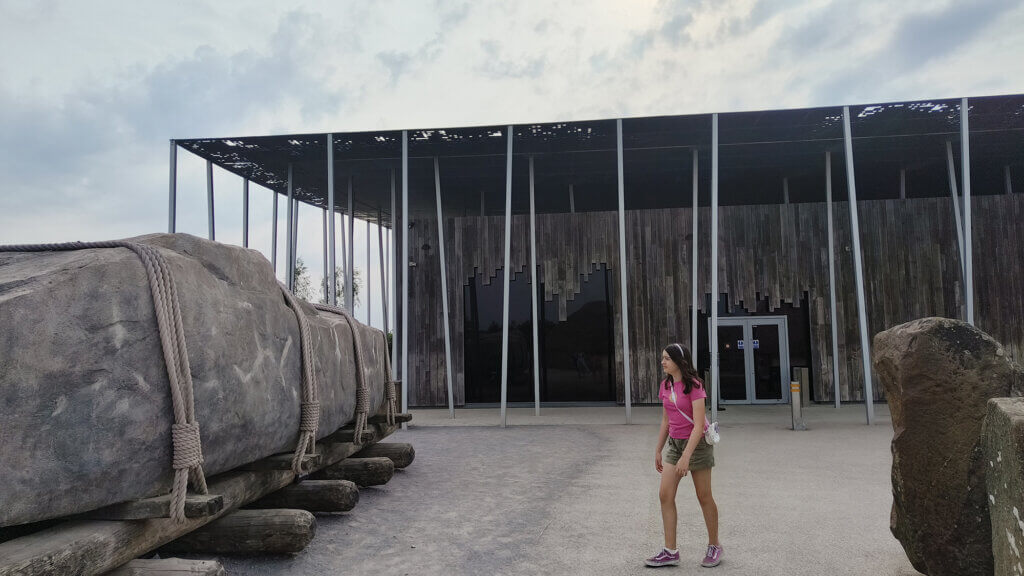
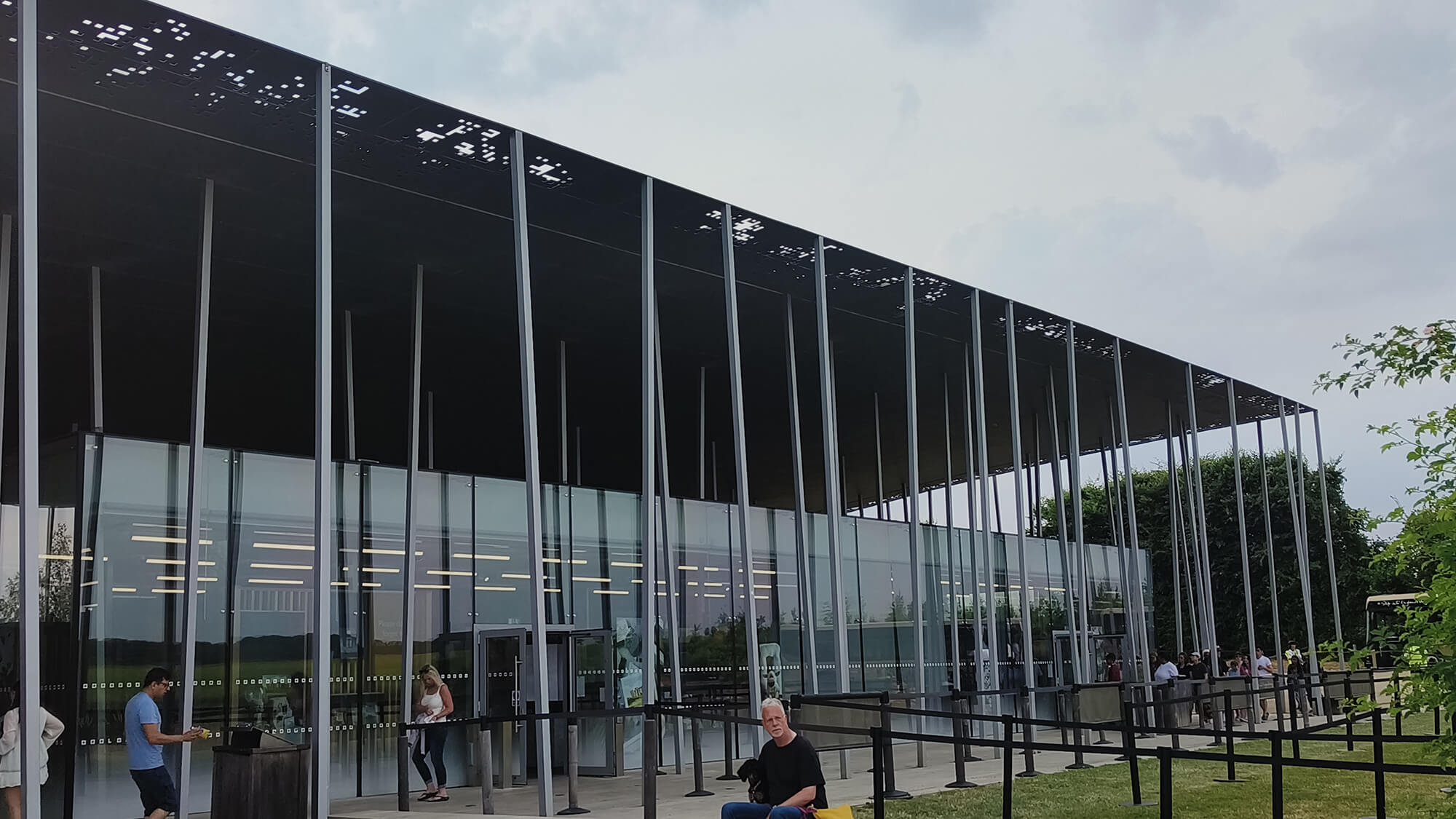
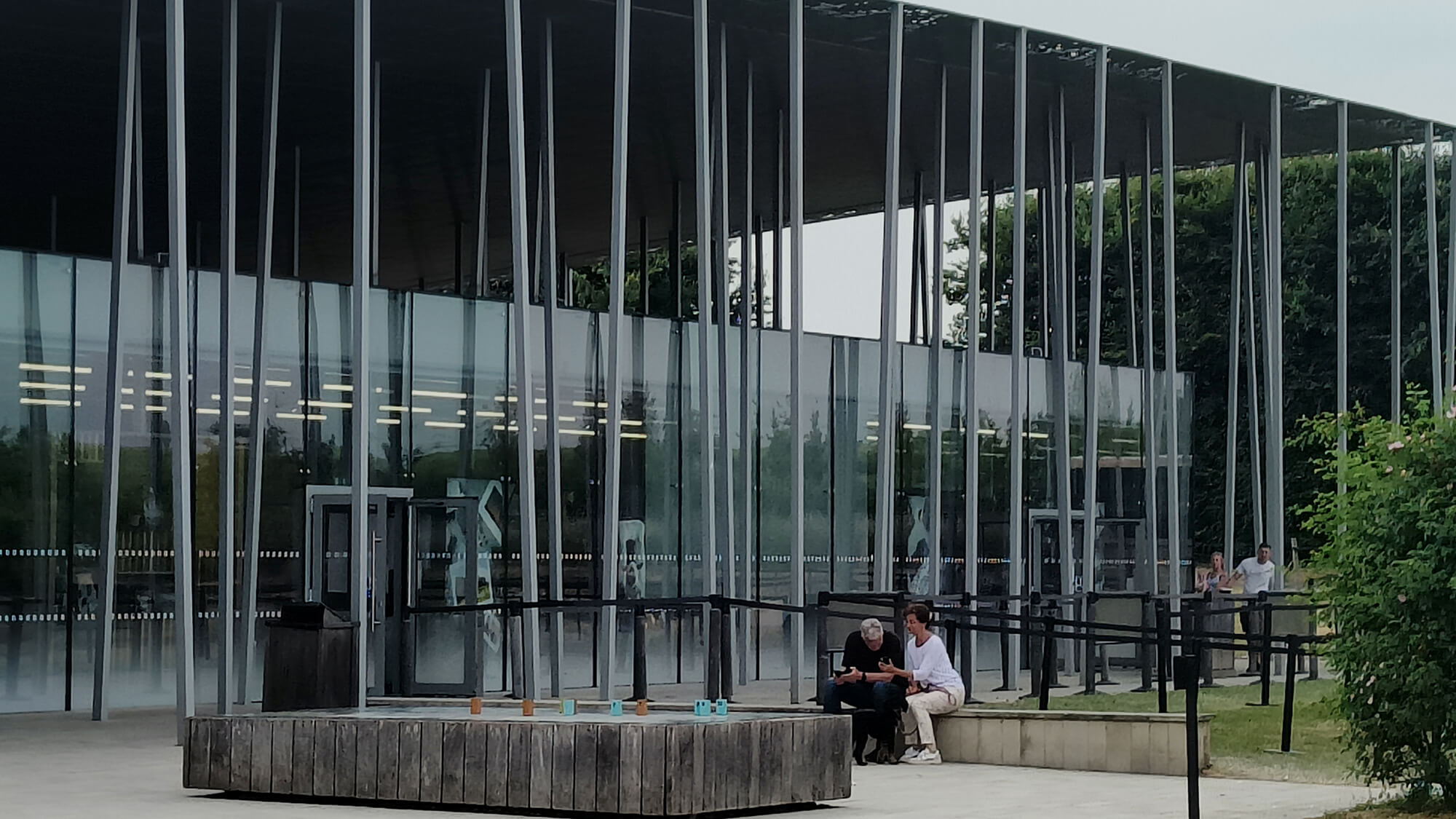
Designed by the architectural firm Denton Corker Marshall and completed in 2013, the centre introduces a contemporary order to the ancient site.
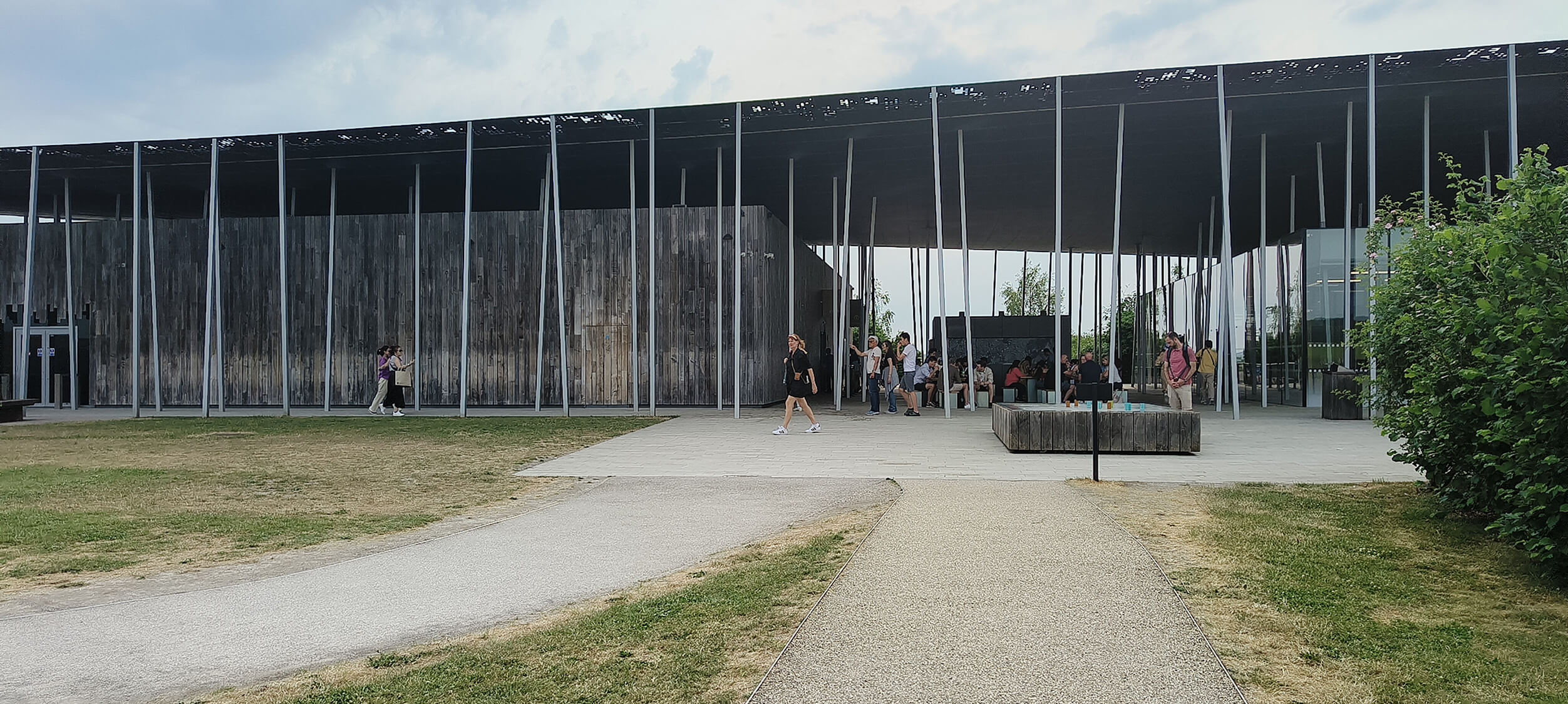
Unlike the heavy and permanent footprint of Stonehenge, the Stonehenge Visitor Centre sits lightly on the land. Conceived with reversibility in mind, it is designed so that it could be removed in the future without leaving a trace.
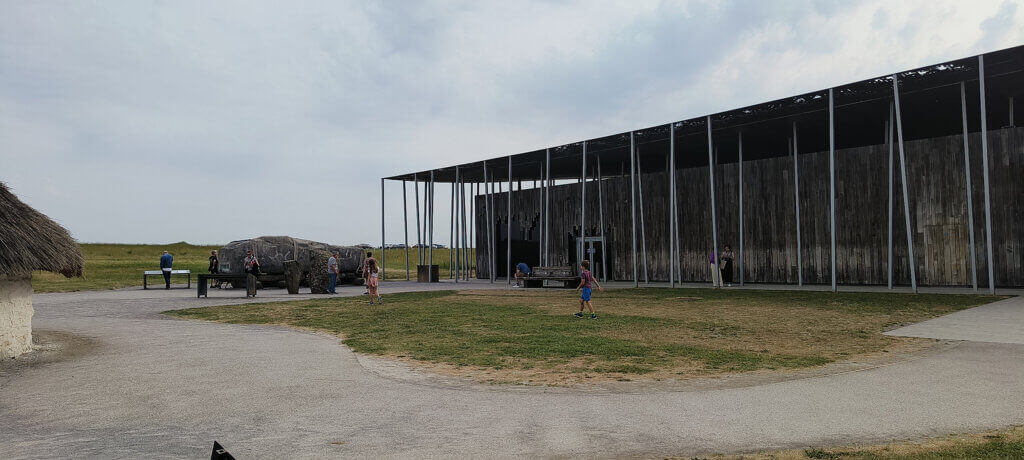
Material, Form, and Impermanence
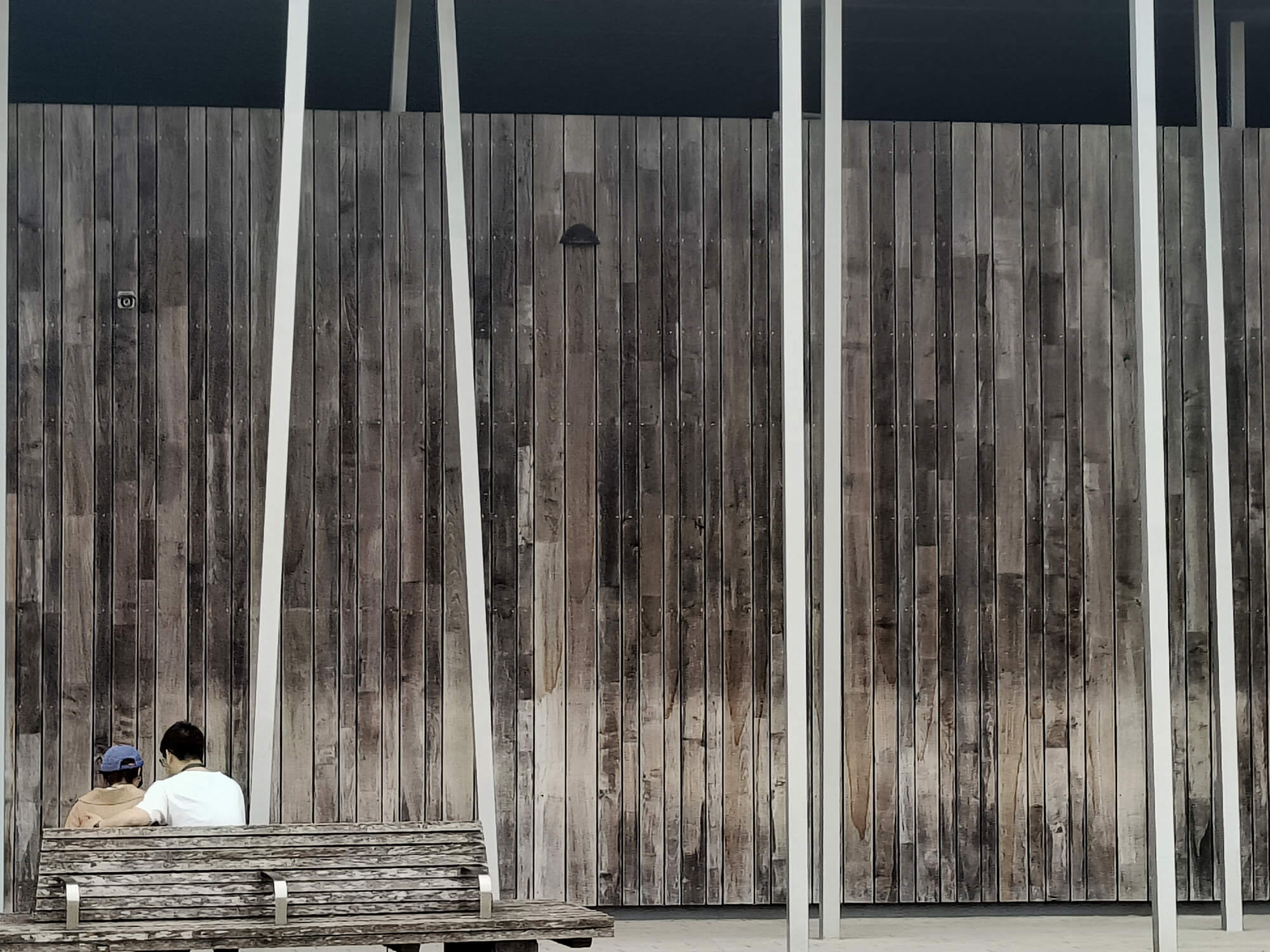
The genius of the Stonehenge Visitor Centre lies in its restrained material palette and the way those materials contrast—both with each other and with the monument. Two materials dominate the design and are used thoughtfully in separate spaces.
Timber, one of the most impermanent materials by nature, yet one of the oldest to be used by humans, is employed for exhibition spaces where visitors engage with the past—history and archaeology. Glass, transparent and contemporary, defines spaces of social interaction: workshops, cafés, and souvenir shops, where people engage with one another.
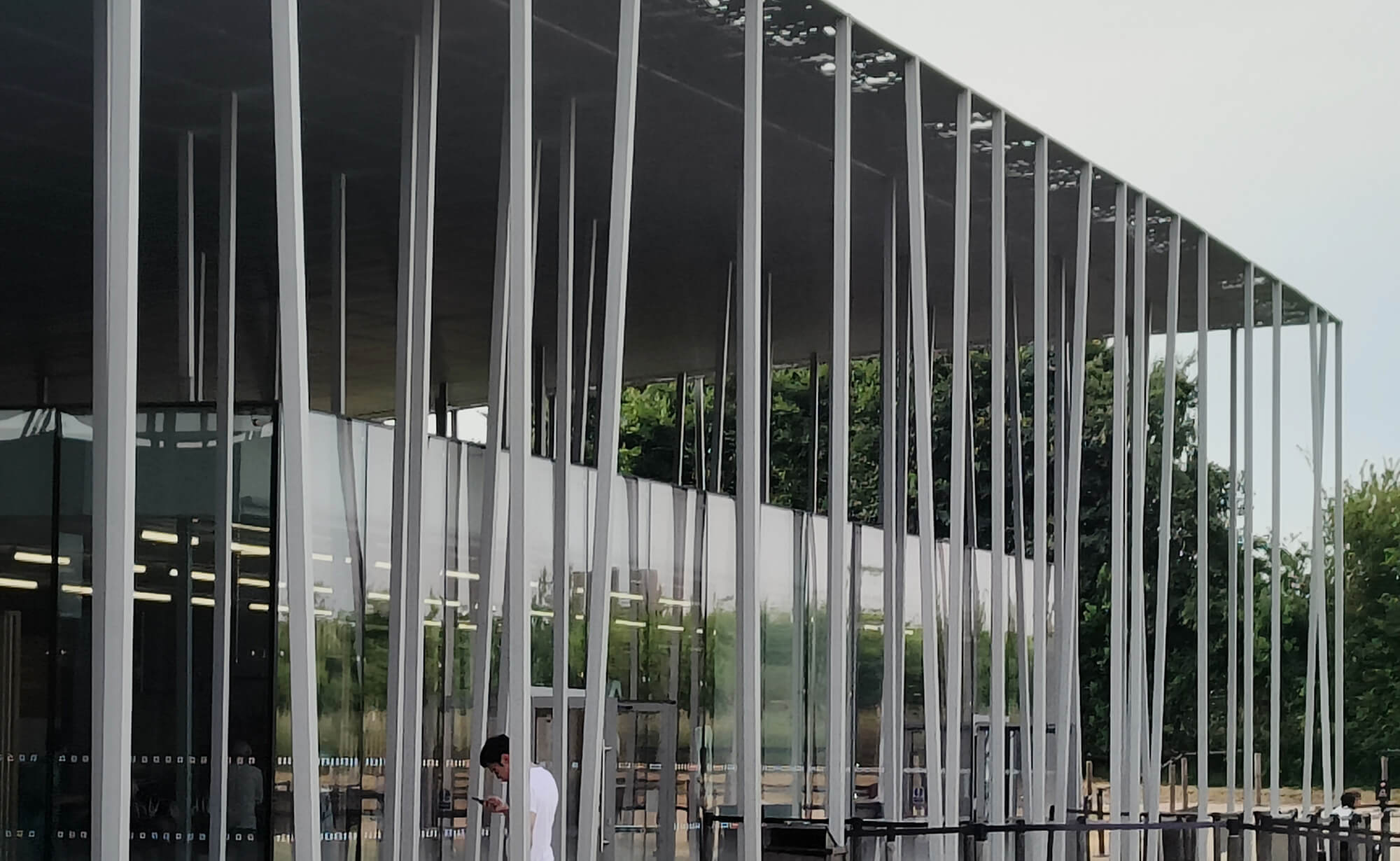
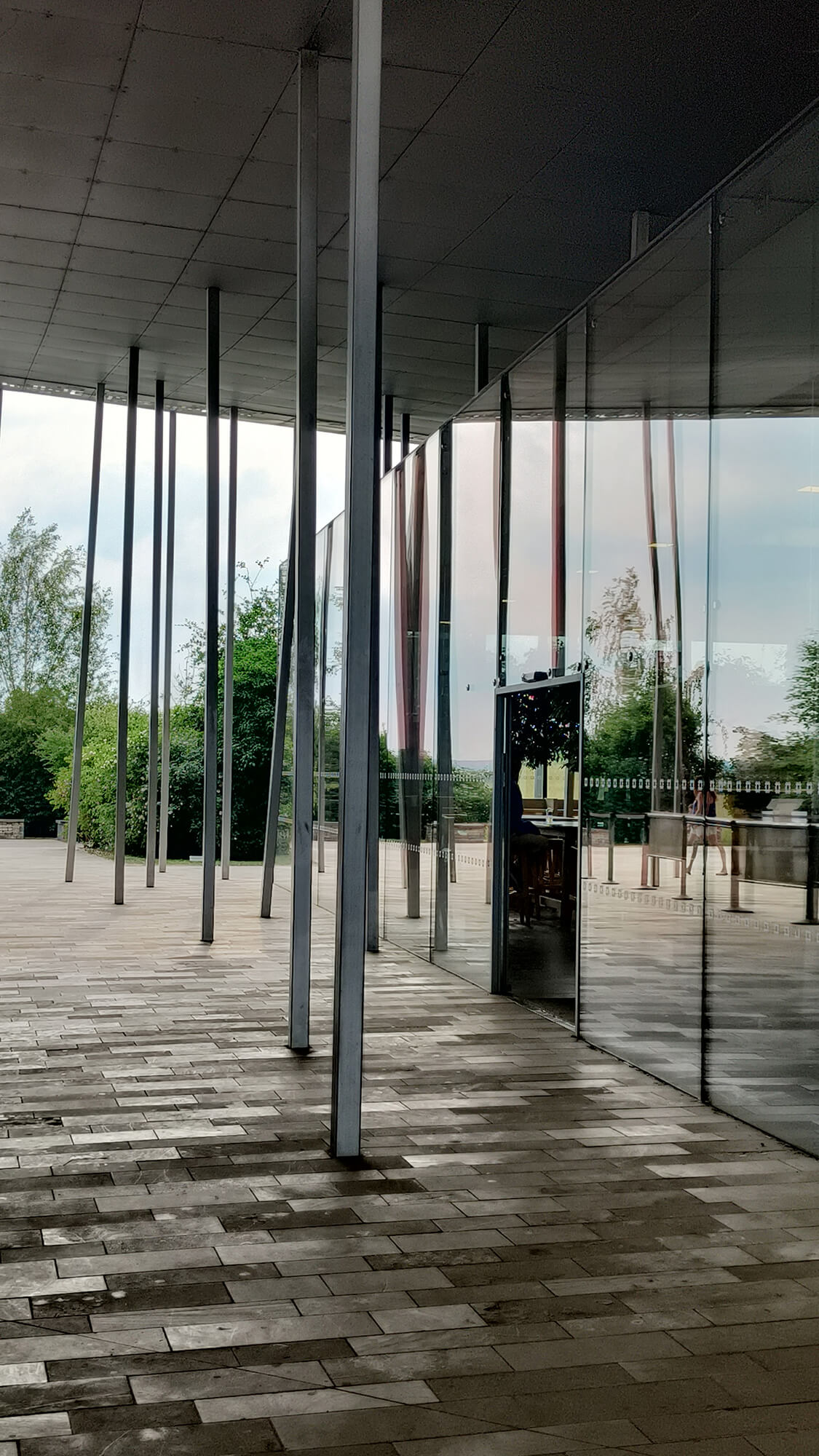
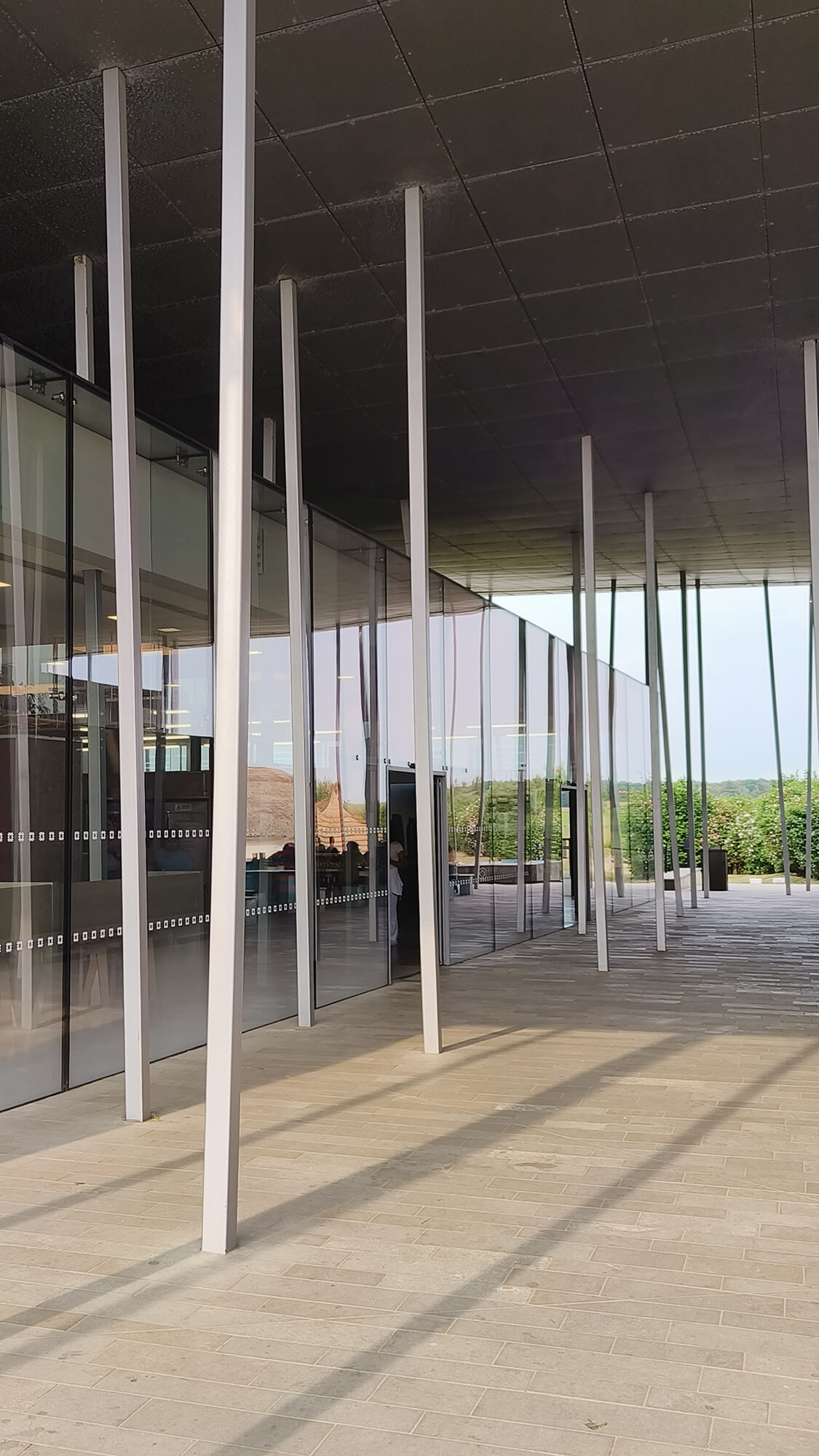
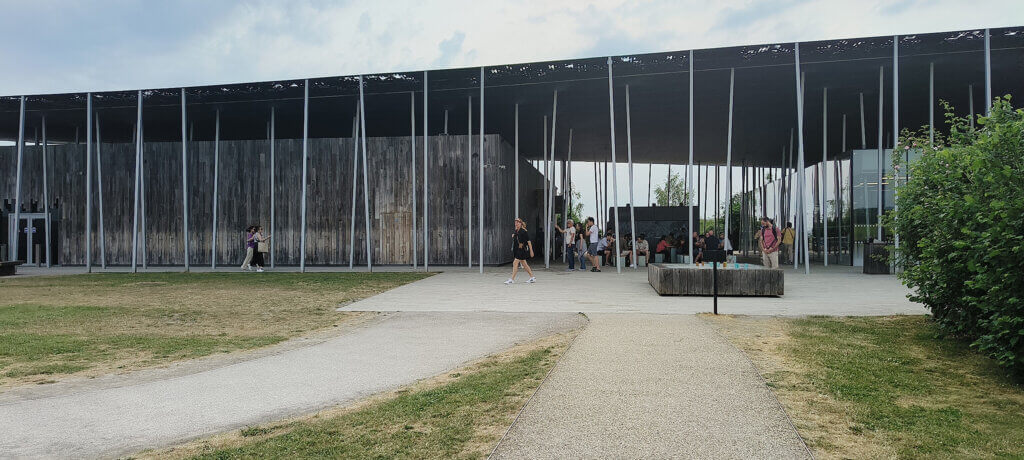 These two worlds—past and present—are connected by a light, sweeping canopy that unifies the complex. It rises gently, surrounds both materials, and makes them part of a coherent whole without competing with the monument itself.The gently bent roof hovering above enhances the sense of weightlessness. It appears to float, suggesting fragility rather than permanence.
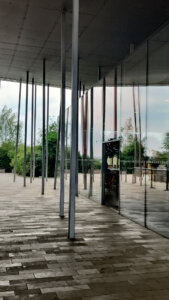 The structure is supported by slightly inclined steel columns, reinforcing its sense of lightness and impermanence. The slender, smooth steel columns quietly complement the rustic, weathered boulders of Stonehenge. Rather than appearing rooted deep within the land like the boulders of the monuments, these slender poles seem merely stuck into the earth, as if they are pinned to the surface for a day’s duration, ready to be uprooted without a scar.
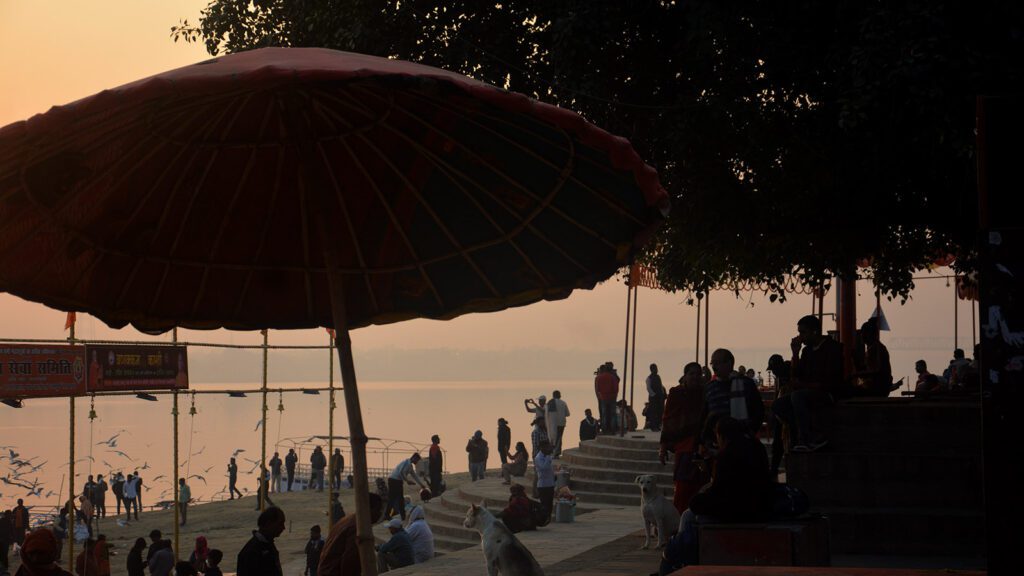
In spirit, the structure resembles a temporary bamboo shamiana—the kind erected for gatherings in India—momentary, functional, and respectful of the ground beneath.
Some institutions choose to belong to their terrain rather than dominate it.
Reflection Beyond Architecture
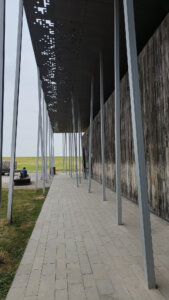 The form, material, and porous spaces of the Stonehenge Visitor Centre are designed not to draw attention, but to create comfort and pause—not to elicit wonder, but to allow presence. Despite its scale, the building continually asserts its fragility. Sometimes true inspiration shapes a response that is thoughtful rather than dominant.
A good design may not announce itself; it can listen, understand, and complement. In doing so, it allows both the original and the response to coexist with dignity.
The Stonehenge Visitor Centre does exactly that.
It made me realize that in life, our strongest responses do not always need to be the loudest. Sometimes, the most meaningful way to respond to a towering truth is not to reject or imitate it, but to stand beside it with a quiet, thoughtful presence of our own.